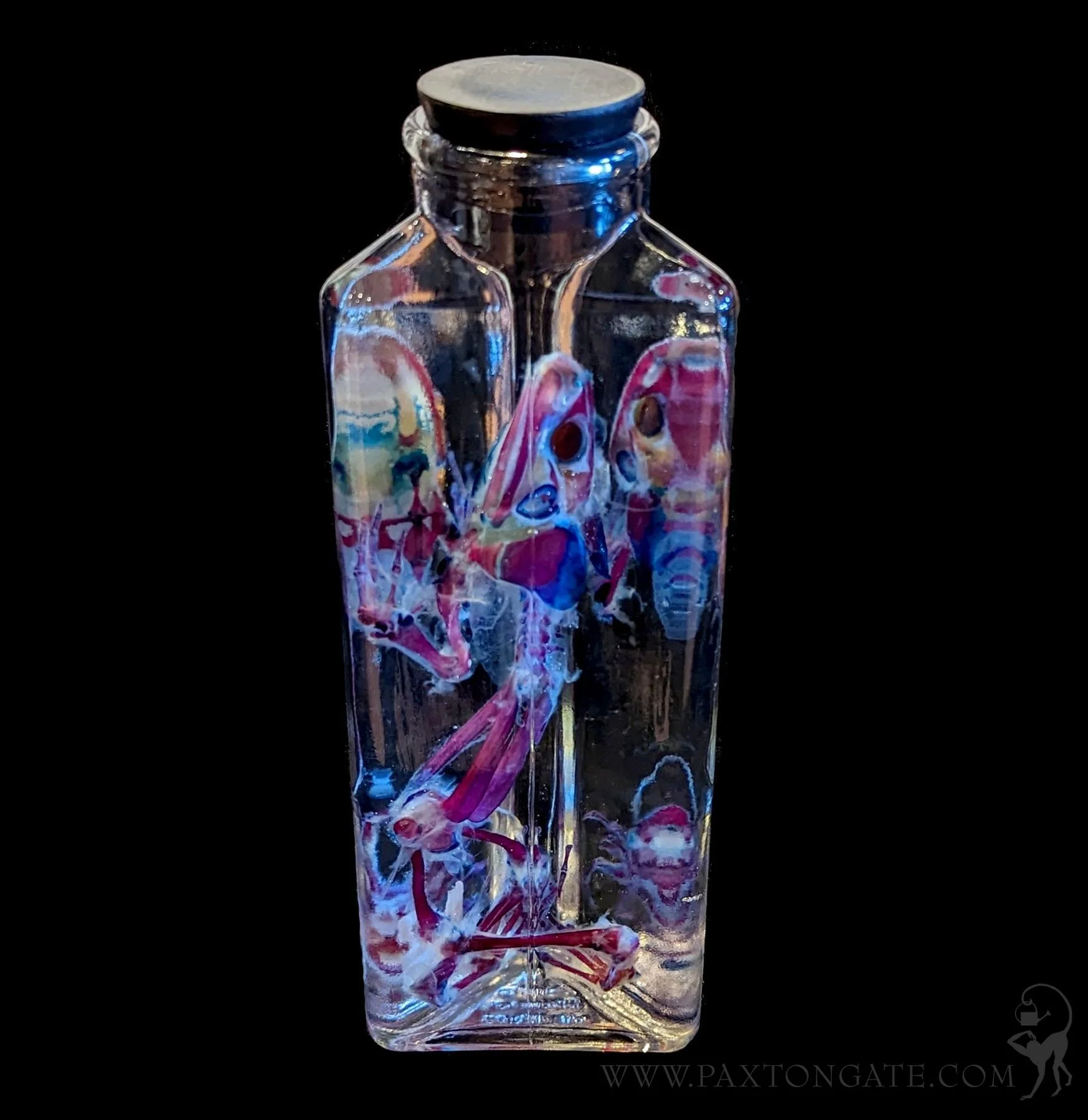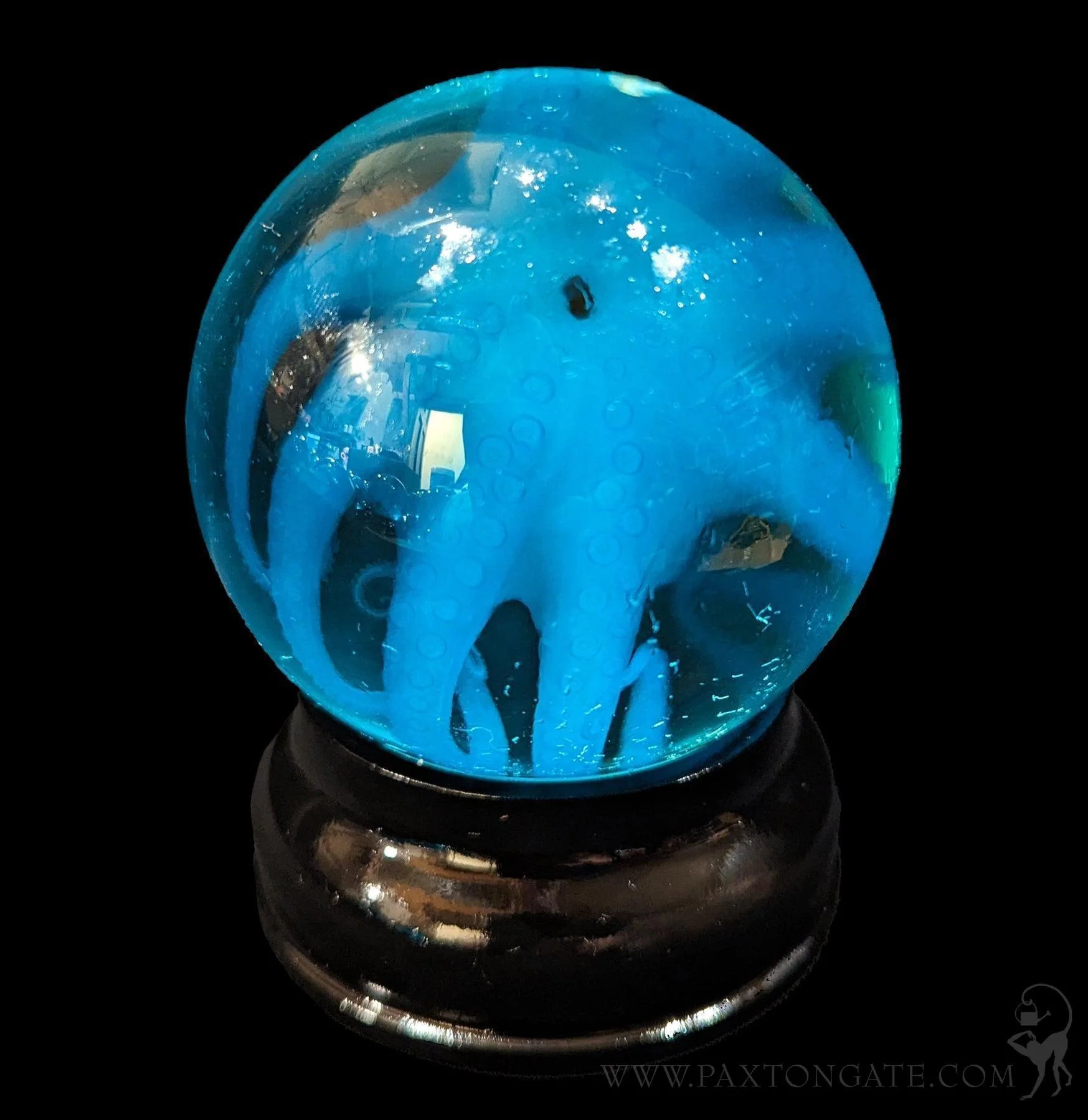
Diaphonized Blue Octopus Globe
Glass globe
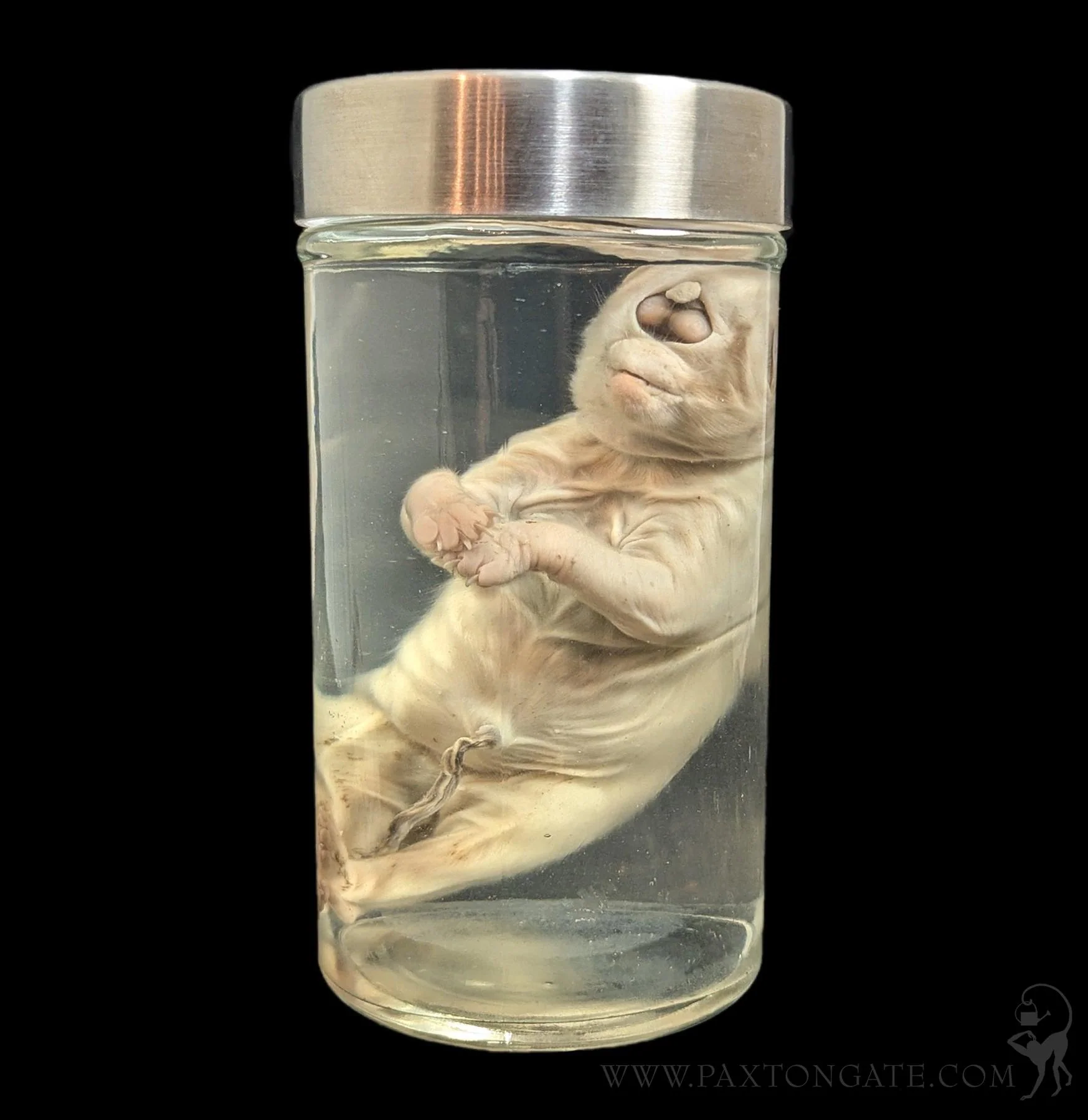
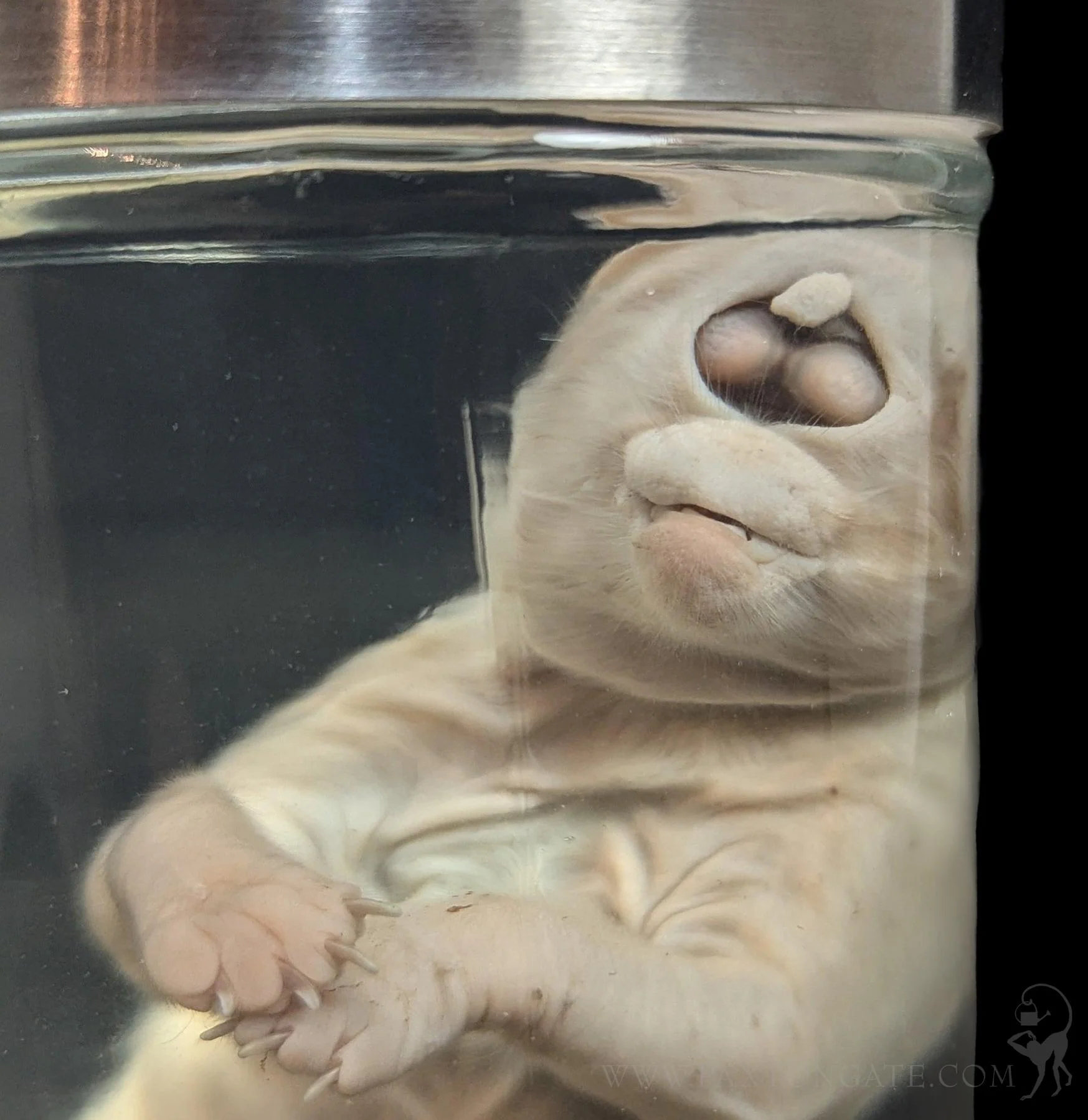
Wet Specimens are a great way of preserving and keeping scientific samples of organic matter. They prevent the specimen from decaying, allowing it to be studied at a later date. Scientist have used this method of preservation for years, storing anything from human organs to malformations animals.
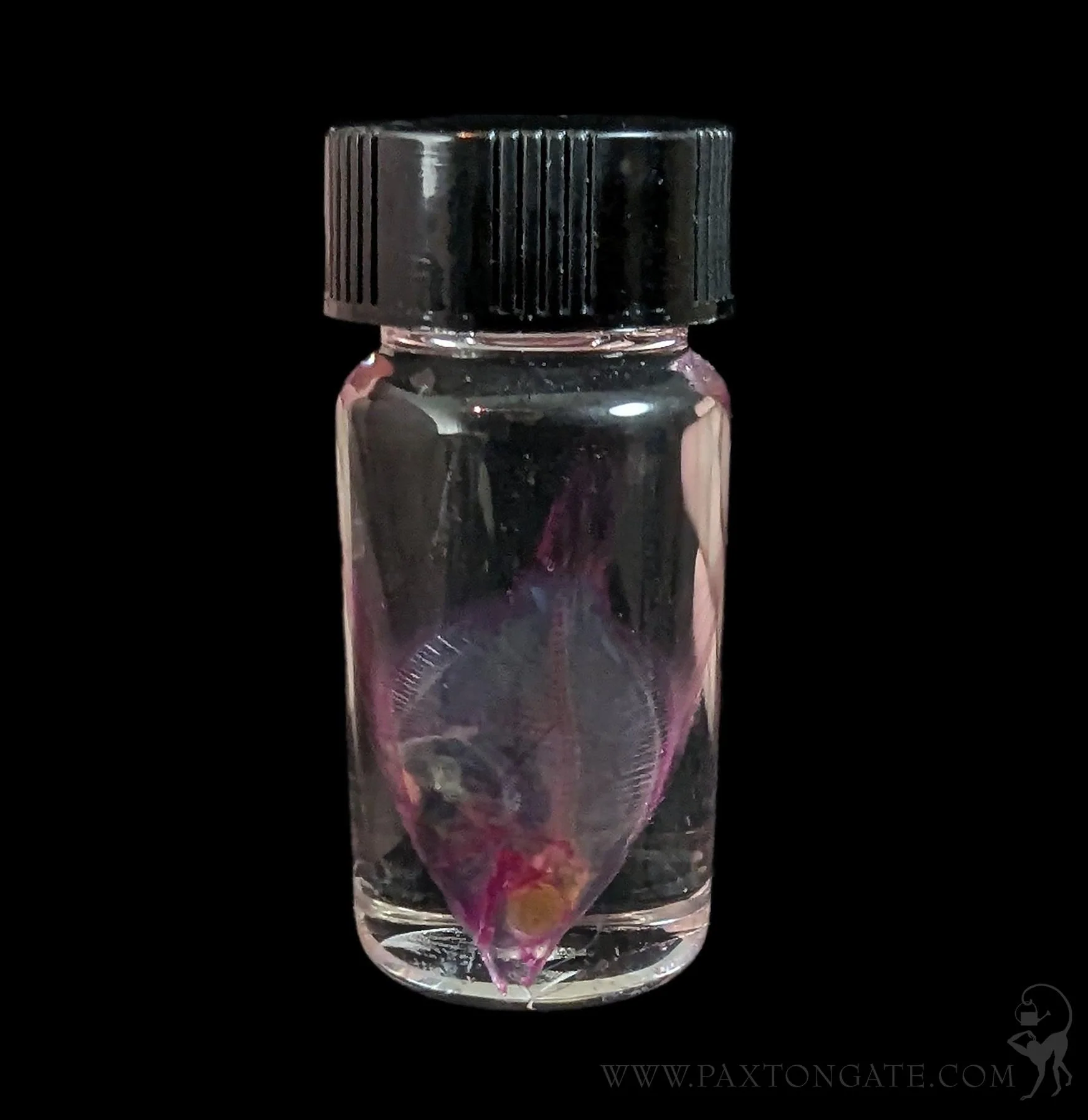
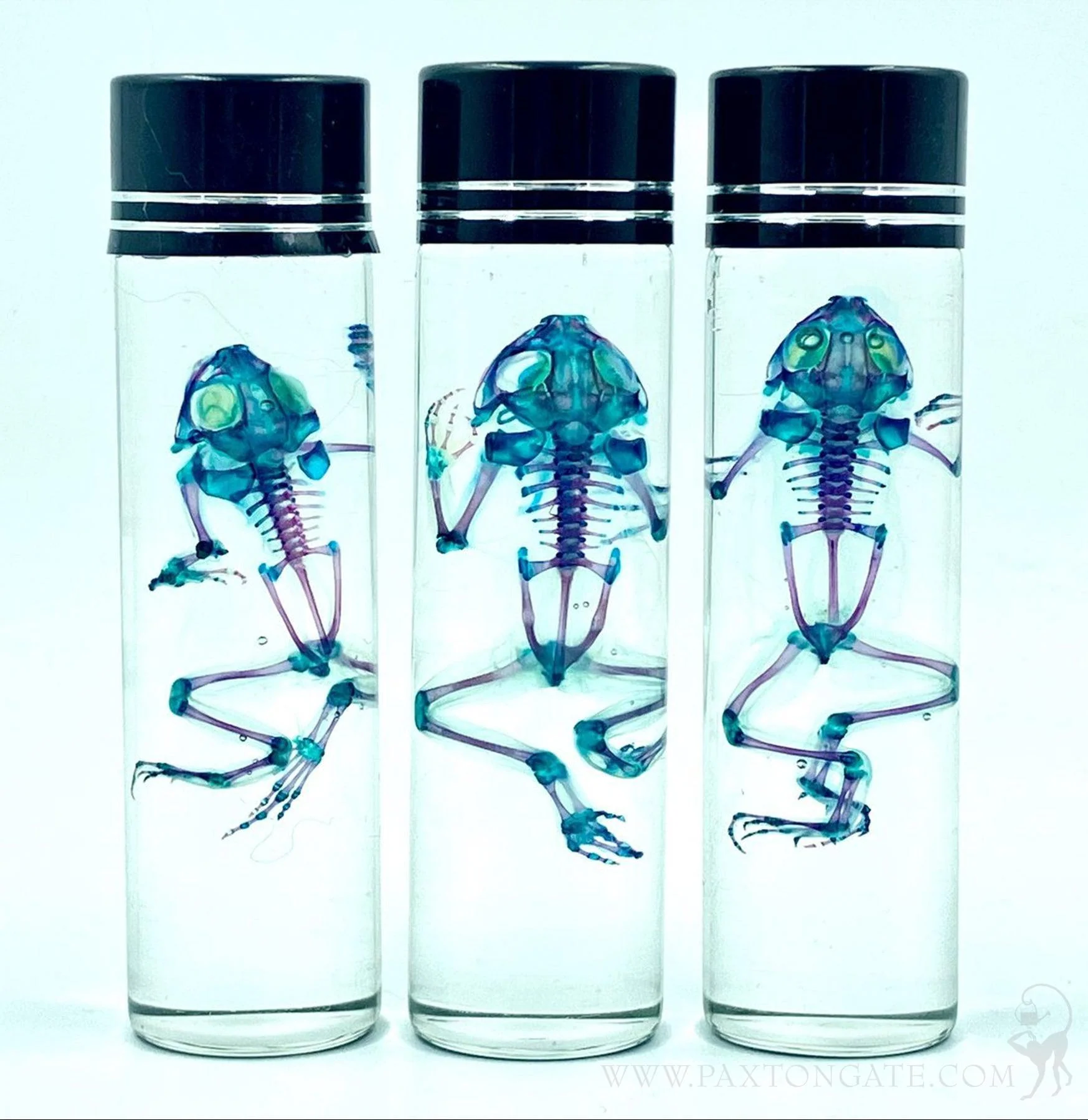
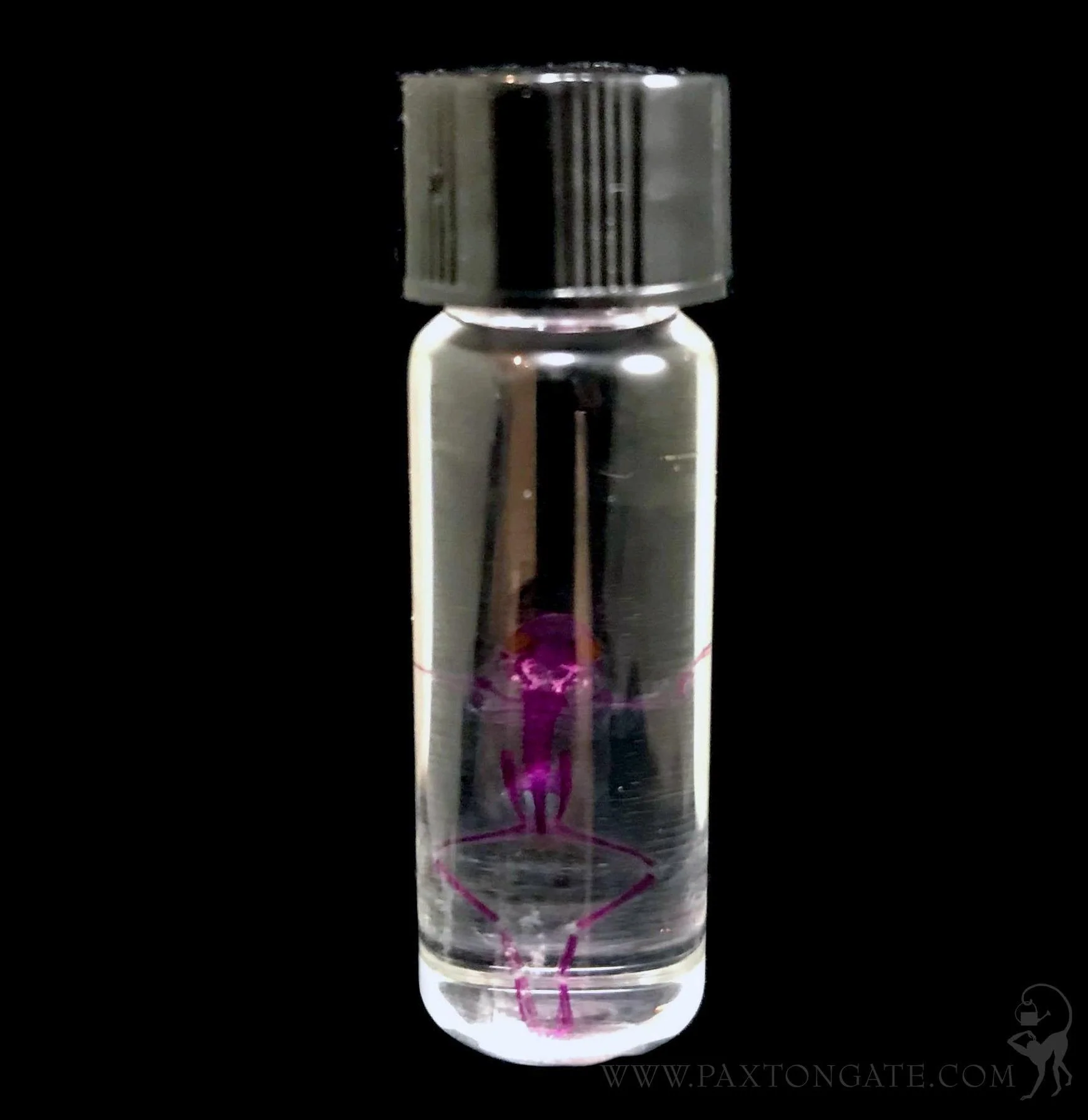
The process of diaphanization has also been known as "clearing and staining." The animals are rendered transparent (the "clearing") by bathing in a soup of trypsin, a digestive enzyme that slowly breaks down their flesh. They also soak in several batches of bone, muscle, or cartilage dyes (the "staining"), with alizarin red and alcian blue the most commonly used. The result is a visually striking display of anatomy
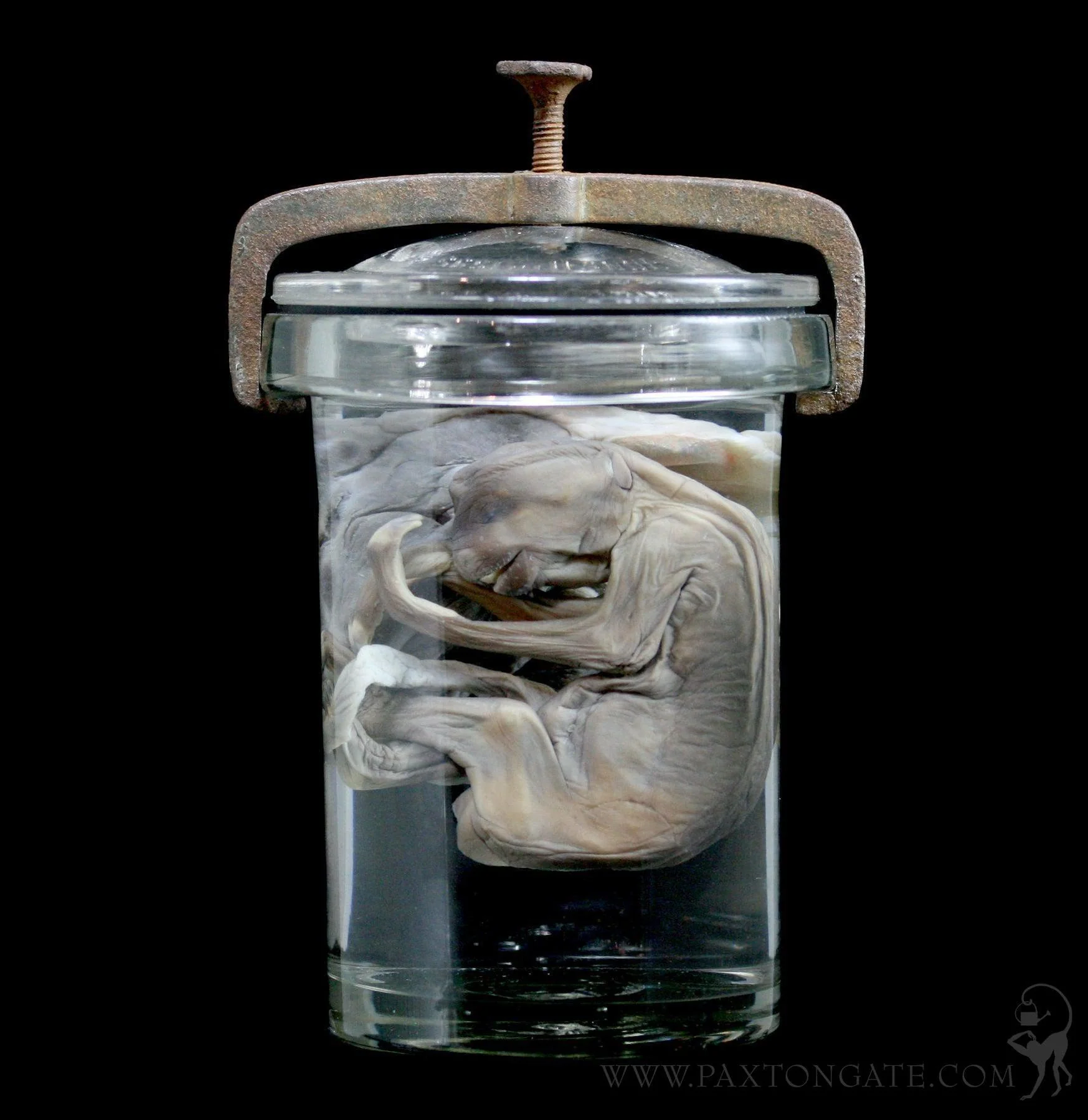
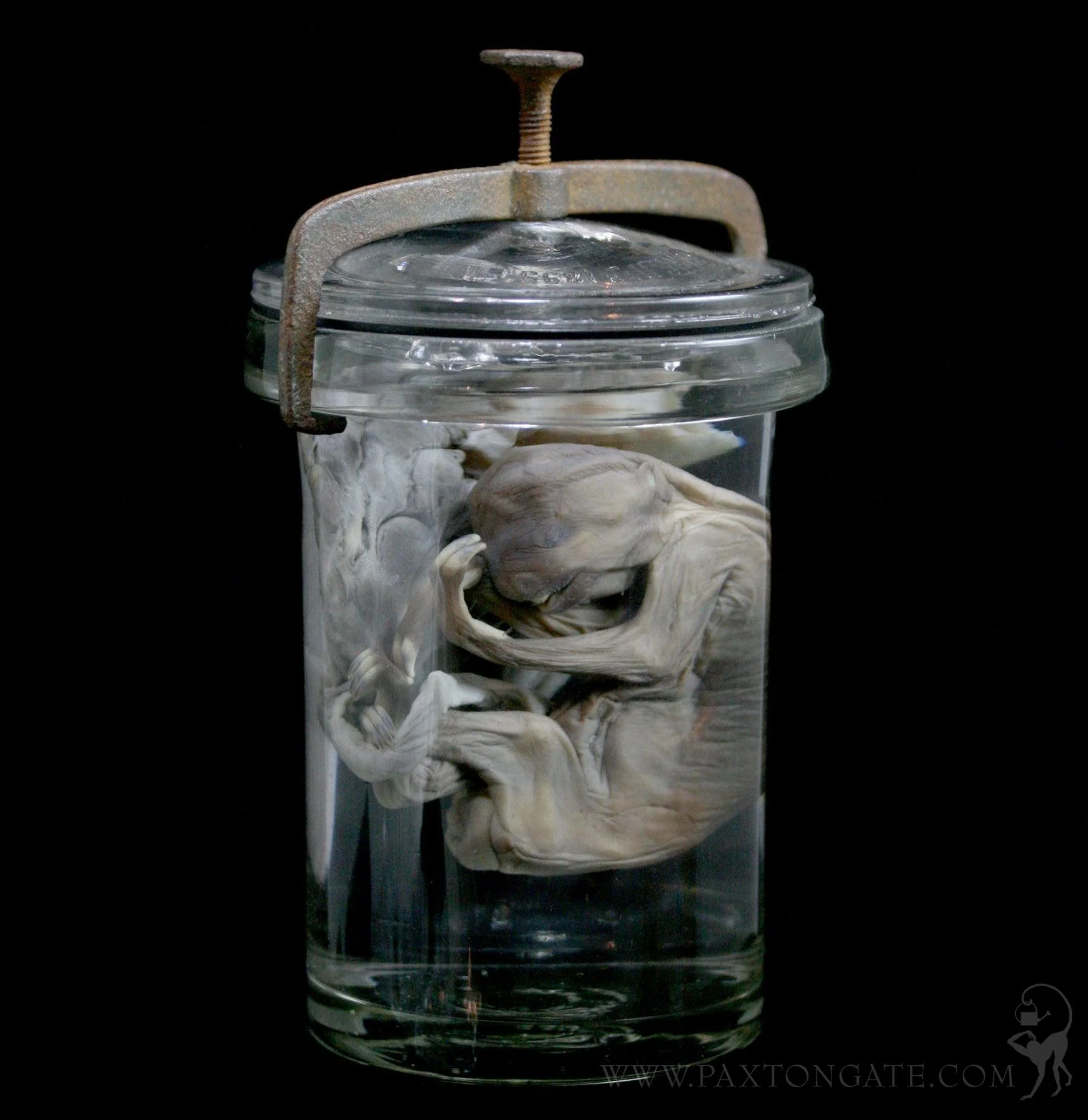
All of our wet specimens died naturally before being preserved. Many of our specimens come from vet techs with whom we work closely. Specimens such as kittens and puppies were stillborn, miscarried, or died shortly after birth.
Glass globe
Wet Specimens are a great way of preserving and keeping scientific samples of organic matter. They prevent the specimen from decaying, allowing it to be studied at a later date. Scientist have used this method of preservation for years, storing anything from human organs to malformations animals.
The process of diaphanization has also been known as "clearing and staining." The animals are rendered transparent (the "clearing") by bathing in a soup of trypsin, a digestive enzyme that slowly breaks down their flesh. They also soak in several batches of bone, muscle, or cartilage dyes (the "staining"), with alizarin red and alcian blue the most commonly used. The result is a visually striking display of anatomy
All of our wet specimens died naturally before being preserved. Many of our specimens come from vet techs with whom we work closely. Specimens such as kittens and puppies were stillborn, miscarried, or died shortly after birth.
Original: $200.00
-65%$200.00
$70.00Description
Glass globe
Wet Specimens are a great way of preserving and keeping scientific samples of organic matter. They prevent the specimen from decaying, allowing it to be studied at a later date. Scientist have used this method of preservation for years, storing anything from human organs to malformations animals.
The process of diaphanization has also been known as "clearing and staining." The animals are rendered transparent (the "clearing") by bathing in a soup of trypsin, a digestive enzyme that slowly breaks down their flesh. They also soak in several batches of bone, muscle, or cartilage dyes (the "staining"), with alizarin red and alcian blue the most commonly used. The result is a visually striking display of anatomy
All of our wet specimens died naturally before being preserved. Many of our specimens come from vet techs with whom we work closely. Specimens such as kittens and puppies were stillborn, miscarried, or died shortly after birth.