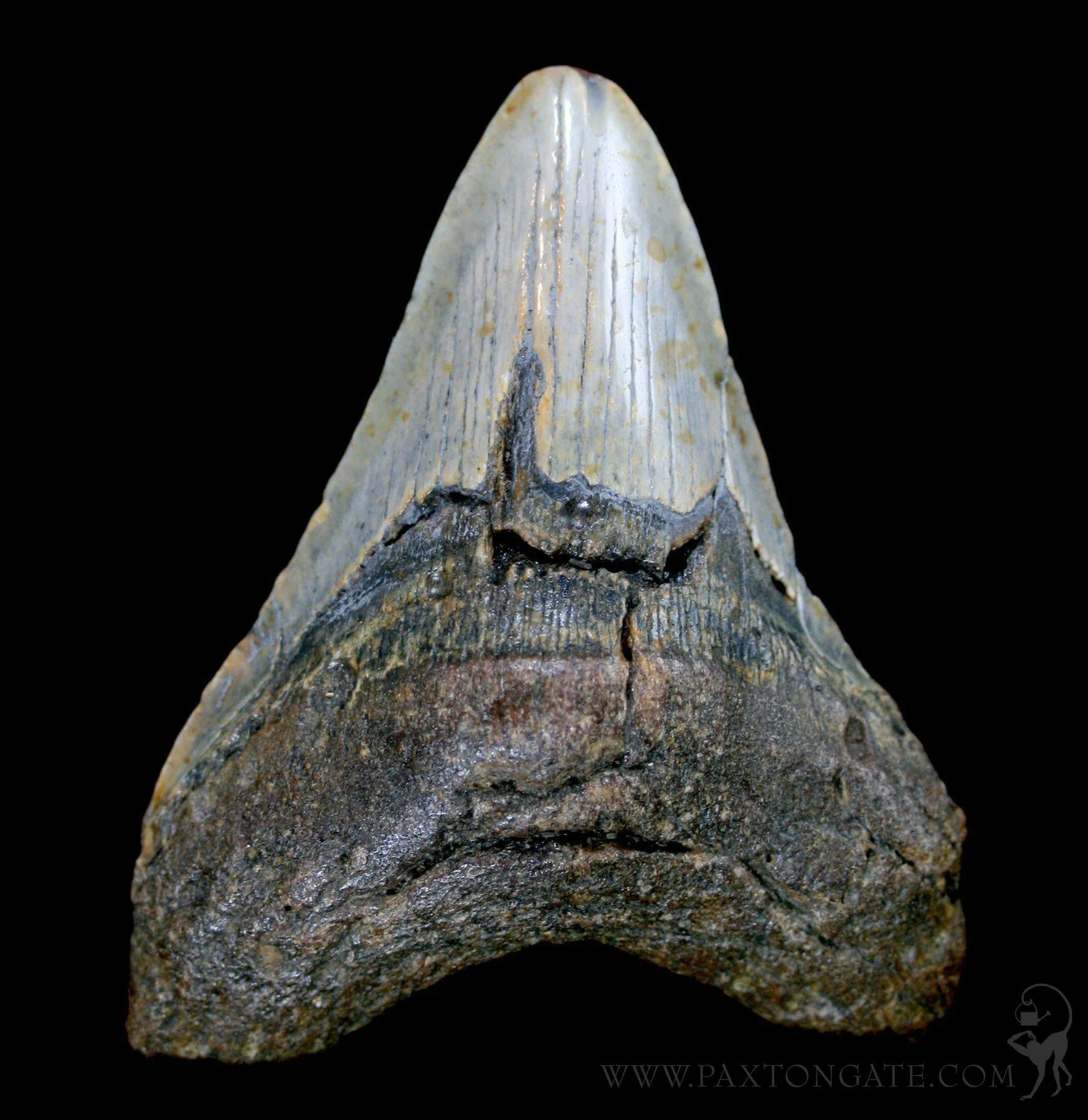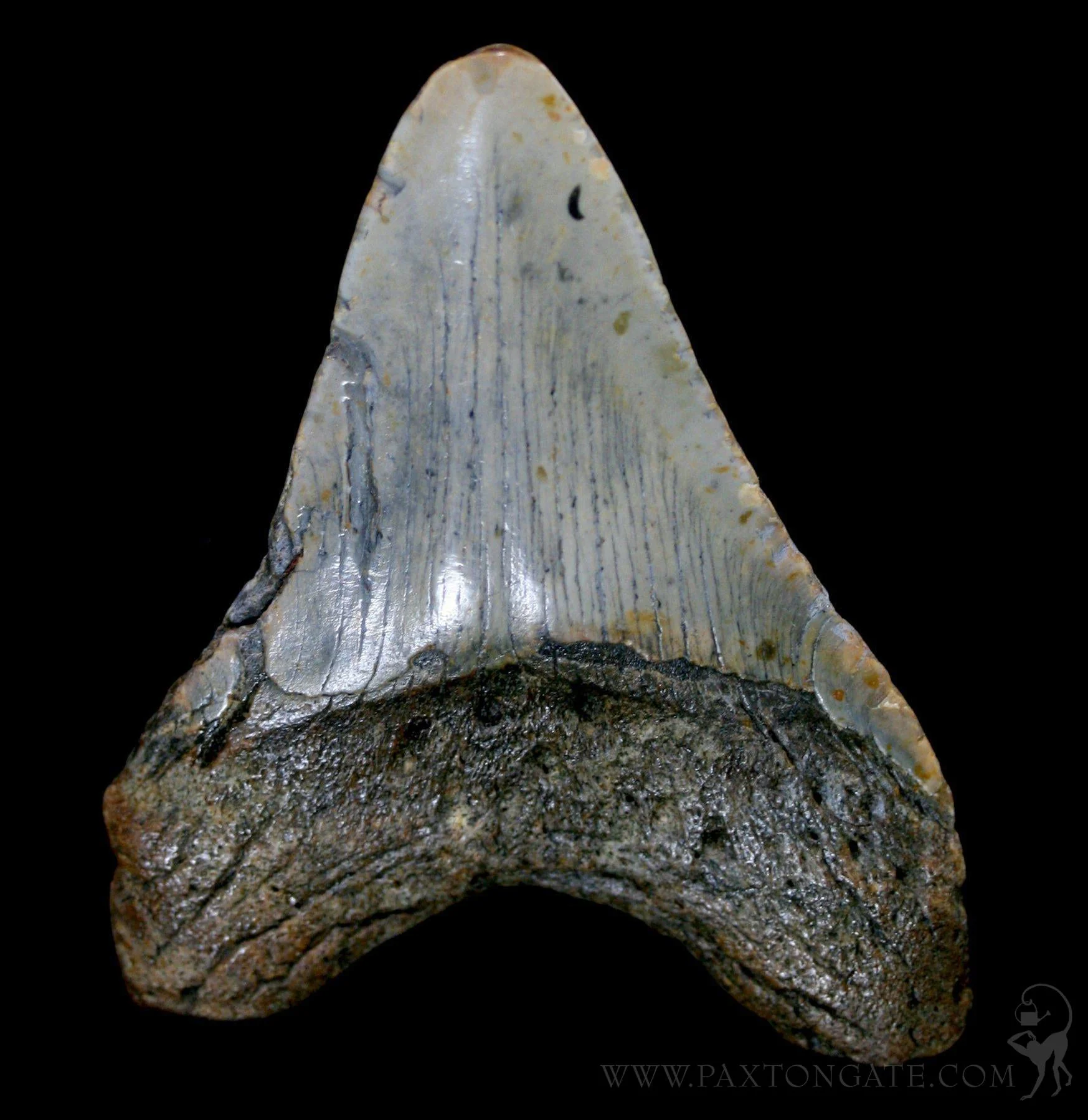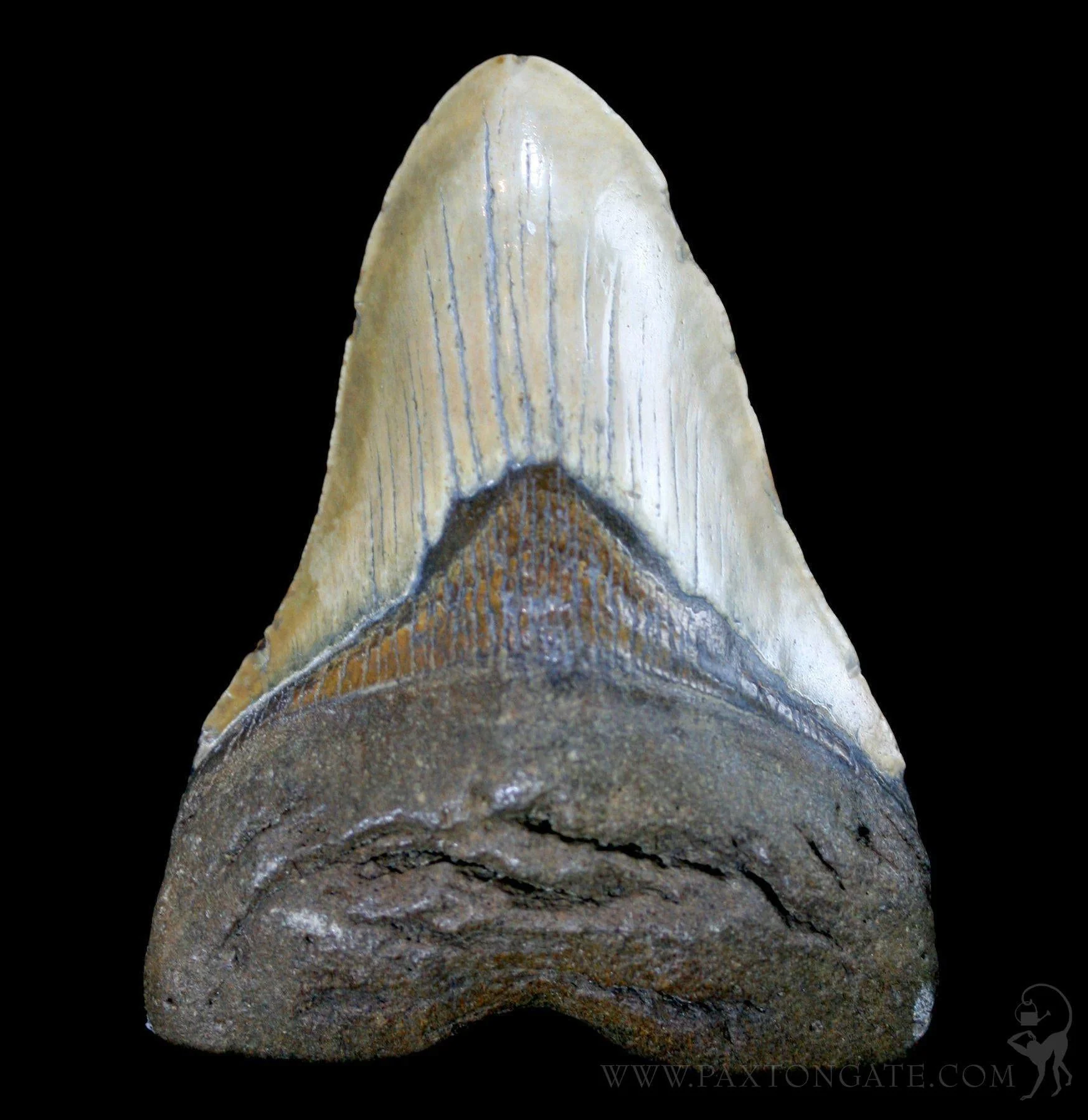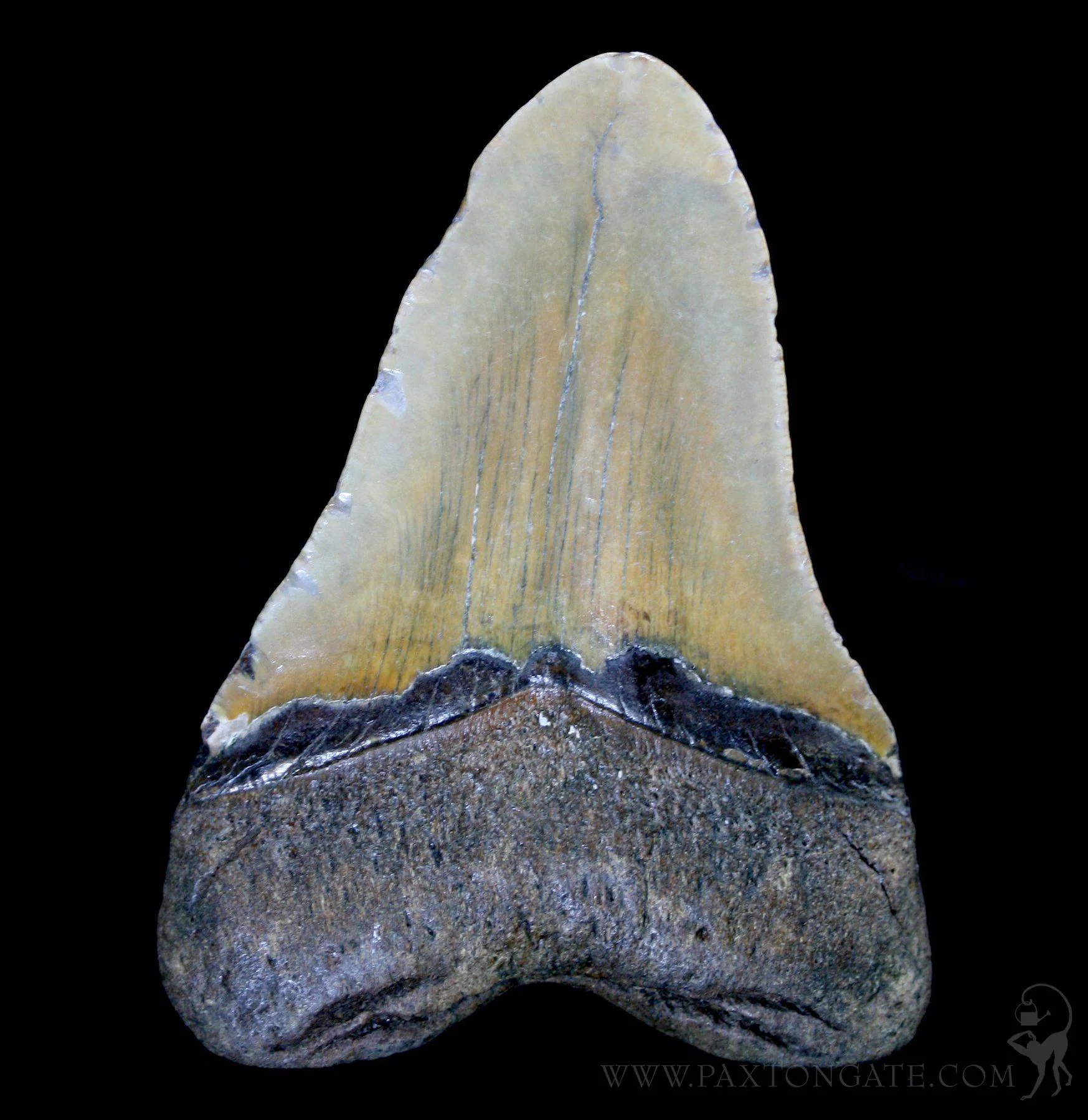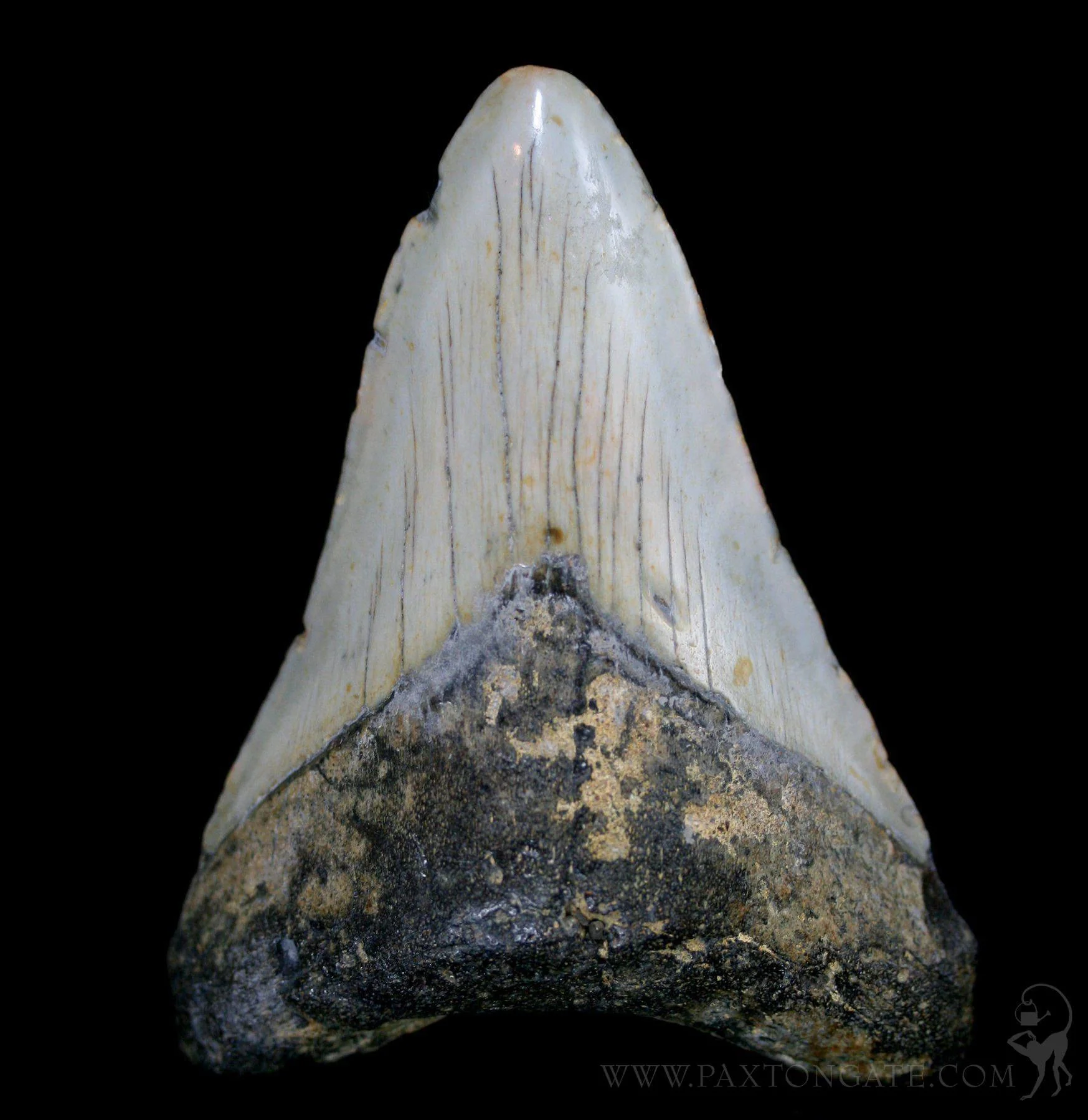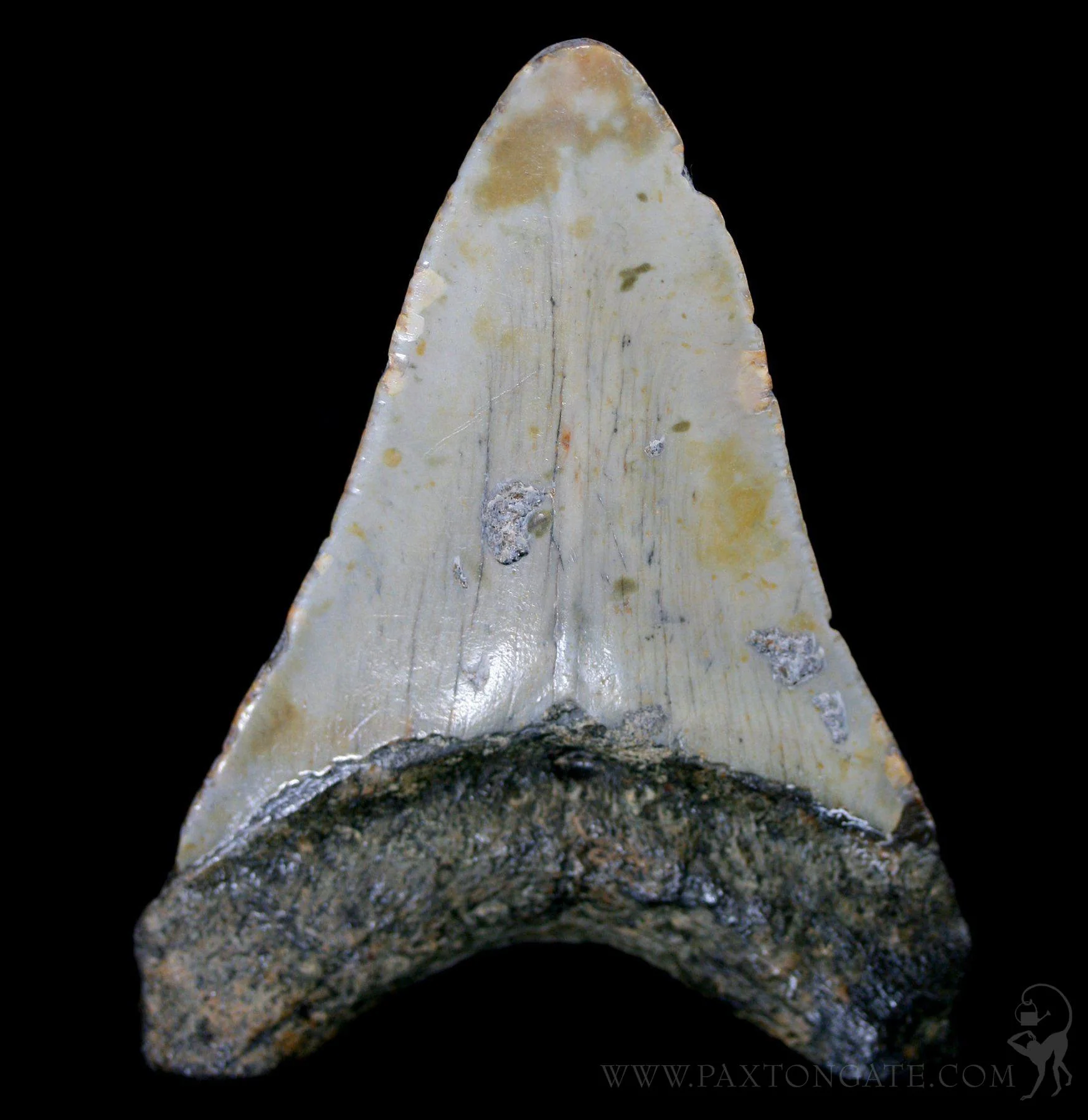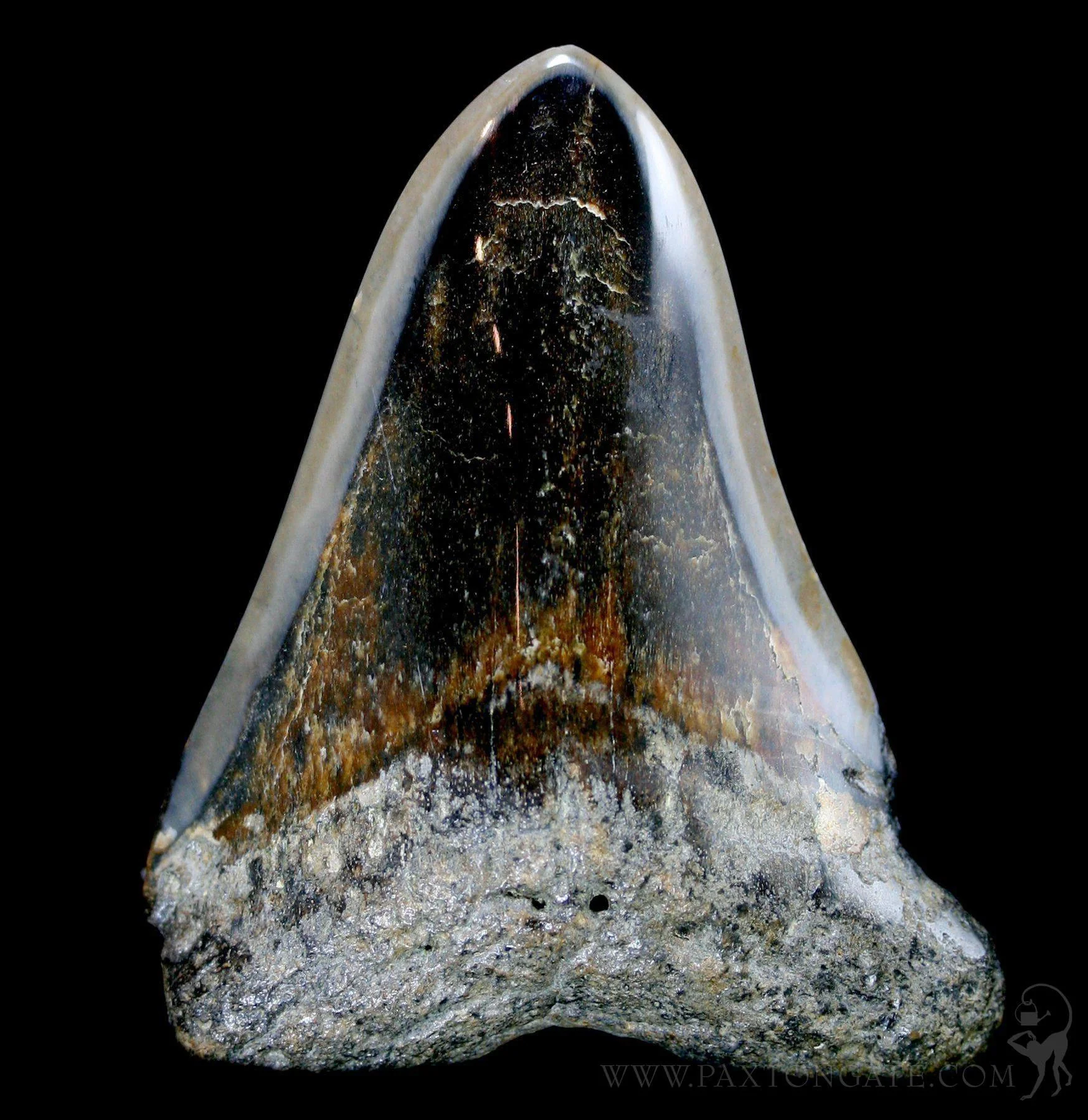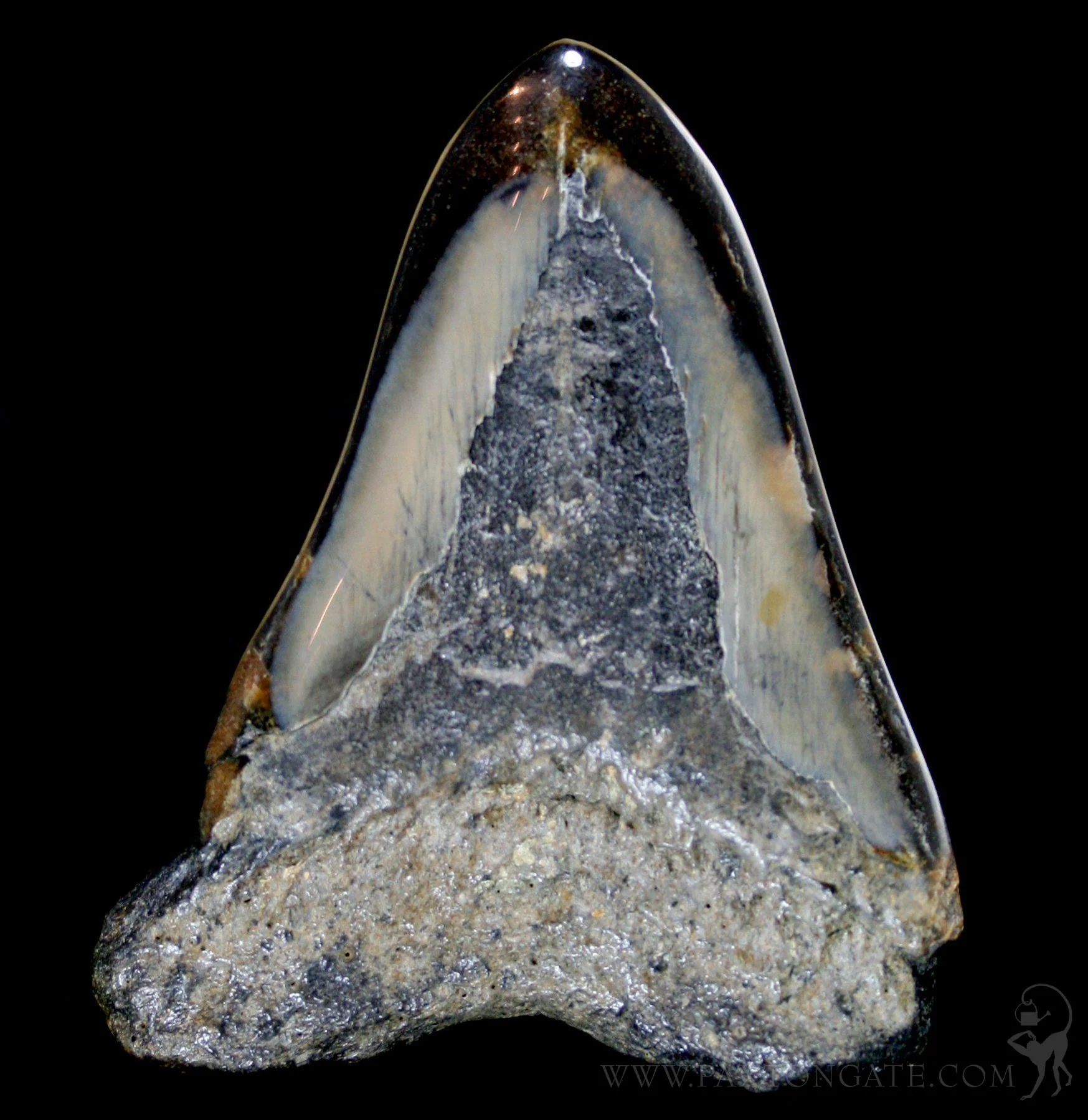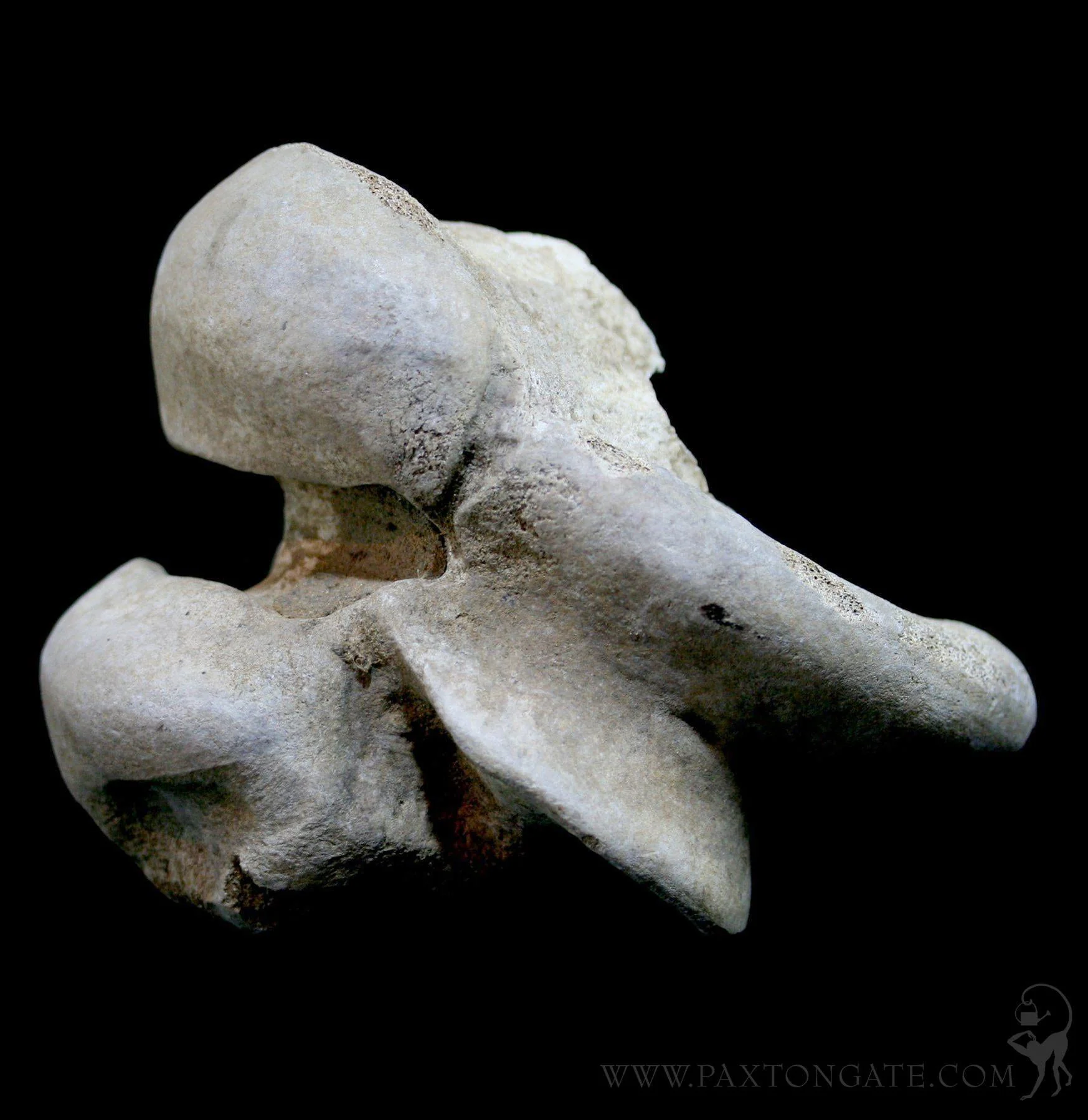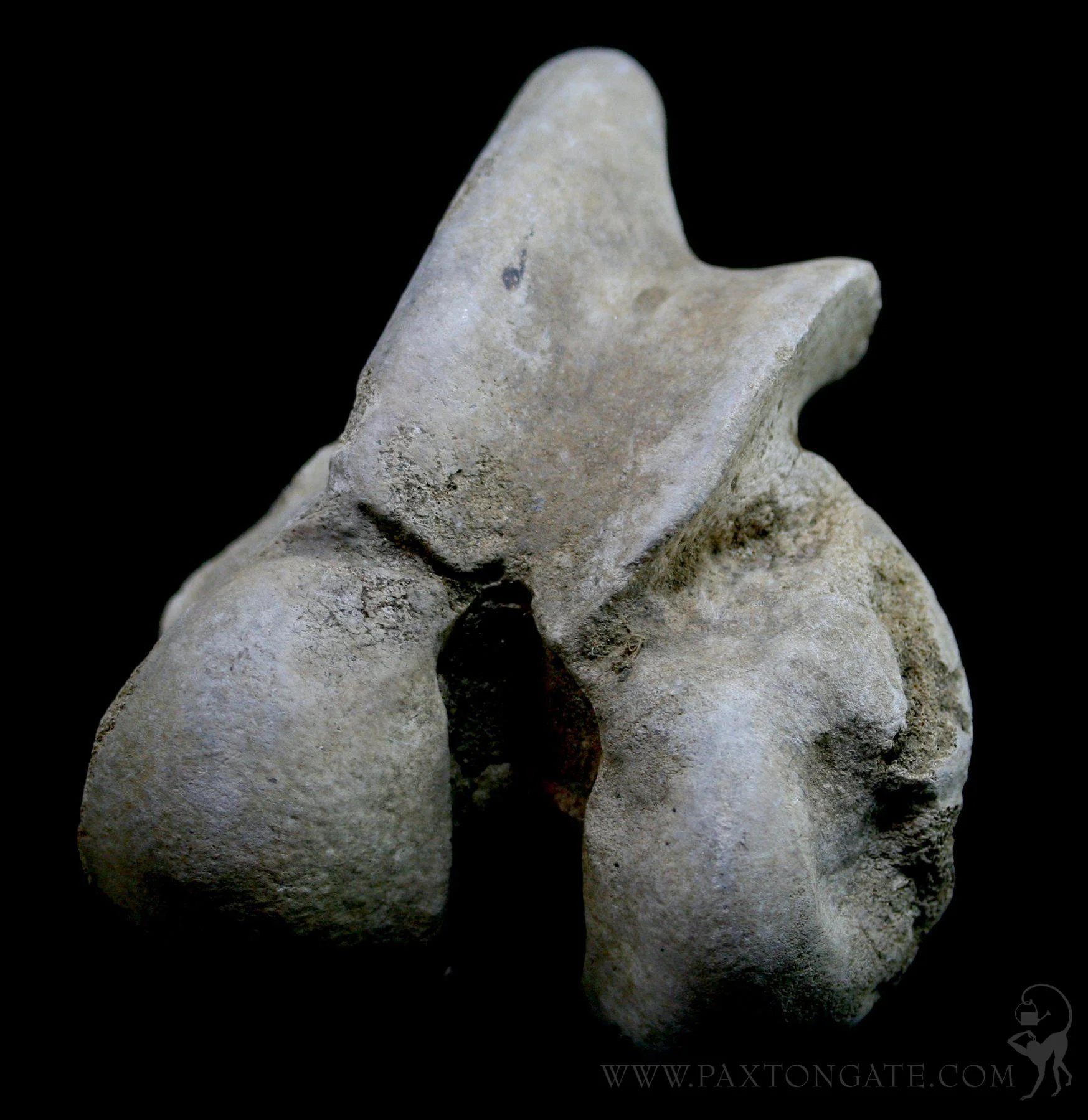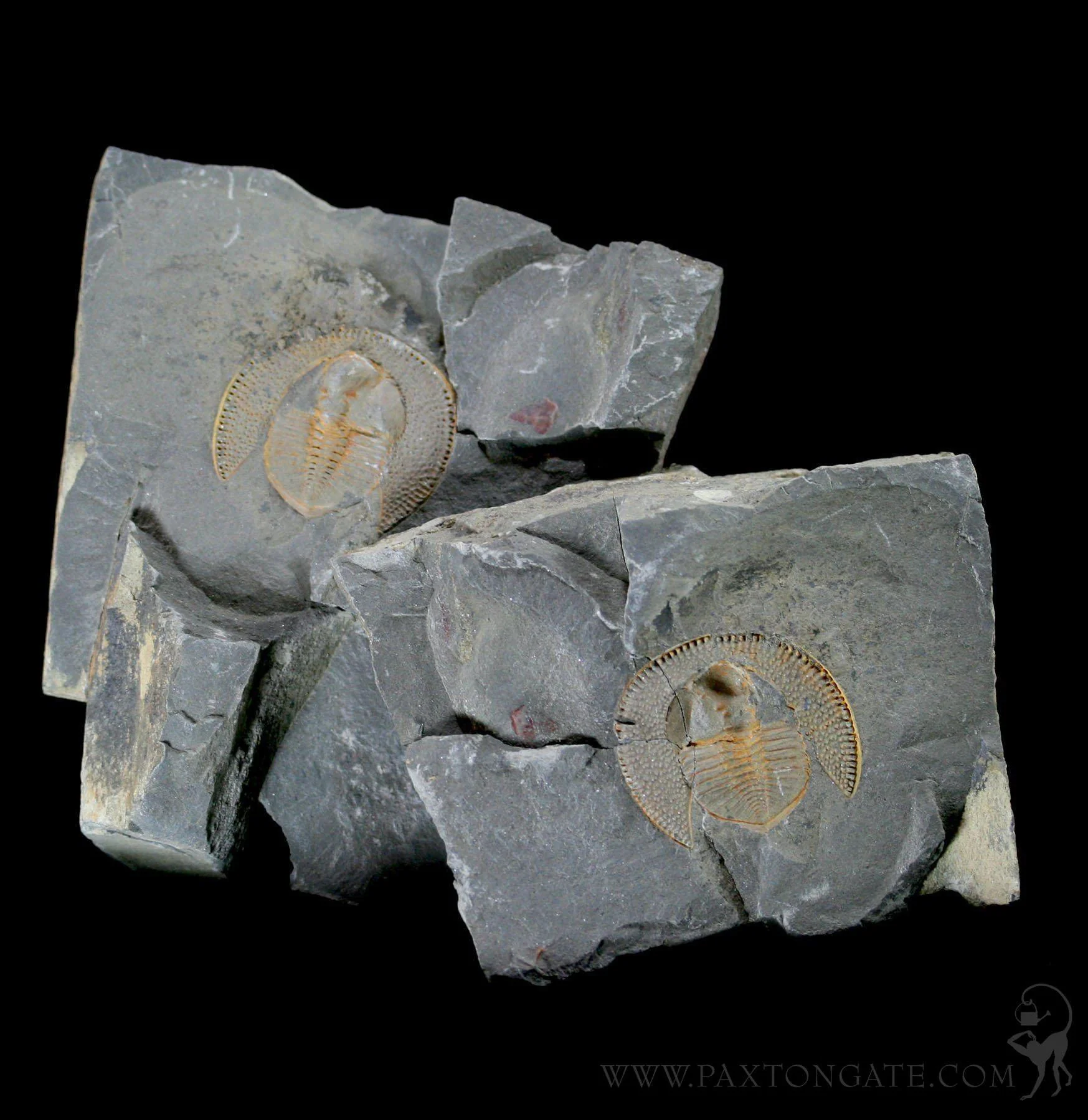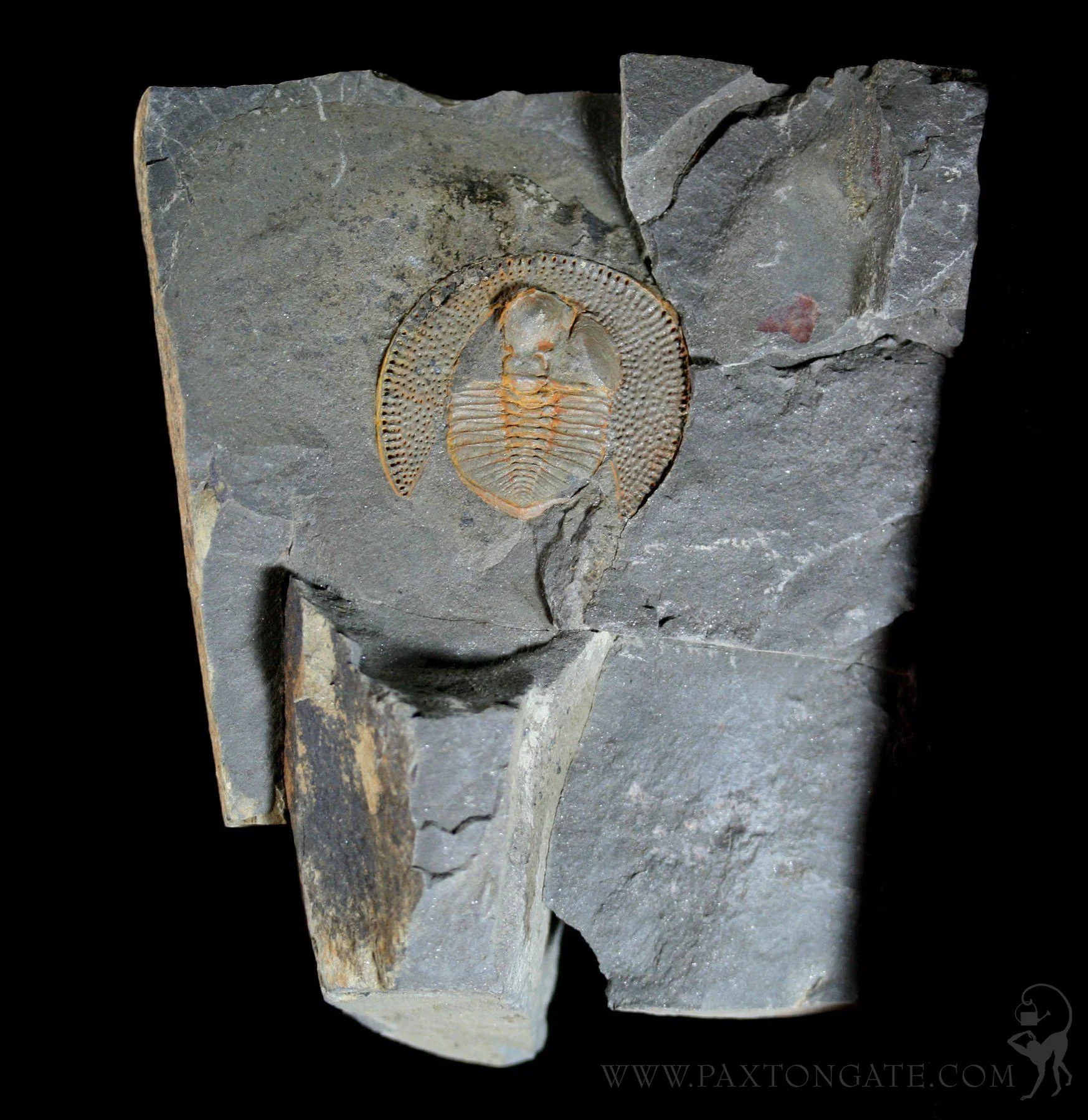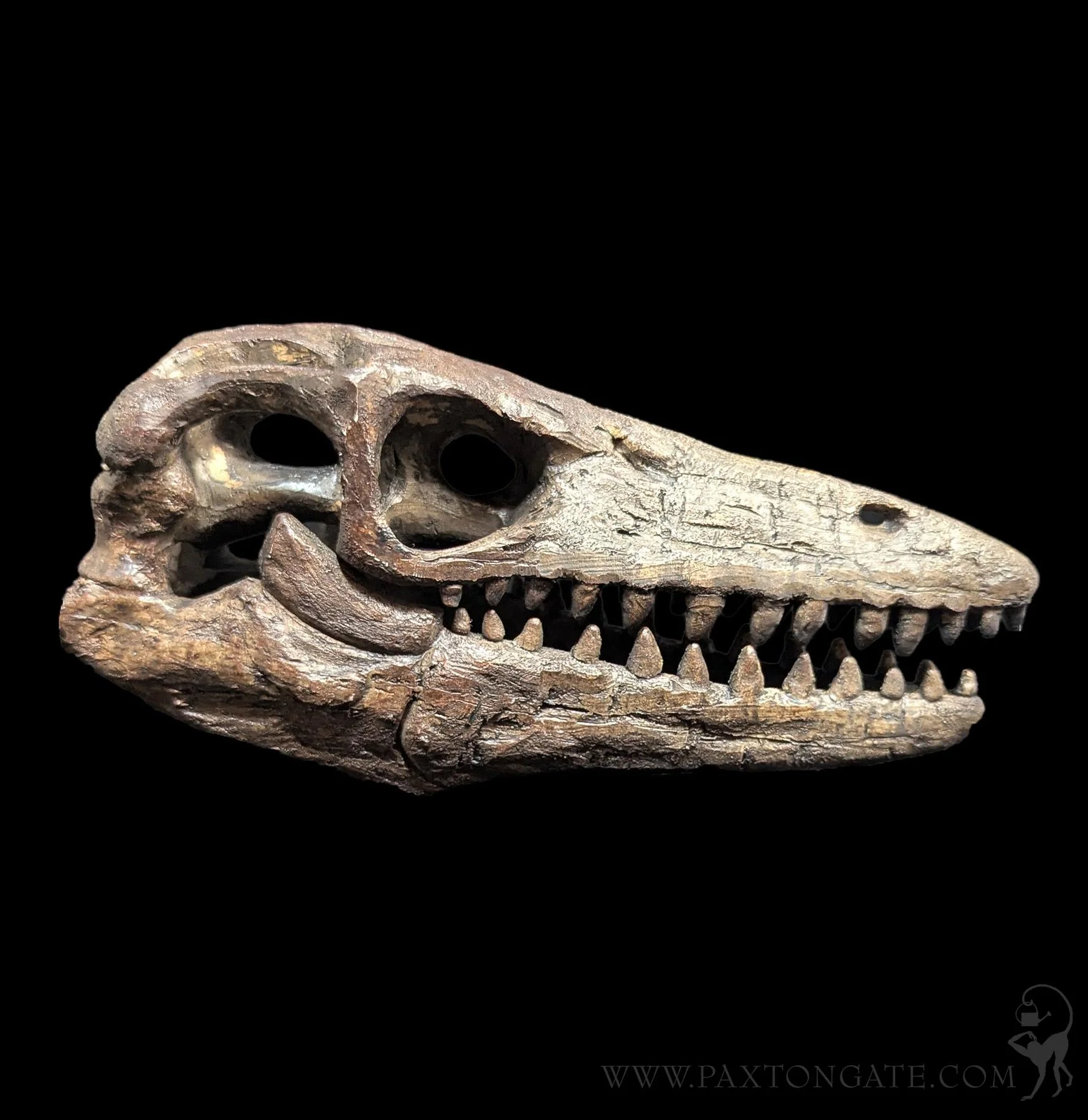
Faux Mosasaur Mini Skull
Dimensions: 7.5″ x 2.5″ x 3.5″
It's also cool to have an example skull of the fossil you already own. While you could technically buy a real mosasaur skull, it's going to set you back about $30K. For those of us who don't have that kind of scratch lying around, these faux skulls are the perfect compromise. You get an example skull and you don't have to take out a loan to get it. A win-win, really.
A bit about the Mosasaur
Mosasaurs were a group of extinct, large marine reptiles from the Late Cretaceous. Their first fossil remains were discovered in a limestone quarry at Maastricht on the Meuse in 1764. They belong to the order Squamata, which includes lizards and snakes.
Mosasaurs had a snakelike body with a large skull and a long snout. Their limbs were modified into paddles, with shorter limb bones and more numerous finger and toe bones than those of their ancestors. The tail was long, with a slightly downcurved end, similar to early ichthyosaurs. The backbone consisted of more than 100 vertebrae. The skull structure was very similar to that of modern monitor lizards, to which mosasaurs are related. The jaws bore many conical, slightly recurved teeth set in individual sockets. The jawbones were jointed near mid-length, as in some advanced monitors, and connected in front by ligaments only. This arrangement allowed the animals not only to open their mouths by lowering the mandible but also to extend the lower jaws sideways while feeding on large prey.
Along with being incredibly cool extinct terrors of the seas, they are famous. You may have seen them in the Jurassic World movies. The big scary guy that eats the Indominus Rex at the end of the movie, sorry for spoilers, is a mosasaur. They make Jaws look like a guppy.
Dimensions: 7.5″ x 2.5″ x 3.5″
It's also cool to have an example skull of the fossil you already own. While you could technically buy a real mosasaur skull, it's going to set you back about $30K. For those of us who don't have that kind of scratch lying around, these faux skulls are the perfect compromise. You get an example skull and you don't have to take out a loan to get it. A win-win, really.
A bit about the Mosasaur
Mosasaurs were a group of extinct, large marine reptiles from the Late Cretaceous. Their first fossil remains were discovered in a limestone quarry at Maastricht on the Meuse in 1764. They belong to the order Squamata, which includes lizards and snakes.
Mosasaurs had a snakelike body with a large skull and a long snout. Their limbs were modified into paddles, with shorter limb bones and more numerous finger and toe bones than those of their ancestors. The tail was long, with a slightly downcurved end, similar to early ichthyosaurs. The backbone consisted of more than 100 vertebrae. The skull structure was very similar to that of modern monitor lizards, to which mosasaurs are related. The jaws bore many conical, slightly recurved teeth set in individual sockets. The jawbones were jointed near mid-length, as in some advanced monitors, and connected in front by ligaments only. This arrangement allowed the animals not only to open their mouths by lowering the mandible but also to extend the lower jaws sideways while feeding on large prey.
Along with being incredibly cool extinct terrors of the seas, they are famous. You may have seen them in the Jurassic World movies. The big scary guy that eats the Indominus Rex at the end of the movie, sorry for spoilers, is a mosasaur. They make Jaws look like a guppy.
Description
Dimensions: 7.5″ x 2.5″ x 3.5″
It's also cool to have an example skull of the fossil you already own. While you could technically buy a real mosasaur skull, it's going to set you back about $30K. For those of us who don't have that kind of scratch lying around, these faux skulls are the perfect compromise. You get an example skull and you don't have to take out a loan to get it. A win-win, really.
A bit about the Mosasaur
Mosasaurs were a group of extinct, large marine reptiles from the Late Cretaceous. Their first fossil remains were discovered in a limestone quarry at Maastricht on the Meuse in 1764. They belong to the order Squamata, which includes lizards and snakes.
Mosasaurs had a snakelike body with a large skull and a long snout. Their limbs were modified into paddles, with shorter limb bones and more numerous finger and toe bones than those of their ancestors. The tail was long, with a slightly downcurved end, similar to early ichthyosaurs. The backbone consisted of more than 100 vertebrae. The skull structure was very similar to that of modern monitor lizards, to which mosasaurs are related. The jaws bore many conical, slightly recurved teeth set in individual sockets. The jawbones were jointed near mid-length, as in some advanced monitors, and connected in front by ligaments only. This arrangement allowed the animals not only to open their mouths by lowering the mandible but also to extend the lower jaws sideways while feeding on large prey.
Along with being incredibly cool extinct terrors of the seas, they are famous. You may have seen them in the Jurassic World movies. The big scary guy that eats the Indominus Rex at the end of the movie, sorry for spoilers, is a mosasaur. They make Jaws look like a guppy.