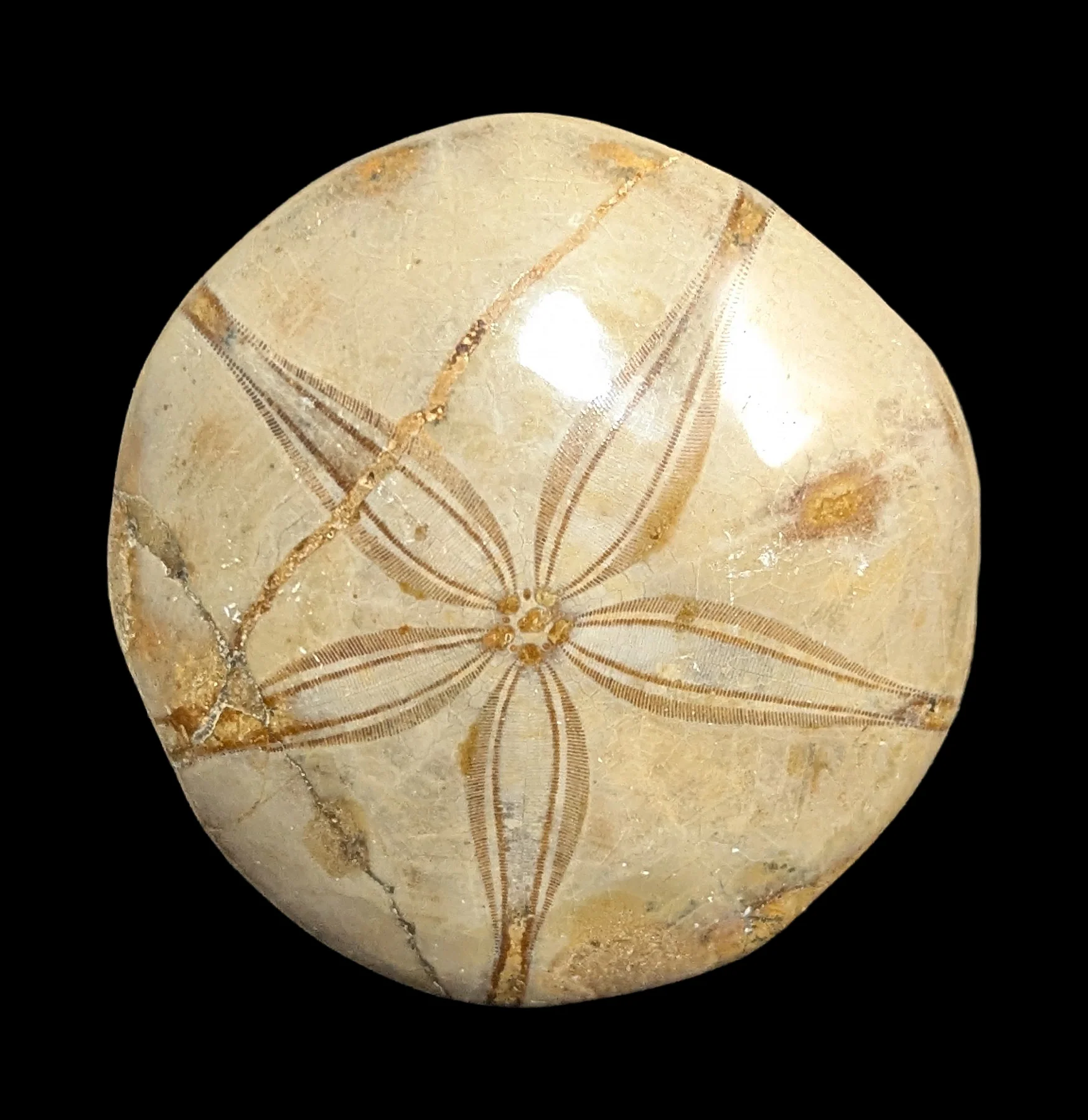
Fossilized Sand Dollar
Lots has changed about our earth over millions of years so it’s cool to see a reflection of our current natural world in the fossil record. These fossilized sand dollars are the ancient relatives of modern sand dollars that are currently crawling around the ocean floor. What you notice first about these fossils is that they are way thicker. Ancient sand dollars, especially groups like Scutella, actually had naturally thicker, more robust skeletons (called tests) than most modern species. Their shape was a bit more domed and solid, which helped them survive in different seafloor conditions. The second thing is the cool pattern on top of its body. It’s called a petaloid, and it wasn’t decorative. It helped with respiration when the animal was alive. To us, that makes the pattern all the more fascinating.
Lots has changed about our earth over millions of years so it’s cool to see a reflection of our current natural world in the fossil record. These fossilized sand dollars are the ancient relatives of modern sand dollars that are currently crawling around the ocean floor. What you notice first about these fossils is that they are way thicker. Ancient sand dollars, especially groups like Scutella, actually had naturally thicker, more robust skeletons (called tests) than most modern species. Their shape was a bit more domed and solid, which helped them survive in different seafloor conditions. The second thing is the cool pattern on top of its body. It’s called a petaloid, and it wasn’t decorative. It helped with respiration when the animal was alive. To us, that makes the pattern all the more fascinating.
Original: $16.00
-65%$16.00
$5.60Description
Lots has changed about our earth over millions of years so it’s cool to see a reflection of our current natural world in the fossil record. These fossilized sand dollars are the ancient relatives of modern sand dollars that are currently crawling around the ocean floor. What you notice first about these fossils is that they are way thicker. Ancient sand dollars, especially groups like Scutella, actually had naturally thicker, more robust skeletons (called tests) than most modern species. Their shape was a bit more domed and solid, which helped them survive in different seafloor conditions. The second thing is the cool pattern on top of its body. It’s called a petaloid, and it wasn’t decorative. It helped with respiration when the animal was alive. To us, that makes the pattern all the more fascinating.