Fancy Rat Skeleton Greeting Card Pack
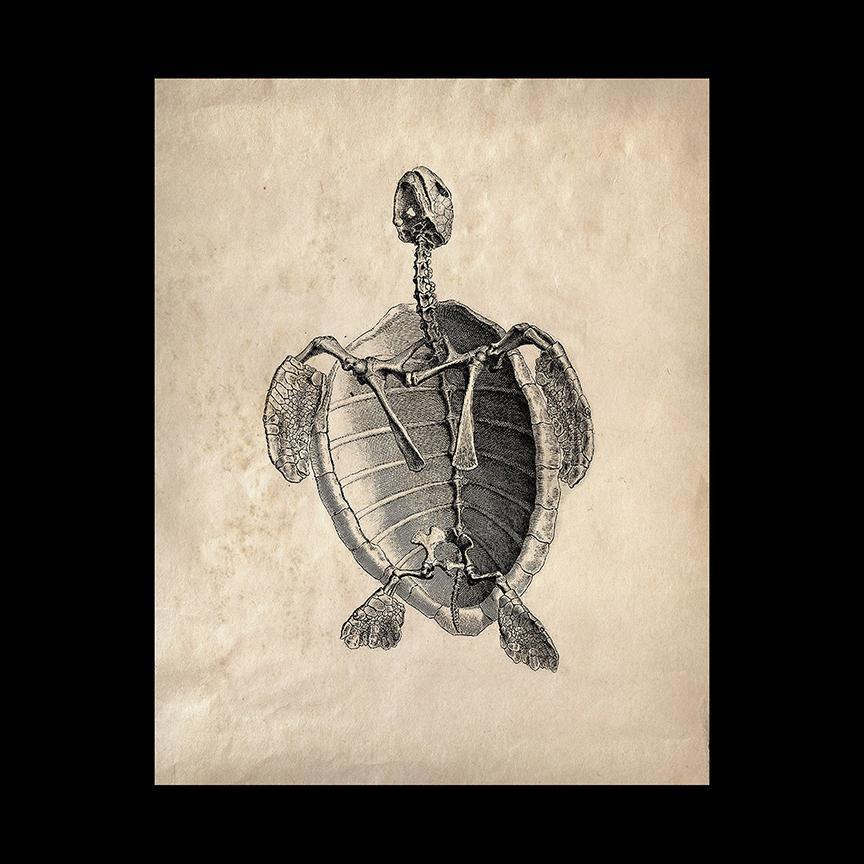
Illustration by William Chesleden from the book Osteographia
Add a unique touch to any wish with these personalized greeting cards. Measuring at 4.25” x 5.5”, these printable cards can handle long-distance transportation with minimal risk thanks to their robust, uncoated cardstock. Available in 8-packs, 16-packs, and 24-packs - each pack comes with size-matching white envelopes for each card.
.: One size: 4.25" x 5.5'' (10.8 x 13.9 cm)
.: Available with printing on the outside and inside
.: Matte finish
.: Matching white envelopes included
More about William Chesleden: William Cheselden was born on October 19, 1688 at Somerby, near Burrow-on-the-Hill, Leicestershire. He most likely apprenticed as a surgeon in Leicester in his early youth, but by 1703 he was a pupil of the noted anatomist William Cowper in London, and about the same time was apprenticed as a surgeon at St. Thomas's Hospital. By 1711, he was lecturing in anatomy privately and later at St. Thomas's Hospital, where he became a surgeon in 1718. As a surgeon, he was particularly noted for his operation for the stone, for which he invented a new method. His noted work, Anatomy of the humane body, was first published in 1713 and became an important textbook, going through 16 English and American editions up to 1806. He died on April 10, 1752 in Bath and is buried on the grounds of the Chelsea Hospital.
About Osteographia:In 1733, William Chesleden published Osteographia, a grand folio edition depicting human and animal bones, featuring beautiful copperplate images, including playful skeletons, vignettes, and initials. He depicts all the bones of the human body separately in their actual life size "and again reduced in order to shew them united to one another." Cheselden and his engravers, Gerard van der Gucht and Mr. Shinevoet, employed a camera obscura to execute many of the images, and the practice is depicted in the title page vignette. The work, which was most likely printed for Cheselden by William Bowyer, was unfortunately a financial failure, as his bid for subscribers was met "with little success," which was the case with so many large anatomical atlases of the period.
Illustration by William Chesleden from the book Osteographia
Add a unique touch to any wish with these personalized greeting cards. Measuring at 4.25” x 5.5”, these printable cards can handle long-distance transportation with minimal risk thanks to their robust, uncoated cardstock. Available in 8-packs, 16-packs, and 24-packs - each pack comes with size-matching white envelopes for each card.
.: One size: 4.25" x 5.5'' (10.8 x 13.9 cm)
.: Available with printing on the outside and inside
.: Matte finish
.: Matching white envelopes included
More about William Chesleden: William Cheselden was born on October 19, 1688 at Somerby, near Burrow-on-the-Hill, Leicestershire. He most likely apprenticed as a surgeon in Leicester in his early youth, but by 1703 he was a pupil of the noted anatomist William Cowper in London, and about the same time was apprenticed as a surgeon at St. Thomas's Hospital. By 1711, he was lecturing in anatomy privately and later at St. Thomas's Hospital, where he became a surgeon in 1718. As a surgeon, he was particularly noted for his operation for the stone, for which he invented a new method. His noted work, Anatomy of the humane body, was first published in 1713 and became an important textbook, going through 16 English and American editions up to 1806. He died on April 10, 1752 in Bath and is buried on the grounds of the Chelsea Hospital.
About Osteographia:In 1733, William Chesleden published Osteographia, a grand folio edition depicting human and animal bones, featuring beautiful copperplate images, including playful skeletons, vignettes, and initials. He depicts all the bones of the human body separately in their actual life size "and again reduced in order to shew them united to one another." Cheselden and his engravers, Gerard van der Gucht and Mr. Shinevoet, employed a camera obscura to execute many of the images, and the practice is depicted in the title page vignette. The work, which was most likely printed for Cheselden by William Bowyer, was unfortunately a financial failure, as his bid for subscribers was met "with little success," which was the case with so many large anatomical atlases of the period.
Original: $20.00
-65%$20.00
$7.00Description
Illustration by William Chesleden from the book Osteographia
Add a unique touch to any wish with these personalized greeting cards. Measuring at 4.25” x 5.5”, these printable cards can handle long-distance transportation with minimal risk thanks to their robust, uncoated cardstock. Available in 8-packs, 16-packs, and 24-packs - each pack comes with size-matching white envelopes for each card.
.: One size: 4.25" x 5.5'' (10.8 x 13.9 cm)
.: Available with printing on the outside and inside
.: Matte finish
.: Matching white envelopes included
More about William Chesleden: William Cheselden was born on October 19, 1688 at Somerby, near Burrow-on-the-Hill, Leicestershire. He most likely apprenticed as a surgeon in Leicester in his early youth, but by 1703 he was a pupil of the noted anatomist William Cowper in London, and about the same time was apprenticed as a surgeon at St. Thomas's Hospital. By 1711, he was lecturing in anatomy privately and later at St. Thomas's Hospital, where he became a surgeon in 1718. As a surgeon, he was particularly noted for his operation for the stone, for which he invented a new method. His noted work, Anatomy of the humane body, was first published in 1713 and became an important textbook, going through 16 English and American editions up to 1806. He died on April 10, 1752 in Bath and is buried on the grounds of the Chelsea Hospital.
About Osteographia:In 1733, William Chesleden published Osteographia, a grand folio edition depicting human and animal bones, featuring beautiful copperplate images, including playful skeletons, vignettes, and initials. He depicts all the bones of the human body separately in their actual life size "and again reduced in order to shew them united to one another." Cheselden and his engravers, Gerard van der Gucht and Mr. Shinevoet, employed a camera obscura to execute many of the images, and the practice is depicted in the title page vignette. The work, which was most likely printed for Cheselden by William Bowyer, was unfortunately a financial failure, as his bid for subscribers was met "with little success," which was the case with so many large anatomical atlases of the period.