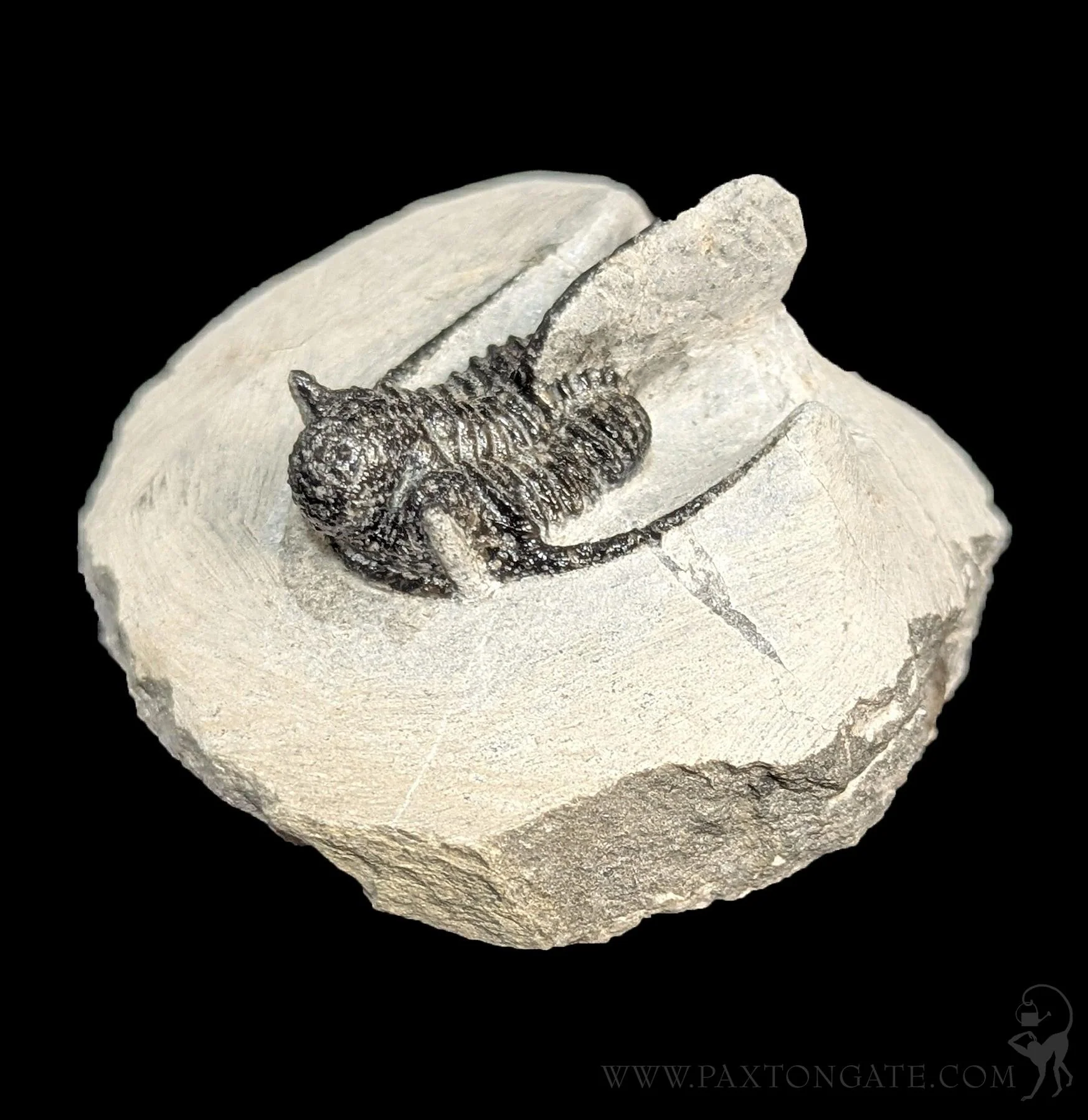
Otarion Trilobite Fossil Specimen 1
2x2"
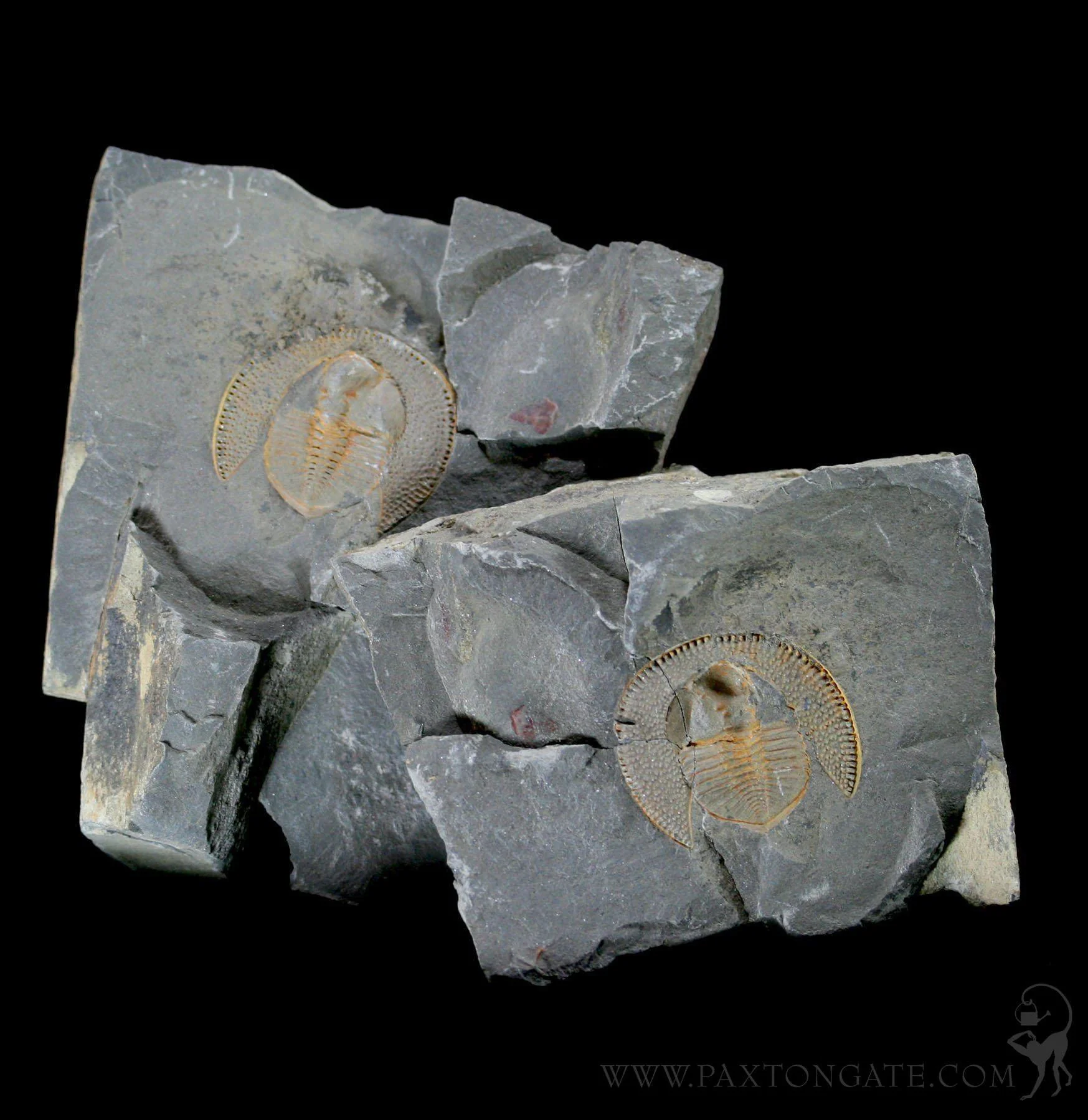
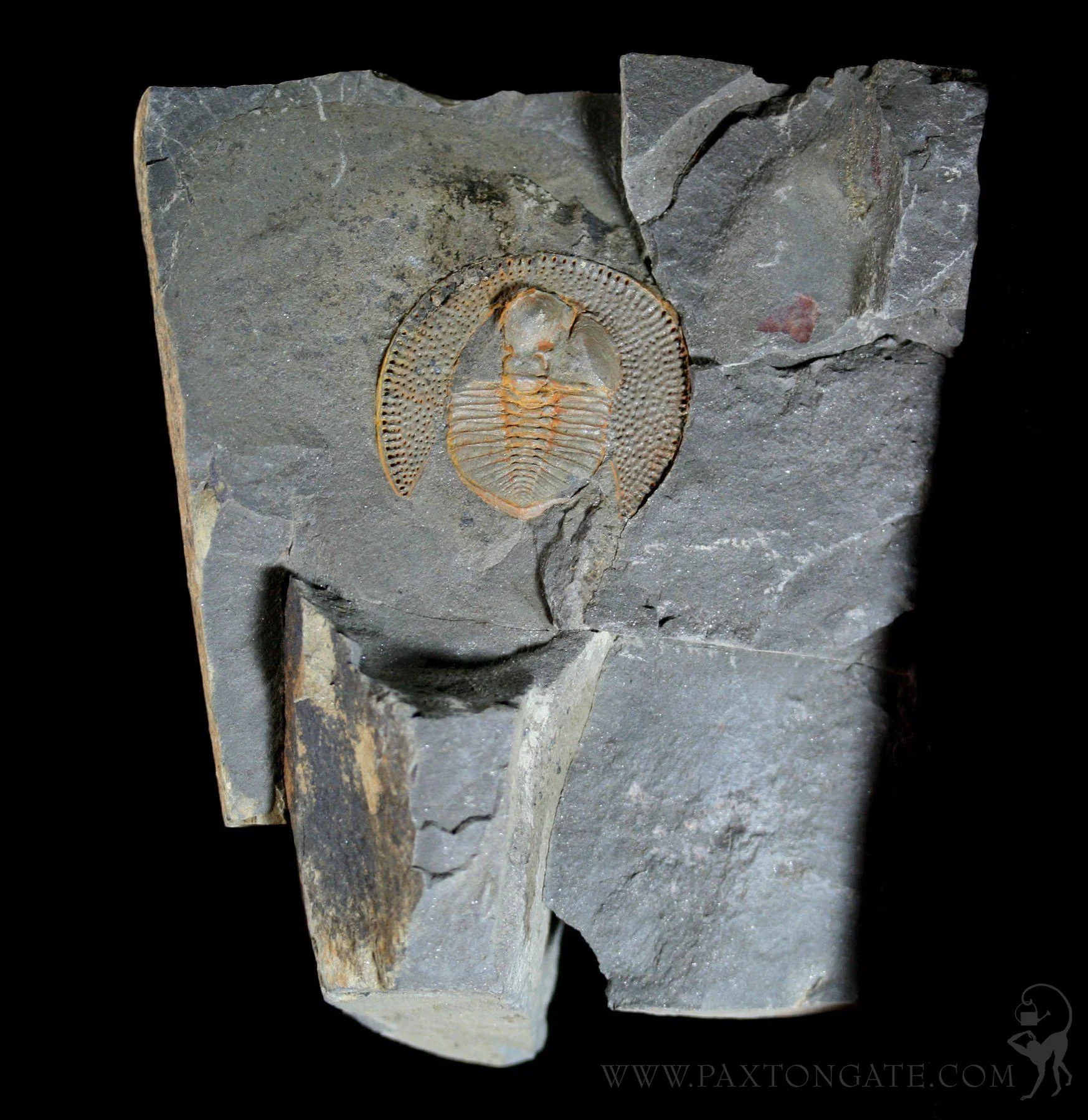
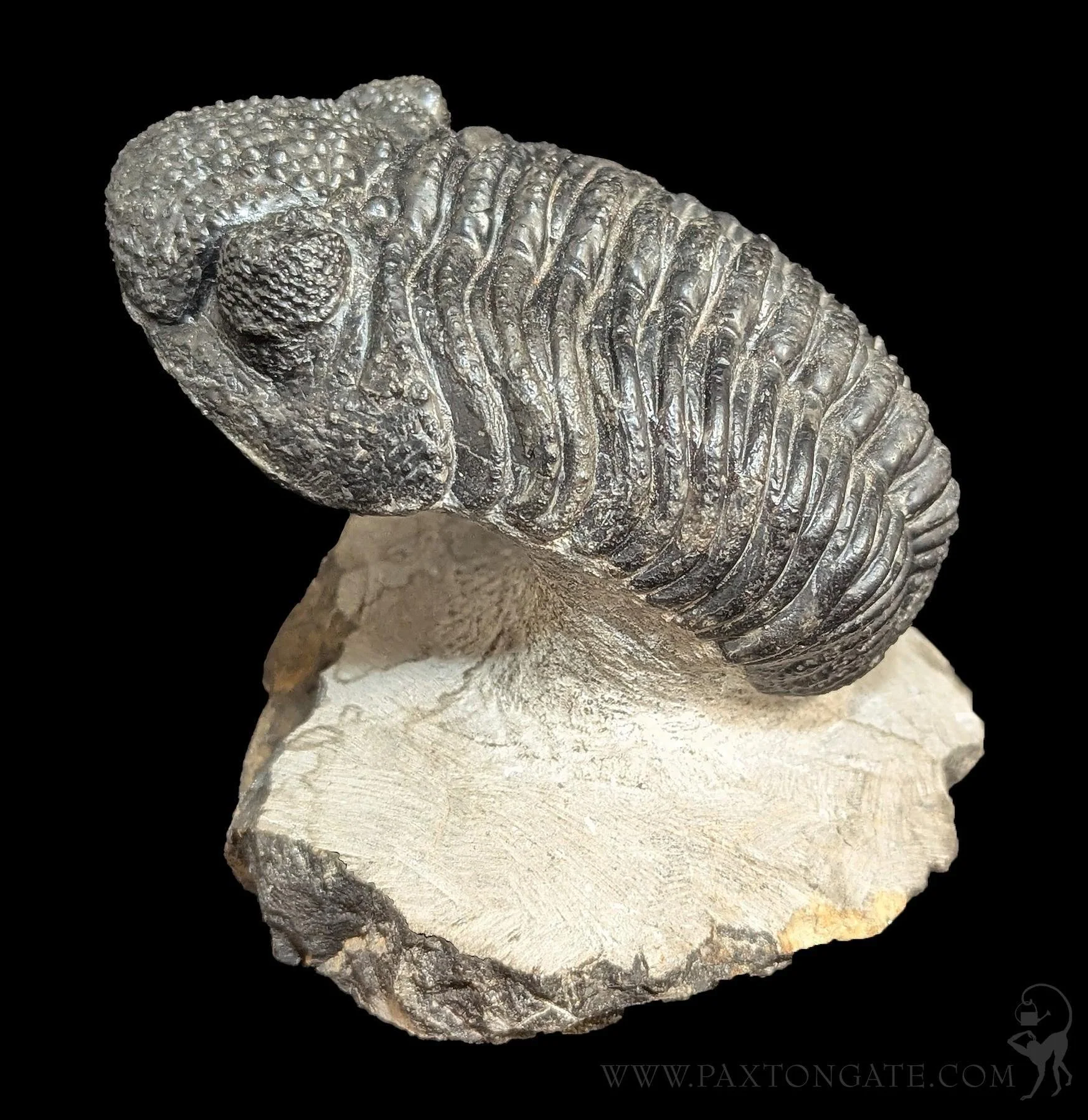
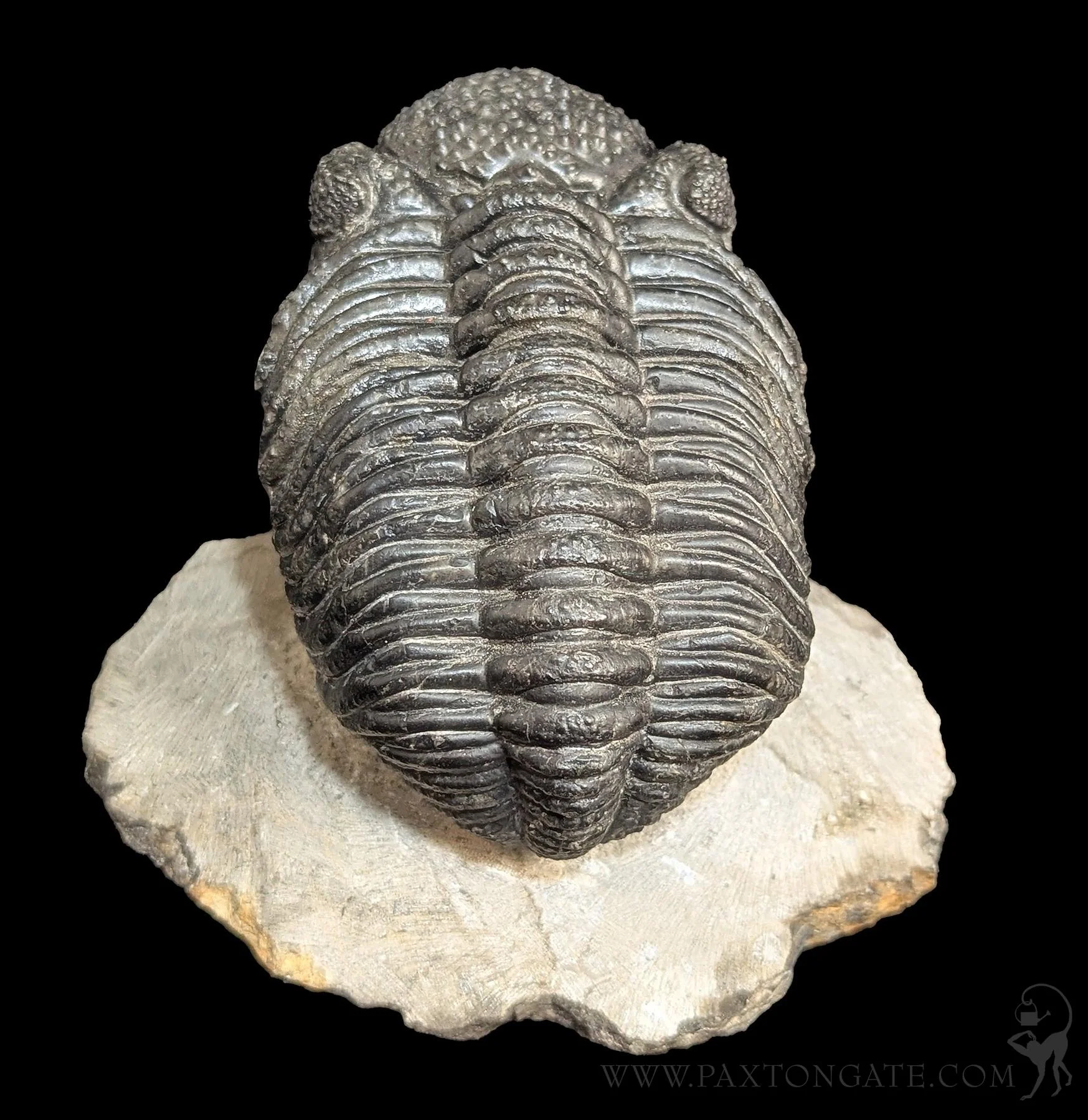
These trilobites always remind us of a shark swimming through the waves because of their distinct spine that jets out from their back. The way these fossils have been prepared really solidifies that image in our heads. It’s kind of relaxing, to be honest. These aren’t just zen stone wave riders, they are part of the trilobite family. The Otarion lived during the Paleozoic Era, hundreds of millions of years ago, crawling along the sea floor. While they may not have been actual wave riders, this fossil captures what feels like an extinct creature frozen in time as it glides through prehistoric water. Everything about that is cool.
About trilobites in general:
These ancient marine arthropods are especially famous for their large, highly detailed compound eyes, some of the most impressive ever found in trilobites. Fun fact: trilobites are the only known animals to have eyes made with calcite lenses. Yes, like the crystal calcite. How cool is that?
Their compound eyes were built from tiny lenses made of calcite, a transparent form of calcium carbonate. Each lens sat on top of a photoreceptor cell beneath the exoskeleton. Because trilobite shells were already made largely of calcite, their eye lenses were essentially part of the mineralized exoskeleton.
These creatures thrived on Earth roughly 419 to 359 million years ago, long before the dinosaurs. There’s a gap of about 20 million years between the extinction of trilobites and the appearance of the first dinosaurs. Trilobites were everywhere until the Permian-Triassic extinction event, ominously known as “The Great Dying.” No one knows exactly what happened, but scientists believe a combination of massive volcanic eruptions, extreme climate change, ocean acidification, and low oxygen levels devastated marine ecosystems during this mass extinction.
Considering the scale of that event, you probably won’t be shocked to hear that trilobites have no direct living descendants today. Their closest living relatives are thought to be arthropods, the group that includes horseshoe crabs, spiders, and crustaceans. Sadly, we probably won’t ever see a resurgence of calcite-eyed sea bugs, but nature has a way of surprising even the most astute among us. Guess we’ll have to wait a few million years to find out.
2x2"
These trilobites always remind us of a shark swimming through the waves because of their distinct spine that jets out from their back. The way these fossils have been prepared really solidifies that image in our heads. It’s kind of relaxing, to be honest. These aren’t just zen stone wave riders, they are part of the trilobite family. The Otarion lived during the Paleozoic Era, hundreds of millions of years ago, crawling along the sea floor. While they may not have been actual wave riders, this fossil captures what feels like an extinct creature frozen in time as it glides through prehistoric water. Everything about that is cool.
About trilobites in general:
These ancient marine arthropods are especially famous for their large, highly detailed compound eyes, some of the most impressive ever found in trilobites. Fun fact: trilobites are the only known animals to have eyes made with calcite lenses. Yes, like the crystal calcite. How cool is that?
Their compound eyes were built from tiny lenses made of calcite, a transparent form of calcium carbonate. Each lens sat on top of a photoreceptor cell beneath the exoskeleton. Because trilobite shells were already made largely of calcite, their eye lenses were essentially part of the mineralized exoskeleton.
These creatures thrived on Earth roughly 419 to 359 million years ago, long before the dinosaurs. There’s a gap of about 20 million years between the extinction of trilobites and the appearance of the first dinosaurs. Trilobites were everywhere until the Permian-Triassic extinction event, ominously known as “The Great Dying.” No one knows exactly what happened, but scientists believe a combination of massive volcanic eruptions, extreme climate change, ocean acidification, and low oxygen levels devastated marine ecosystems during this mass extinction.
Considering the scale of that event, you probably won’t be shocked to hear that trilobites have no direct living descendants today. Their closest living relatives are thought to be arthropods, the group that includes horseshoe crabs, spiders, and crustaceans. Sadly, we probably won’t ever see a resurgence of calcite-eyed sea bugs, but nature has a way of surprising even the most astute among us. Guess we’ll have to wait a few million years to find out.
Description
2x2"
These trilobites always remind us of a shark swimming through the waves because of their distinct spine that jets out from their back. The way these fossils have been prepared really solidifies that image in our heads. It’s kind of relaxing, to be honest. These aren’t just zen stone wave riders, they are part of the trilobite family. The Otarion lived during the Paleozoic Era, hundreds of millions of years ago, crawling along the sea floor. While they may not have been actual wave riders, this fossil captures what feels like an extinct creature frozen in time as it glides through prehistoric water. Everything about that is cool.
About trilobites in general:
These ancient marine arthropods are especially famous for their large, highly detailed compound eyes, some of the most impressive ever found in trilobites. Fun fact: trilobites are the only known animals to have eyes made with calcite lenses. Yes, like the crystal calcite. How cool is that?
Their compound eyes were built from tiny lenses made of calcite, a transparent form of calcium carbonate. Each lens sat on top of a photoreceptor cell beneath the exoskeleton. Because trilobite shells were already made largely of calcite, their eye lenses were essentially part of the mineralized exoskeleton.
These creatures thrived on Earth roughly 419 to 359 million years ago, long before the dinosaurs. There’s a gap of about 20 million years between the extinction of trilobites and the appearance of the first dinosaurs. Trilobites were everywhere until the Permian-Triassic extinction event, ominously known as “The Great Dying.” No one knows exactly what happened, but scientists believe a combination of massive volcanic eruptions, extreme climate change, ocean acidification, and low oxygen levels devastated marine ecosystems during this mass extinction.
Considering the scale of that event, you probably won’t be shocked to hear that trilobites have no direct living descendants today. Their closest living relatives are thought to be arthropods, the group that includes horseshoe crabs, spiders, and crustaceans. Sadly, we probably won’t ever see a resurgence of calcite-eyed sea bugs, but nature has a way of surprising even the most astute among us. Guess we’ll have to wait a few million years to find out.