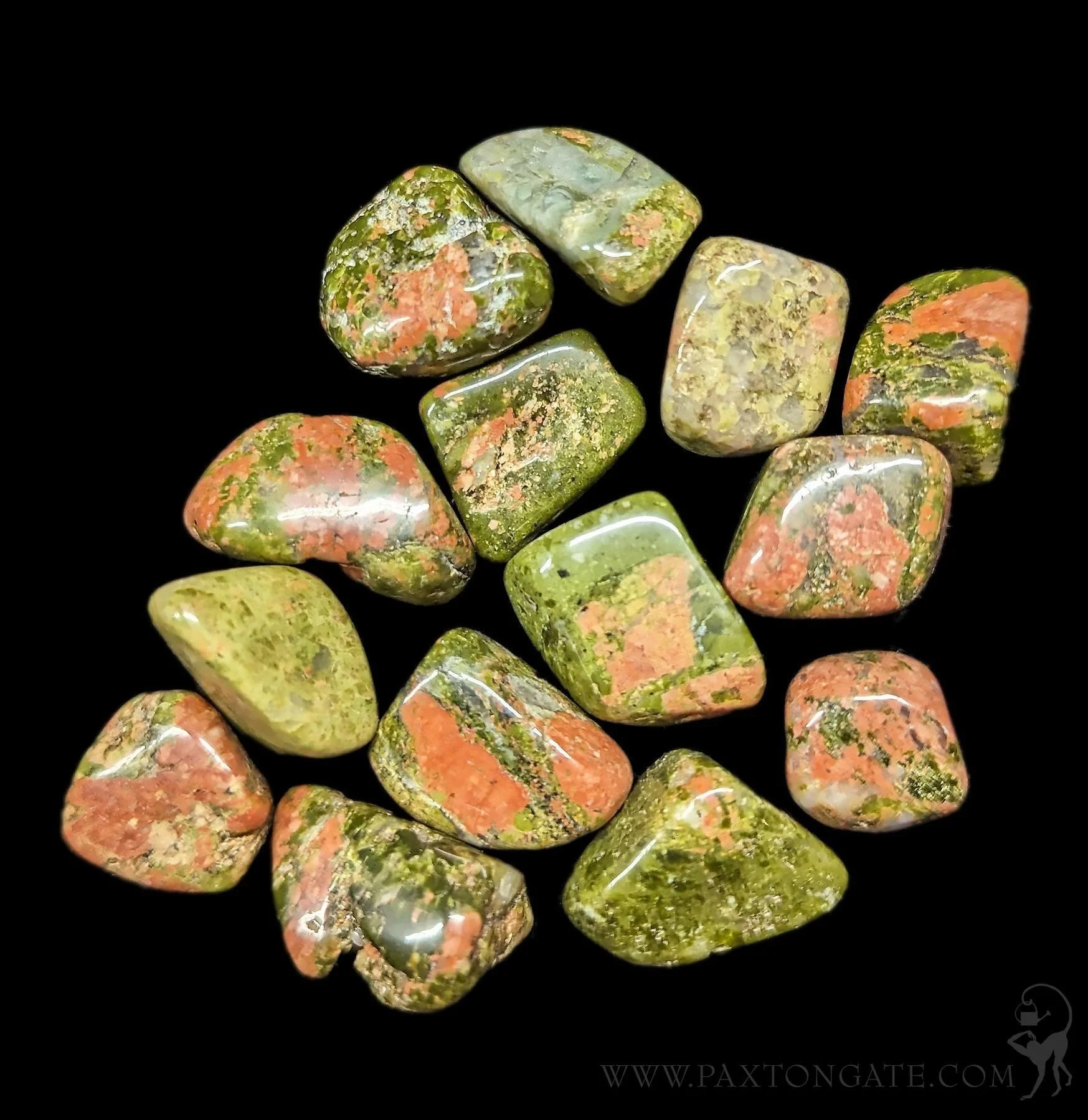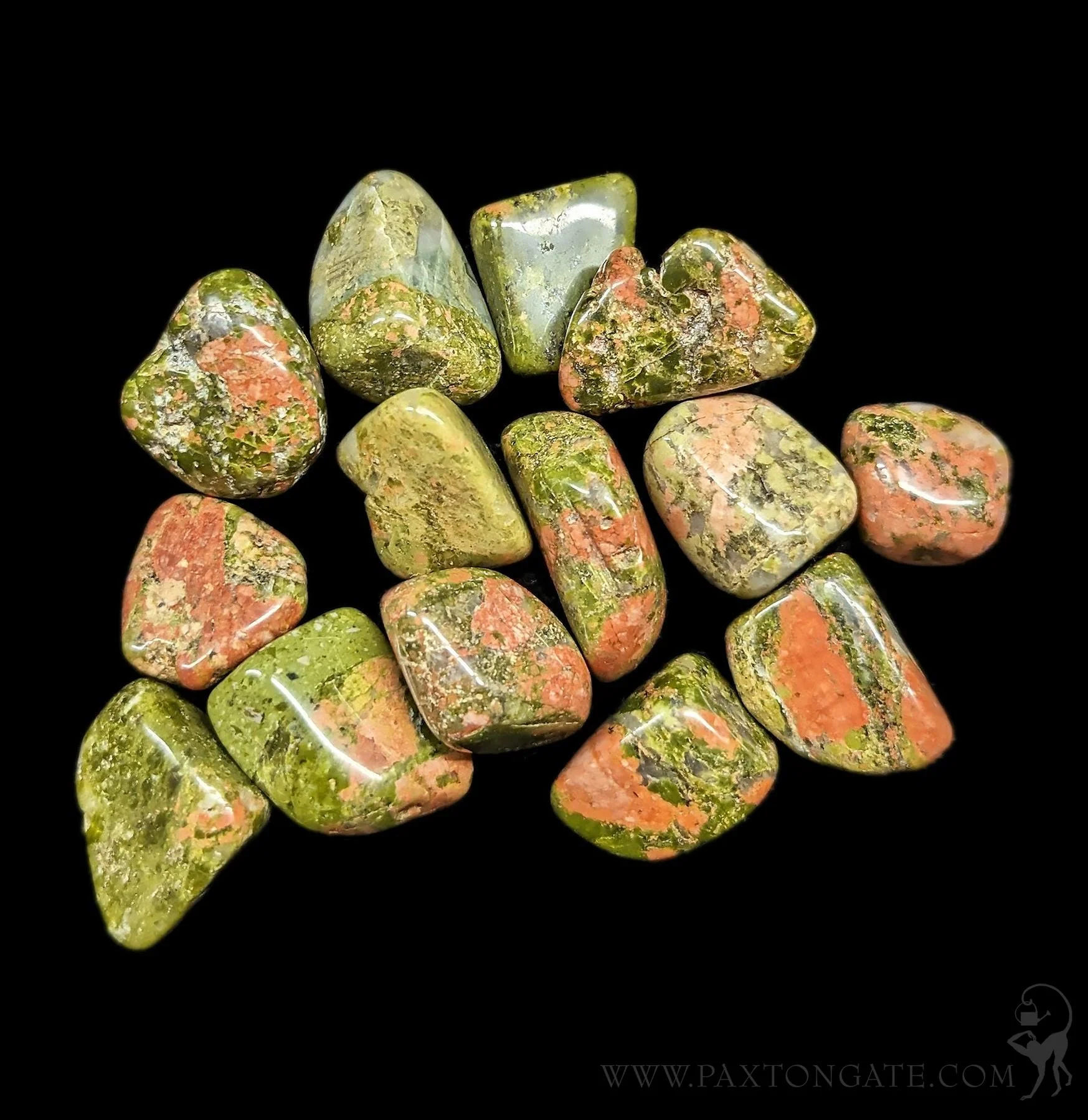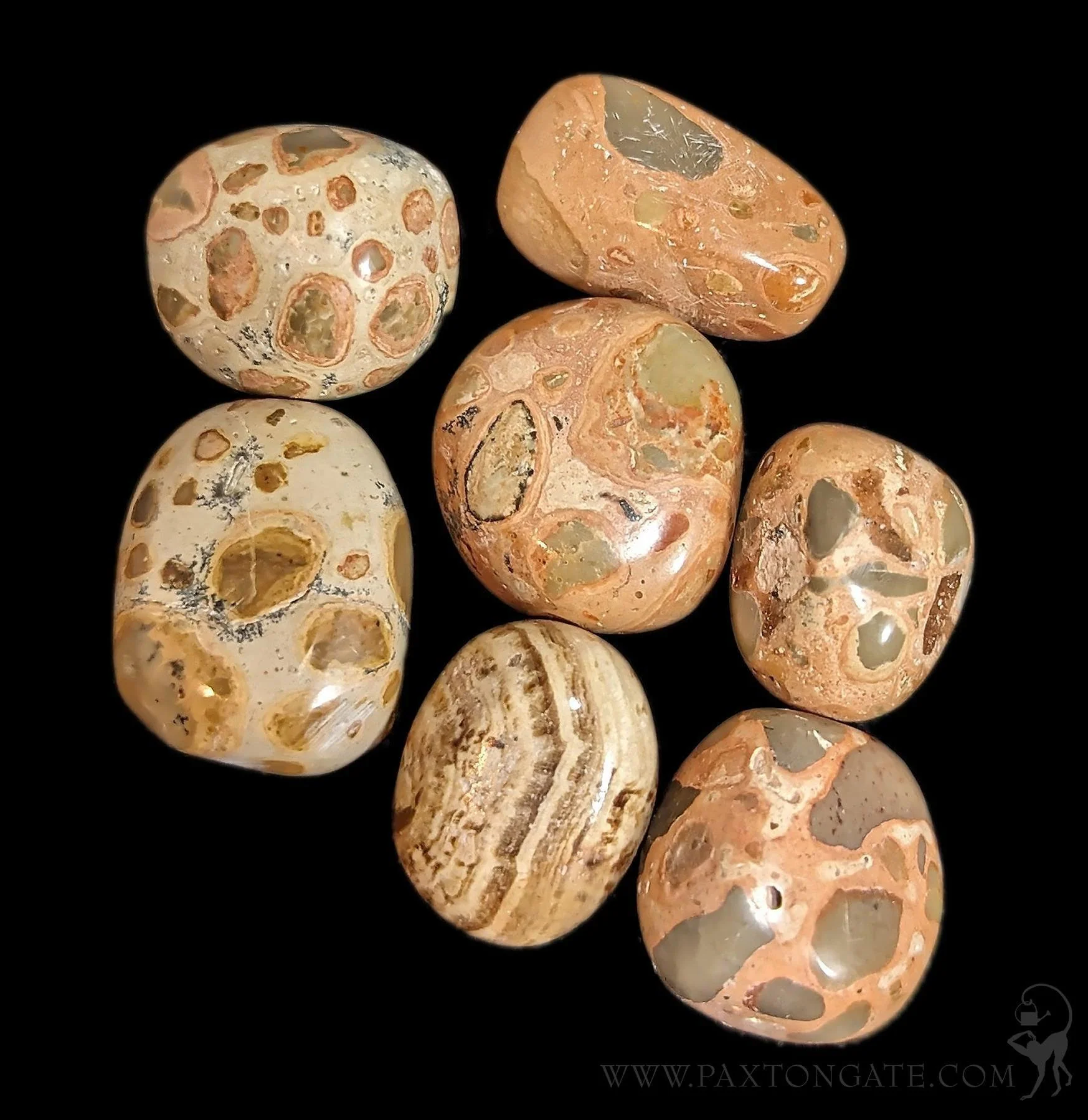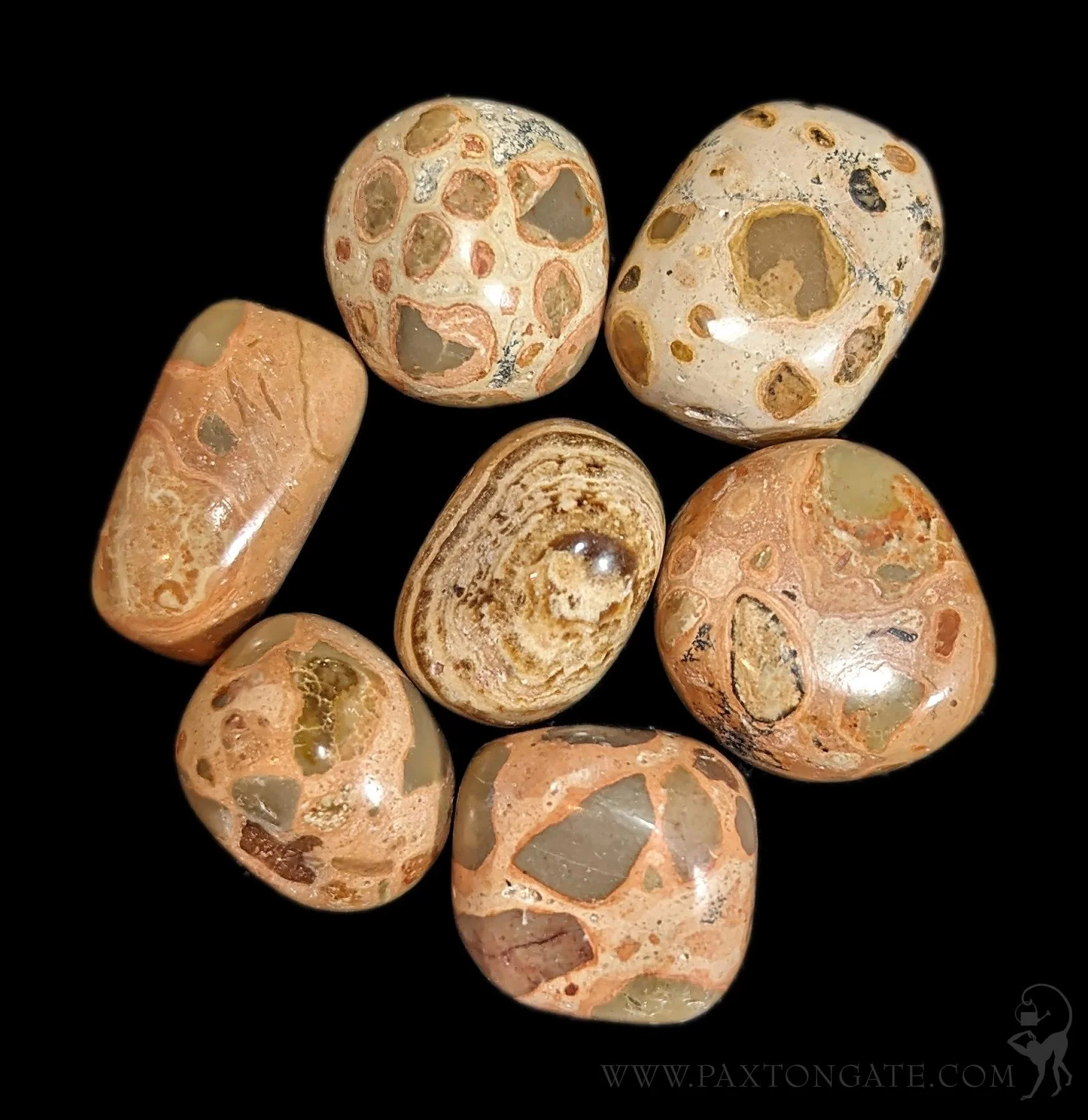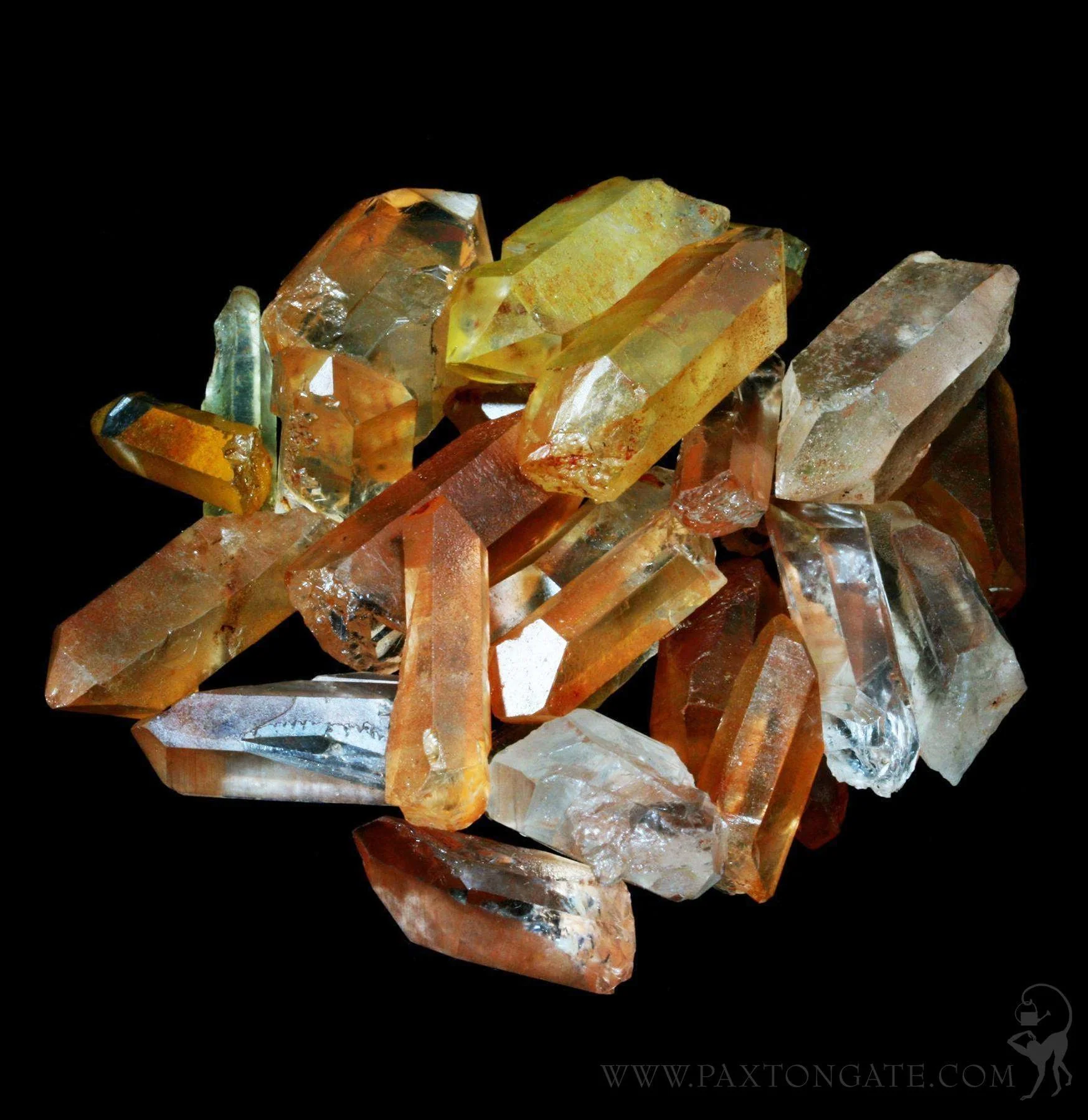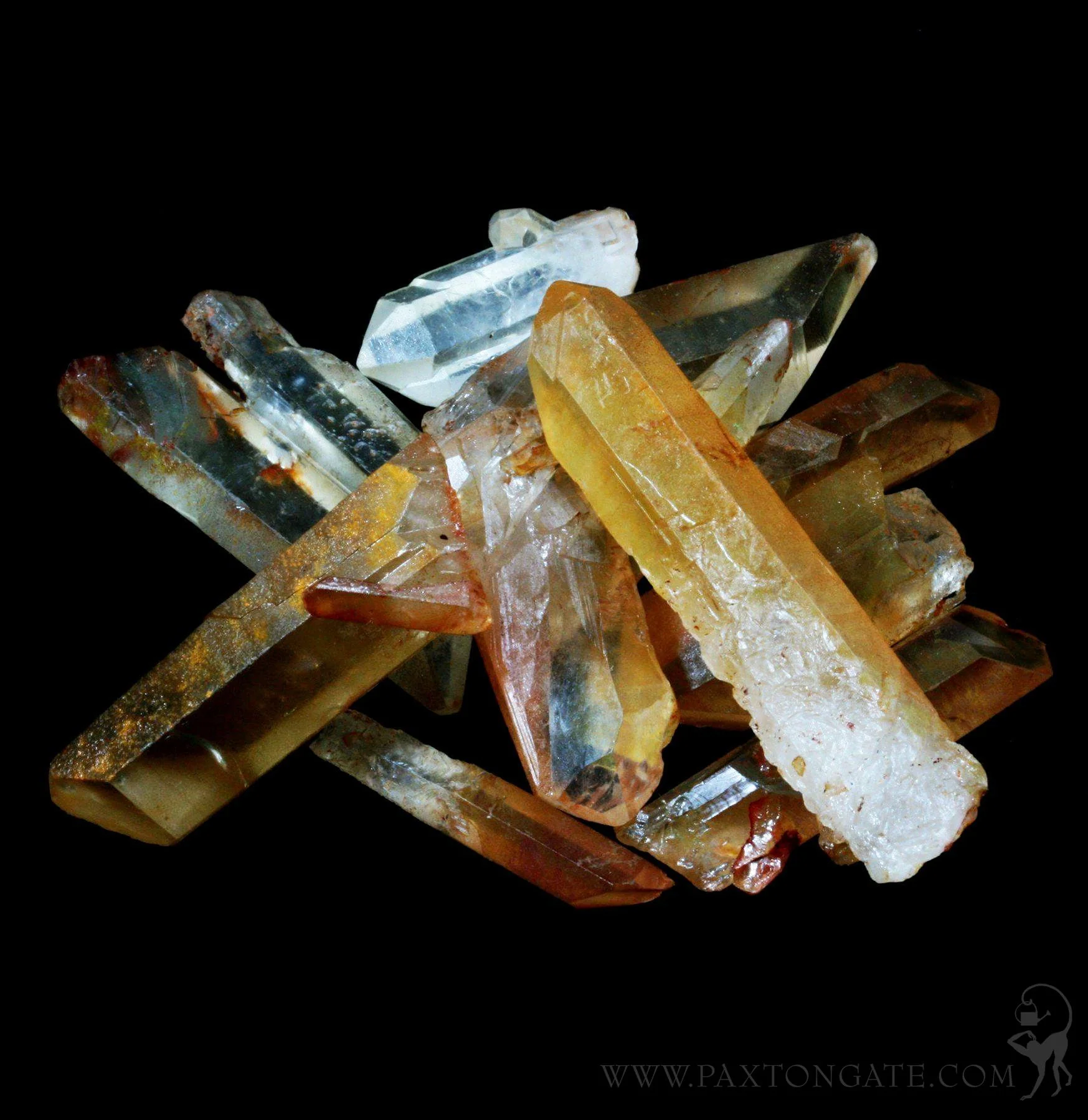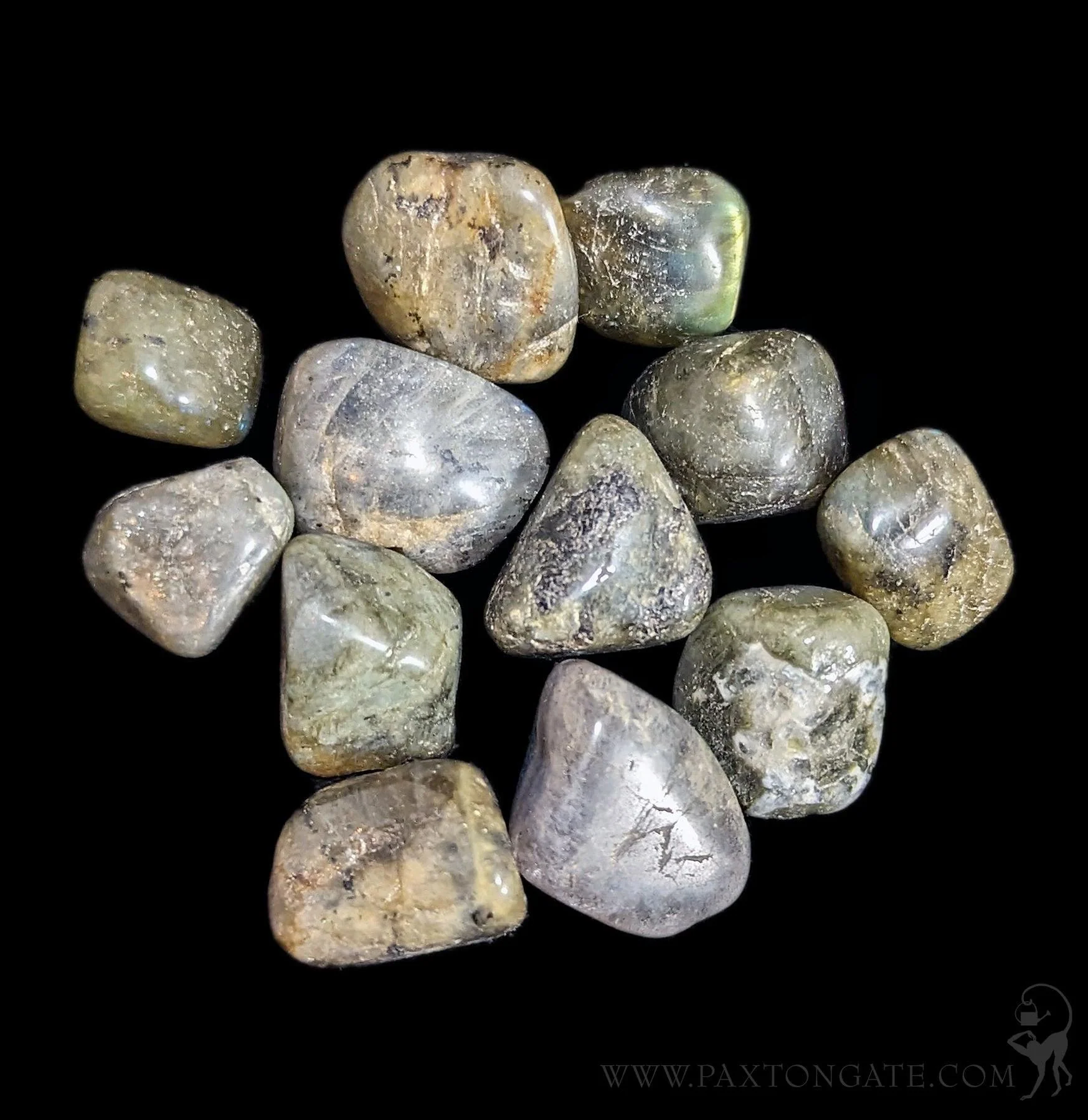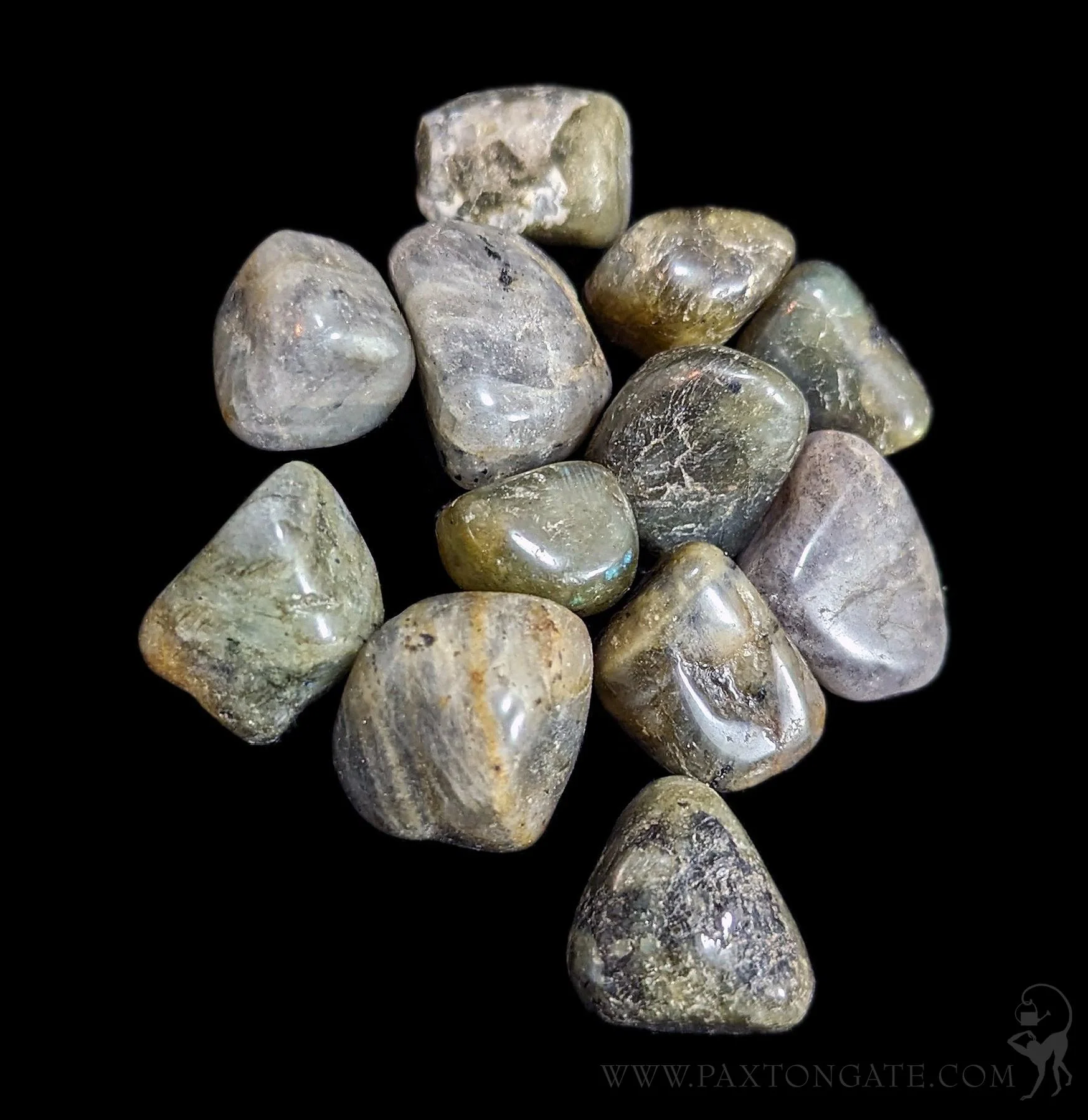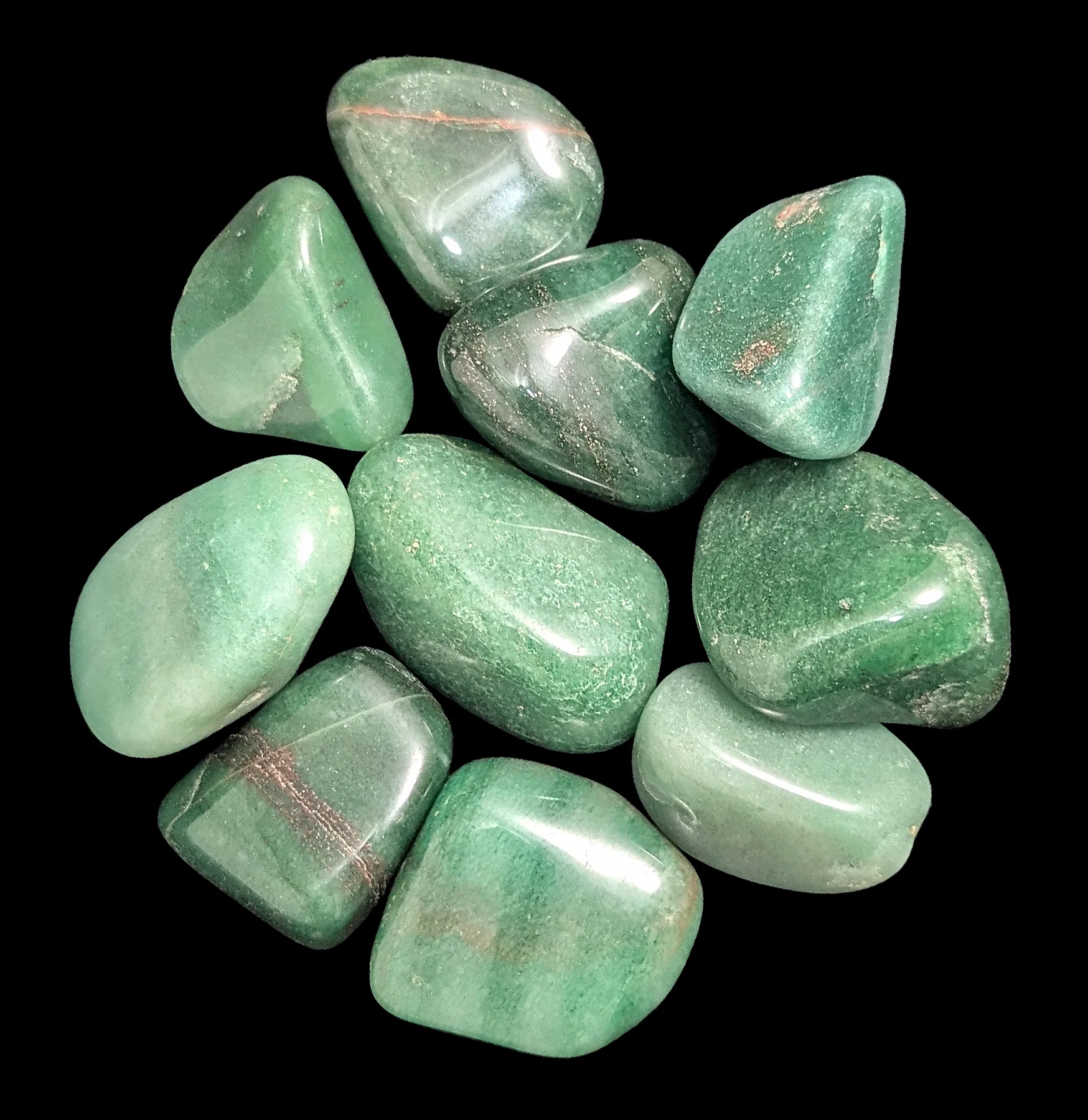
Tumbled Aventurine
You would think that aventurine was named because it was found on some great adventure into a faraway land, but actually, it comes from the Italian phrase “a ventura,” meaning “by chance.” It refers to the accidental discovery of a sparkling type of glass in 18th-century Venice called aventurine glass, which resembles the natural stone. So no great trek into the unknown, just a happy accident by a glassmaker in ye olden days. Sure, this wasn’t unearthed by a real-life Indiana Jones, but it’s still really cool.
Aventurine is a variety of quartz known for its tiny sparkles and translucent color (just like the glass above). The shimmering effect comes from tiny mineral inclusions inside the stone, most commonly mica, which reflect light and create a glitter-like appearance. Whatever it is, it’s really pretty.
Not only do we think it’s pretty, our ancestors did too. Over 2,000 years ago, it was used in India for beads, cabochons, and small carvings. Historical Chinese jewelry and carvings sometimes incorporated green or orange aventurine for ornamental pieces and talismans. As mentioned above, in the 18th century people were so smitten with the accidental glass creation that jewelry makers across Europe started using both the glass and the natural stone in rings, pendants, and brooches. We think the stone is prettier, but we might be biased.
According to metaphysics: Aventurine is often called the “stone of opportunity” because it is believed to attract luck, prosperity, and positive energy. A great stone to have with you when you head off to Vegas.
You would think that aventurine was named because it was found on some great adventure into a faraway land, but actually, it comes from the Italian phrase “a ventura,” meaning “by chance.” It refers to the accidental discovery of a sparkling type of glass in 18th-century Venice called aventurine glass, which resembles the natural stone. So no great trek into the unknown, just a happy accident by a glassmaker in ye olden days. Sure, this wasn’t unearthed by a real-life Indiana Jones, but it’s still really cool.
Aventurine is a variety of quartz known for its tiny sparkles and translucent color (just like the glass above). The shimmering effect comes from tiny mineral inclusions inside the stone, most commonly mica, which reflect light and create a glitter-like appearance. Whatever it is, it’s really pretty.
Not only do we think it’s pretty, our ancestors did too. Over 2,000 years ago, it was used in India for beads, cabochons, and small carvings. Historical Chinese jewelry and carvings sometimes incorporated green or orange aventurine for ornamental pieces and talismans. As mentioned above, in the 18th century people were so smitten with the accidental glass creation that jewelry makers across Europe started using both the glass and the natural stone in rings, pendants, and brooches. We think the stone is prettier, but we might be biased.
According to metaphysics: Aventurine is often called the “stone of opportunity” because it is believed to attract luck, prosperity, and positive energy. A great stone to have with you when you head off to Vegas.
Description
You would think that aventurine was named because it was found on some great adventure into a faraway land, but actually, it comes from the Italian phrase “a ventura,” meaning “by chance.” It refers to the accidental discovery of a sparkling type of glass in 18th-century Venice called aventurine glass, which resembles the natural stone. So no great trek into the unknown, just a happy accident by a glassmaker in ye olden days. Sure, this wasn’t unearthed by a real-life Indiana Jones, but it’s still really cool.
Aventurine is a variety of quartz known for its tiny sparkles and translucent color (just like the glass above). The shimmering effect comes from tiny mineral inclusions inside the stone, most commonly mica, which reflect light and create a glitter-like appearance. Whatever it is, it’s really pretty.
Not only do we think it’s pretty, our ancestors did too. Over 2,000 years ago, it was used in India for beads, cabochons, and small carvings. Historical Chinese jewelry and carvings sometimes incorporated green or orange aventurine for ornamental pieces and talismans. As mentioned above, in the 18th century people were so smitten with the accidental glass creation that jewelry makers across Europe started using both the glass and the natural stone in rings, pendants, and brooches. We think the stone is prettier, but we might be biased.
According to metaphysics: Aventurine is often called the “stone of opportunity” because it is believed to attract luck, prosperity, and positive energy. A great stone to have with you when you head off to Vegas.