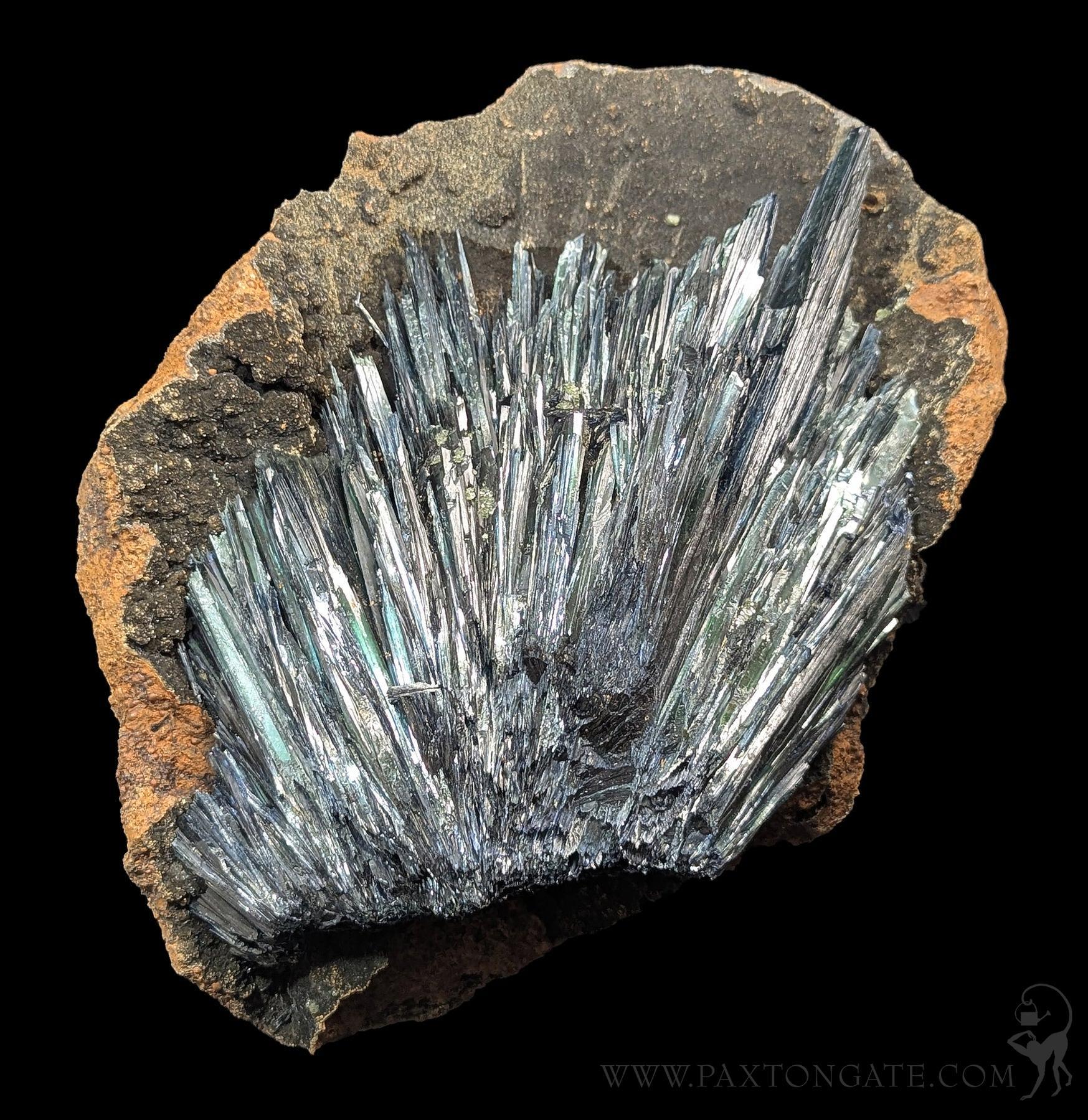
Vivianite Crystal Specimen A
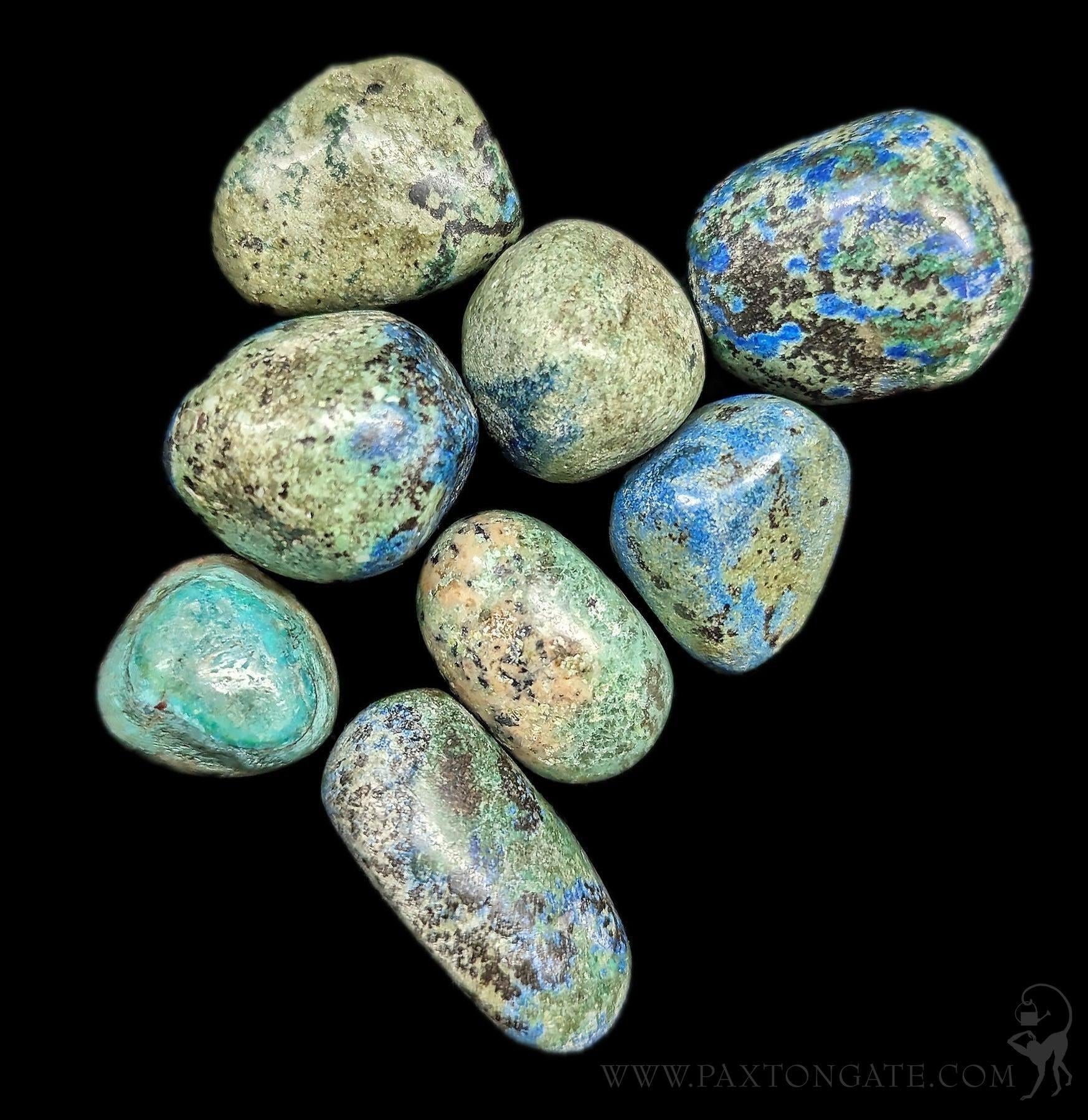
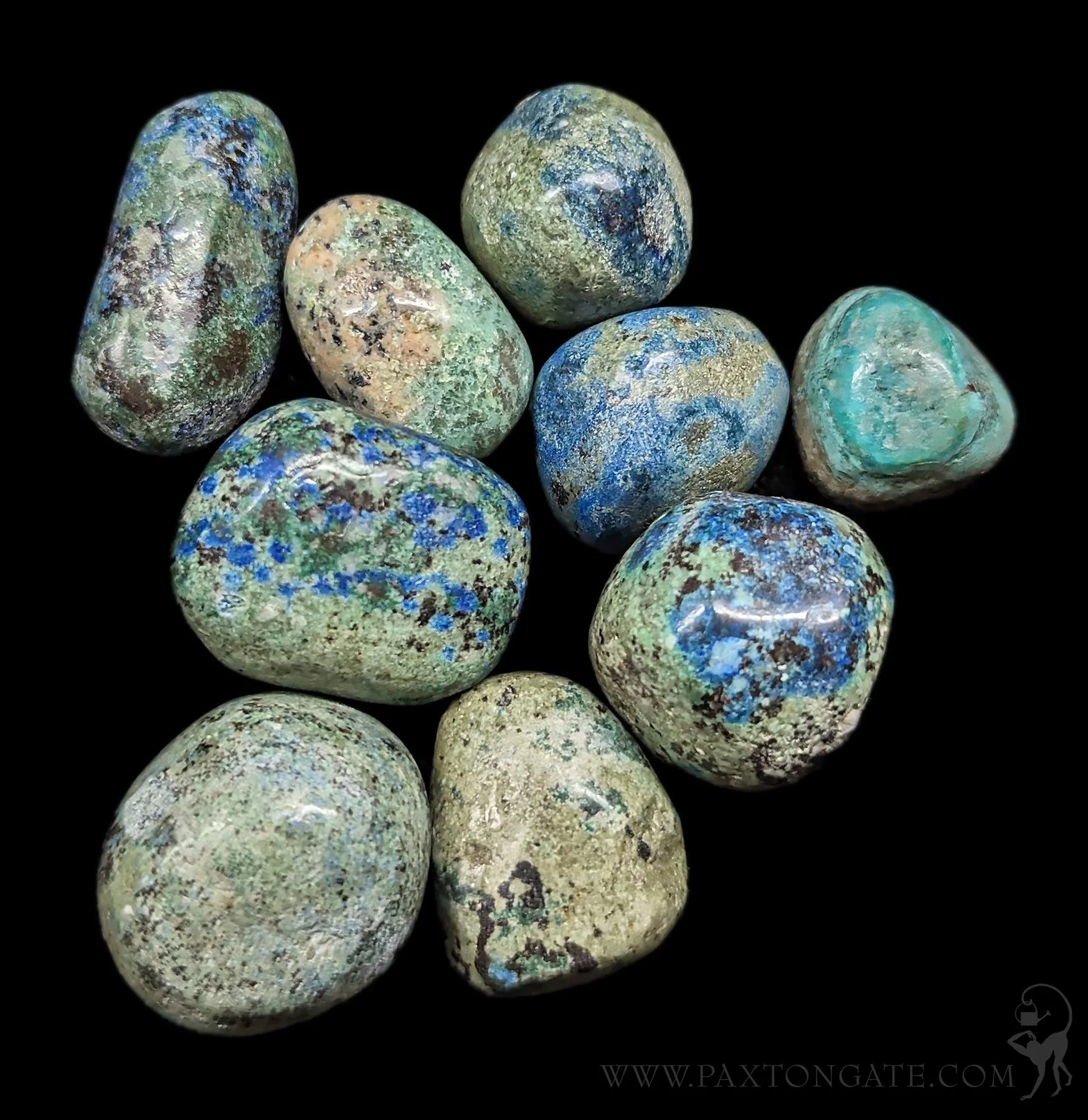
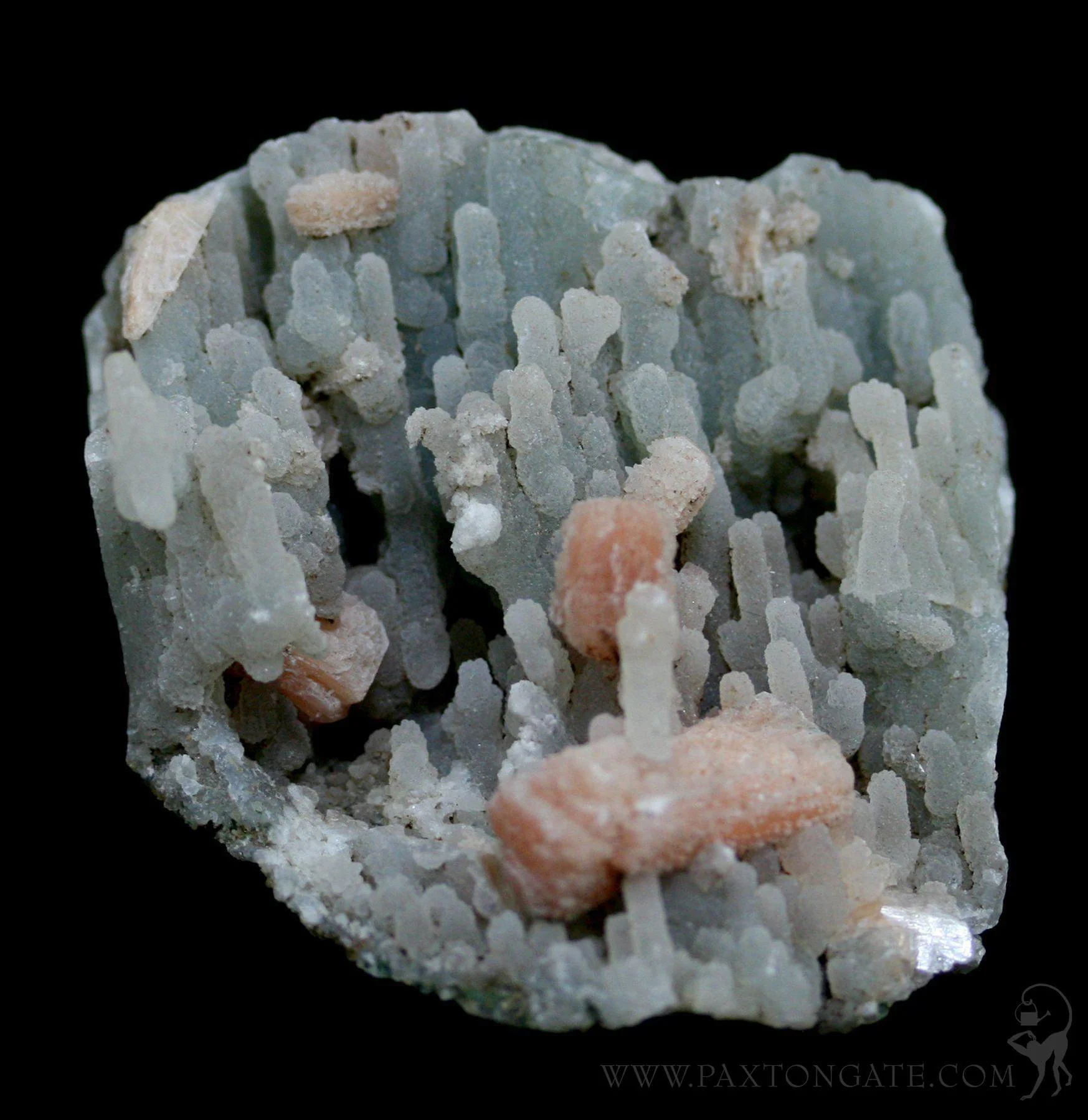
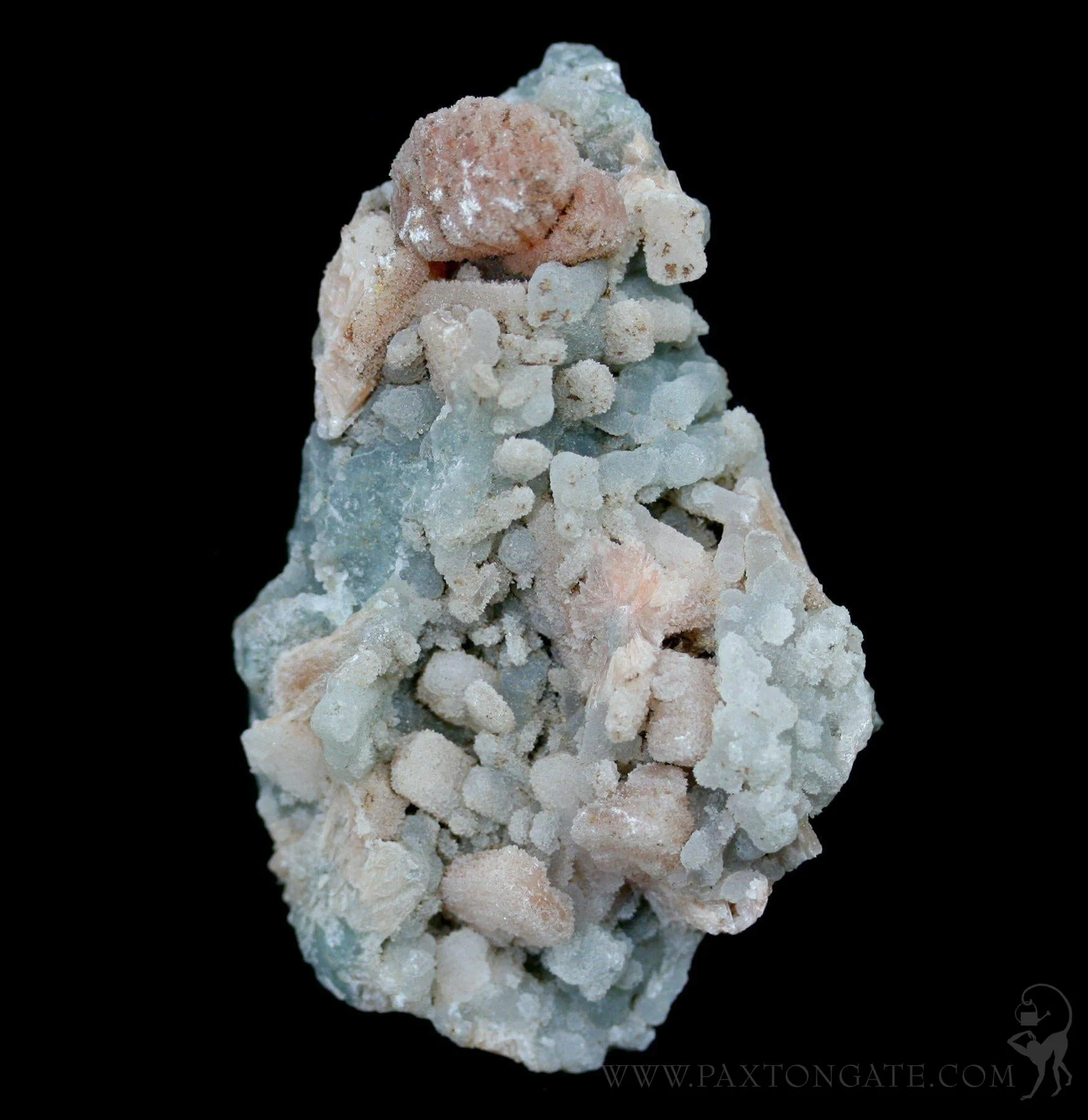
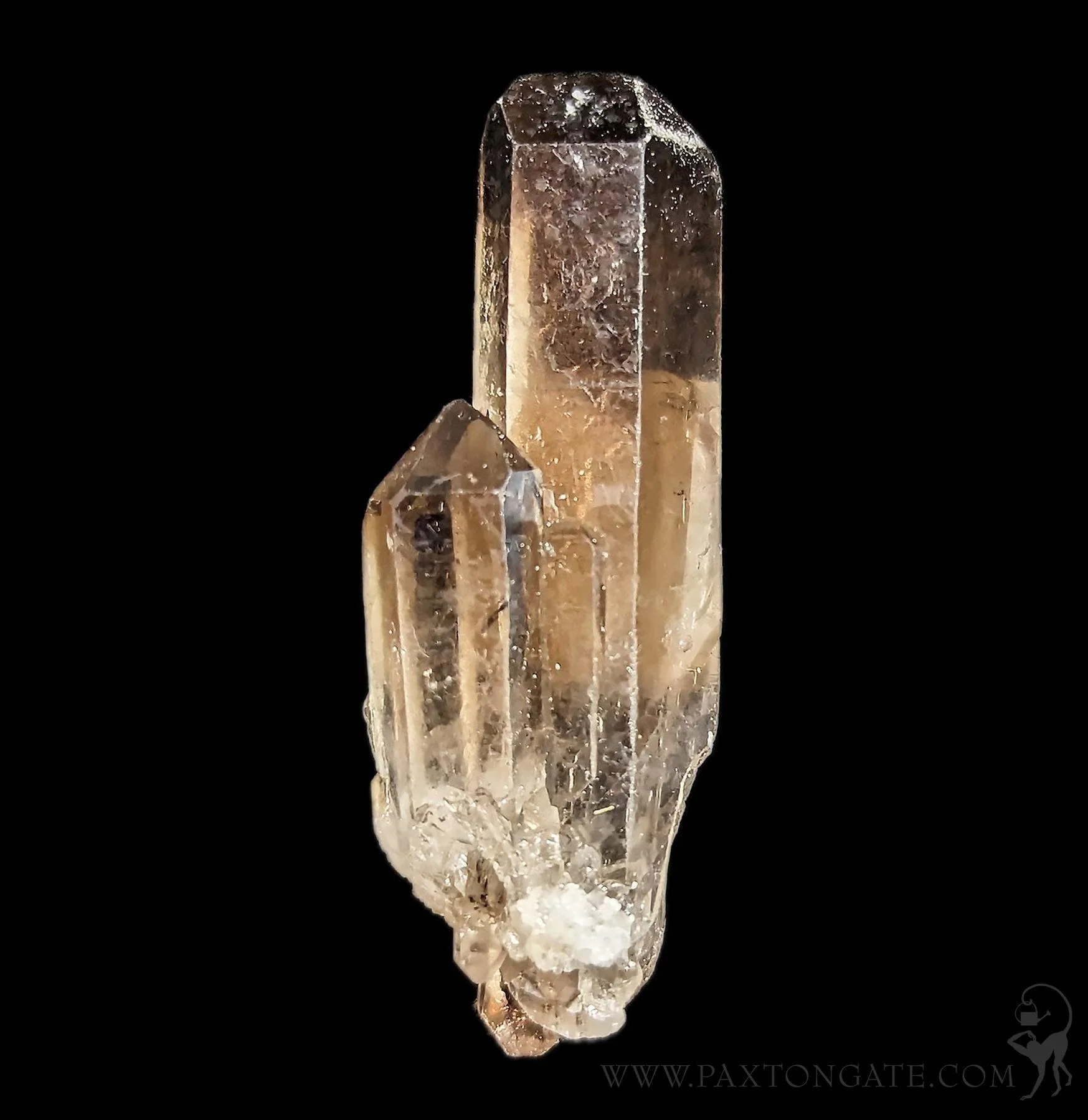
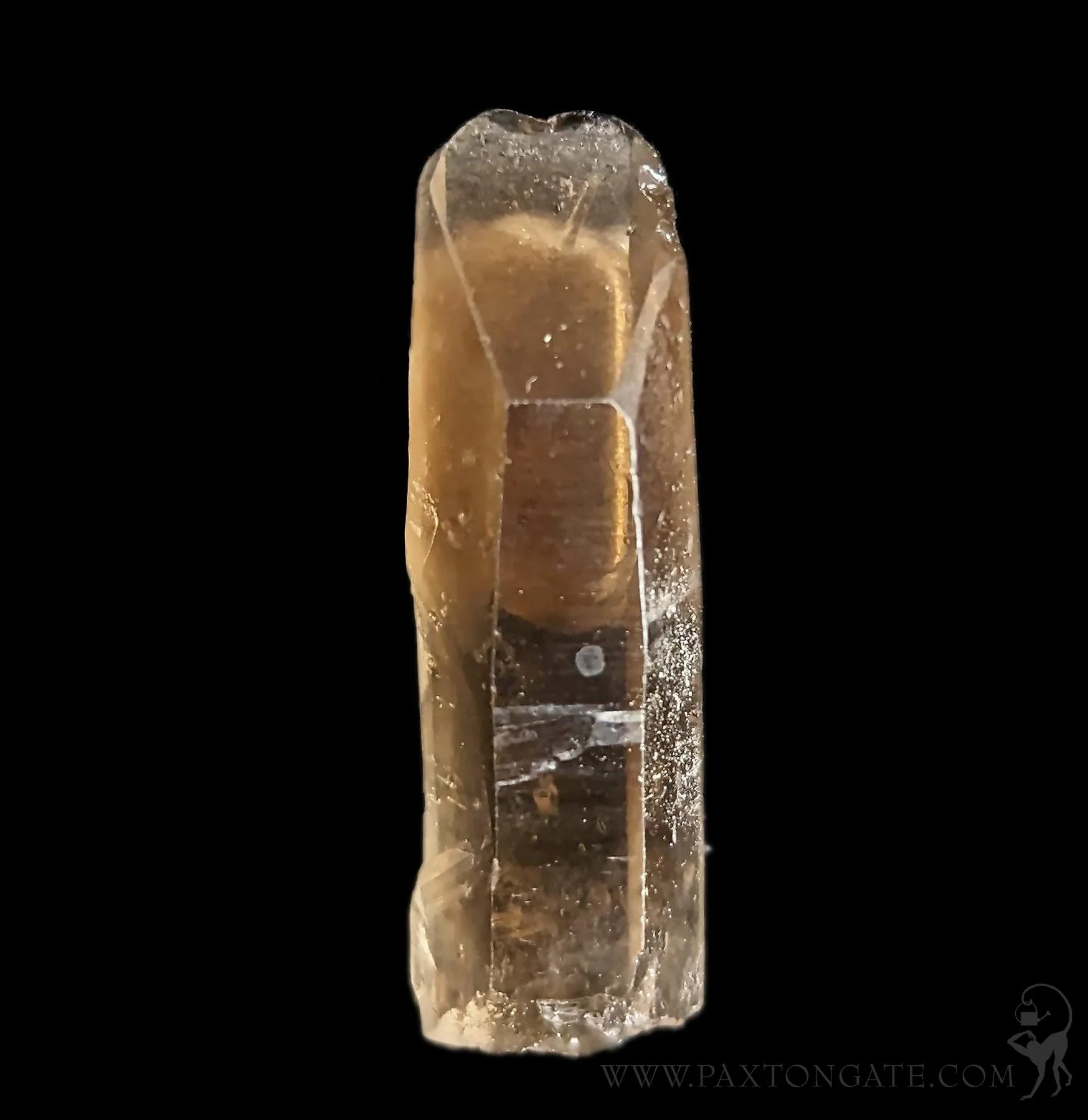
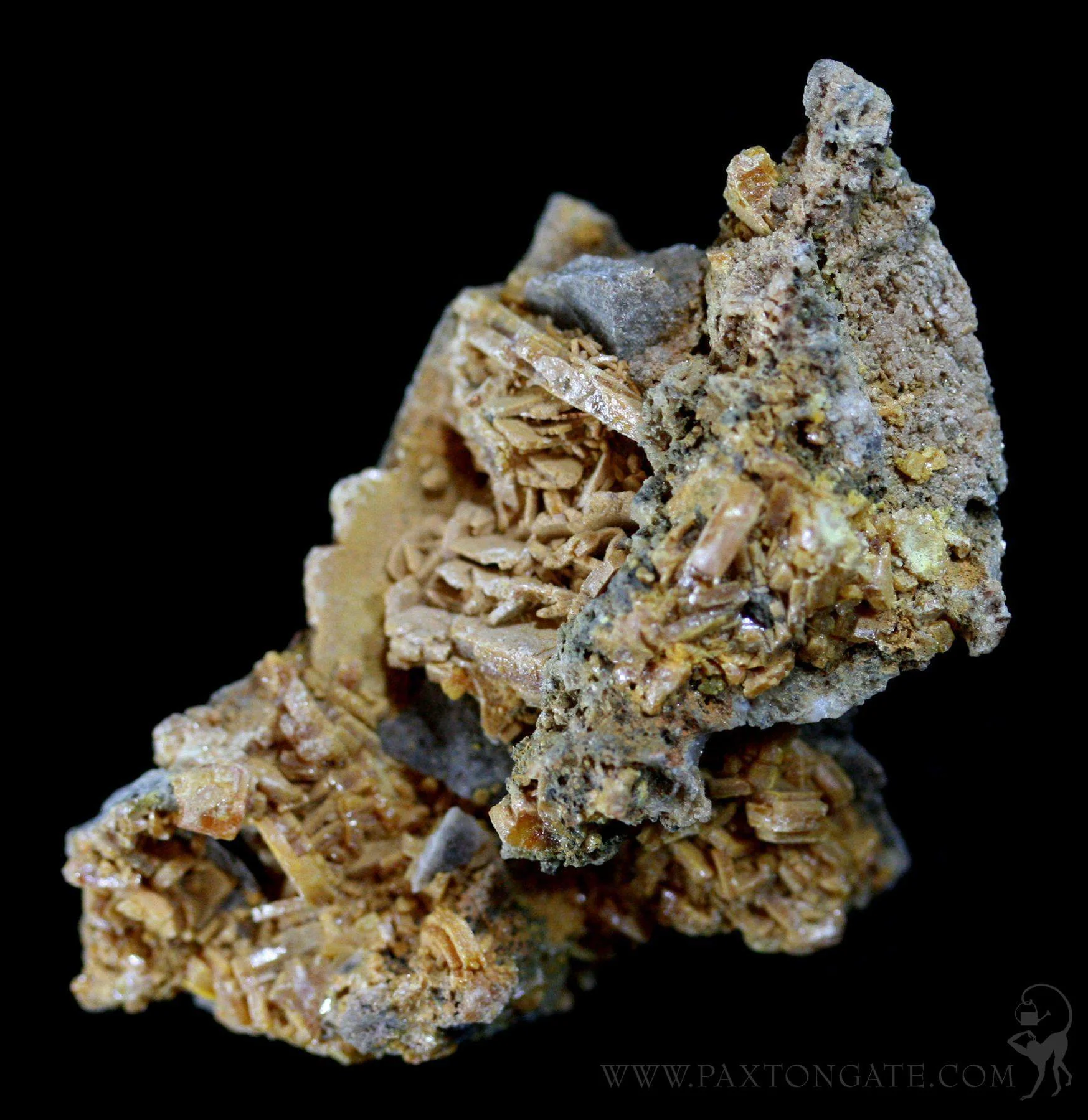
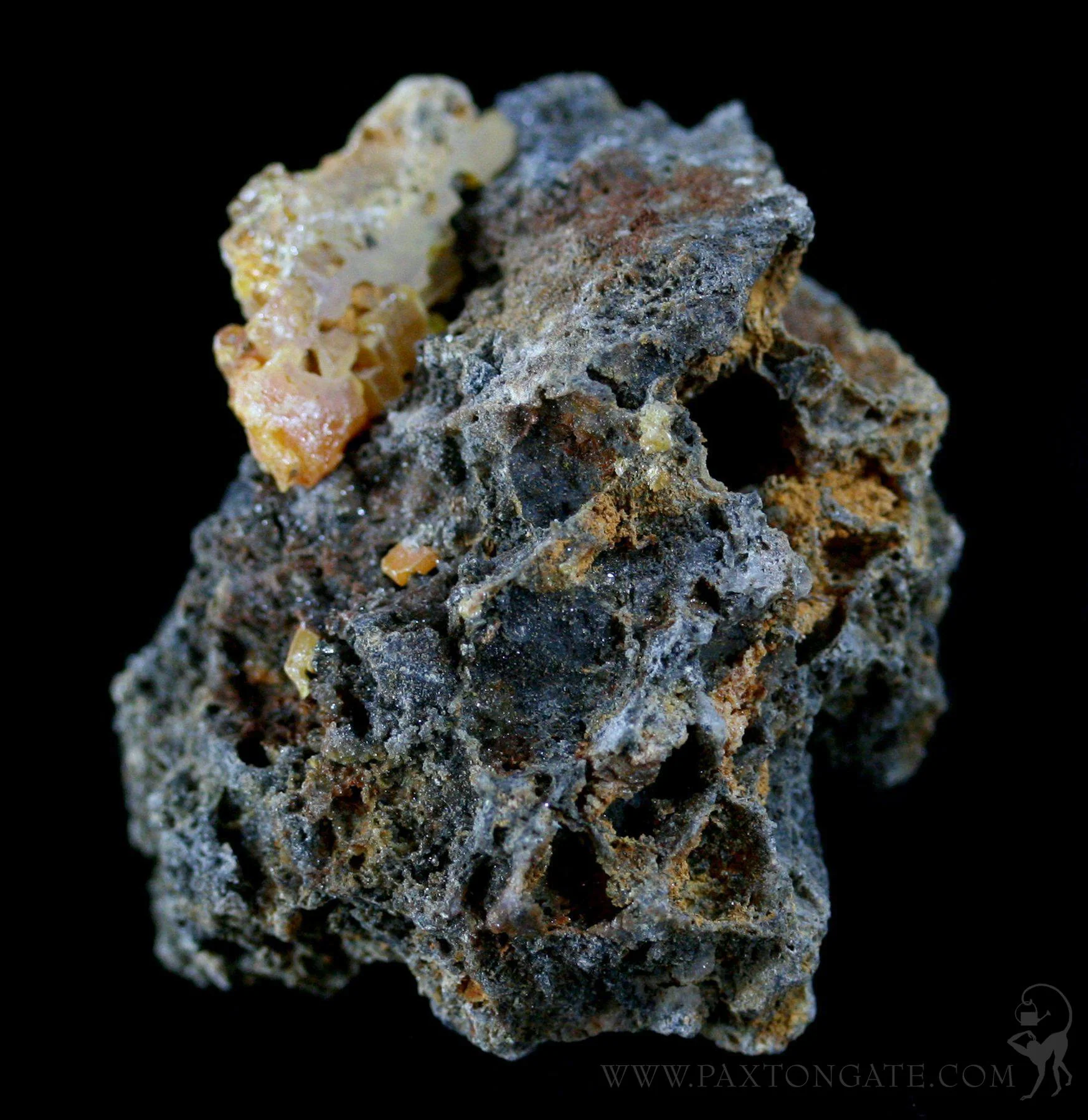
We could start this off by talking about how pretty these crystals are or their deep teal and navy hues but let’s be real. We all know where people know this mineral from. Vivianite is known to grow on corpses. This alone makes the mineral a legend amongst collectors and fans of the odd.
Vivianite forms under unusual conditions when a body is buried in a waterlogged, oxygen-poor environment rich in iron. Phosphate released from the decaying remains gradually combines with the iron and water, creating the mineral known as vivianite. Initially clear and colorless, it darkens into deep shades of blue when exposed to air, as the iron reacts with oxygen. Bacteria play a role in this process by dissolving iron from the soil and phosphate from the remains, while also guiding the growth of the striking blue crystals.
The earliest known example of vivianite forming on human remains dates back to the third millennium BC. This was discovered in Tomb 1 at the Filigosa necropolis in Macomer, Sardinia, within a Domus de Janas, a prehistoric rock-cut tomb. The exceptional preservation of the site allowed researchers to identify vivianite deposits on the bones, making it one of the oldest known occurrences of this mineral in Italy and the first evidence of its presence in a prehistoric context, long before the widespread use of iron.
The reputation of this mineral is really the thing of myths and honestly feels like something out of a fantasy story. We could definitely see a necromancer needing this as a reagent to weave a spell or raise a dragon from the earth. We could have also played too much World of Warcraft but that’s beside the point.
According to metaphysics: Vivianite is a calming, blue-green crystal believed to aid emotional healing, enhance spiritual insight, and promote clarity. It helps release negative energy, encourages self-reflection, and supports personal growth. Often used in meditation or kept nearby, it’s thought to bring balance, calm, and emotional clarity. Sadly, this doesn’t fit the idea of a necromancer seeking this out but it could be helpful to you.
We could start this off by talking about how pretty these crystals are or their deep teal and navy hues but let’s be real. We all know where people know this mineral from. Vivianite is known to grow on corpses. This alone makes the mineral a legend amongst collectors and fans of the odd.
Vivianite forms under unusual conditions when a body is buried in a waterlogged, oxygen-poor environment rich in iron. Phosphate released from the decaying remains gradually combines with the iron and water, creating the mineral known as vivianite. Initially clear and colorless, it darkens into deep shades of blue when exposed to air, as the iron reacts with oxygen. Bacteria play a role in this process by dissolving iron from the soil and phosphate from the remains, while also guiding the growth of the striking blue crystals.
The earliest known example of vivianite forming on human remains dates back to the third millennium BC. This was discovered in Tomb 1 at the Filigosa necropolis in Macomer, Sardinia, within a Domus de Janas, a prehistoric rock-cut tomb. The exceptional preservation of the site allowed researchers to identify vivianite deposits on the bones, making it one of the oldest known occurrences of this mineral in Italy and the first evidence of its presence in a prehistoric context, long before the widespread use of iron.
The reputation of this mineral is really the thing of myths and honestly feels like something out of a fantasy story. We could definitely see a necromancer needing this as a reagent to weave a spell or raise a dragon from the earth. We could have also played too much World of Warcraft but that’s beside the point.
According to metaphysics: Vivianite is a calming, blue-green crystal believed to aid emotional healing, enhance spiritual insight, and promote clarity. It helps release negative energy, encourages self-reflection, and supports personal growth. Often used in meditation or kept nearby, it’s thought to bring balance, calm, and emotional clarity. Sadly, this doesn’t fit the idea of a necromancer seeking this out but it could be helpful to you.
Description
We could start this off by talking about how pretty these crystals are or their deep teal and navy hues but let’s be real. We all know where people know this mineral from. Vivianite is known to grow on corpses. This alone makes the mineral a legend amongst collectors and fans of the odd.
Vivianite forms under unusual conditions when a body is buried in a waterlogged, oxygen-poor environment rich in iron. Phosphate released from the decaying remains gradually combines with the iron and water, creating the mineral known as vivianite. Initially clear and colorless, it darkens into deep shades of blue when exposed to air, as the iron reacts with oxygen. Bacteria play a role in this process by dissolving iron from the soil and phosphate from the remains, while also guiding the growth of the striking blue crystals.
The earliest known example of vivianite forming on human remains dates back to the third millennium BC. This was discovered in Tomb 1 at the Filigosa necropolis in Macomer, Sardinia, within a Domus de Janas, a prehistoric rock-cut tomb. The exceptional preservation of the site allowed researchers to identify vivianite deposits on the bones, making it one of the oldest known occurrences of this mineral in Italy and the first evidence of its presence in a prehistoric context, long before the widespread use of iron.
The reputation of this mineral is really the thing of myths and honestly feels like something out of a fantasy story. We could definitely see a necromancer needing this as a reagent to weave a spell or raise a dragon from the earth. We could have also played too much World of Warcraft but that’s beside the point.
According to metaphysics: Vivianite is a calming, blue-green crystal believed to aid emotional healing, enhance spiritual insight, and promote clarity. It helps release negative energy, encourages self-reflection, and supports personal growth. Often used in meditation or kept nearby, it’s thought to bring balance, calm, and emotional clarity. Sadly, this doesn’t fit the idea of a necromancer seeking this out but it could be helpful to you.