Insect Pinning Class: Giant Clearwing Cicada
Species: Quesada gigas
Location: San Francisco, 766 Valencia St.
If you’ve ever spent time in the South during late spring and summer, you know exactly what we mean when we say these insects get insanely loud, like can’t-hear-yourself-think loud. While the Giant Clearwing Cicada hails from Southeast Asia, it shares the gregarious nature of its cousins from the USA. Apparently, they’ve got a lot to say, and so do we during this insect pinning class. Not only is the Giant Clearwing Cicada an avid singer, it’s also one of the coolest insects we’ve ever worked with. Here’s a bit about them.
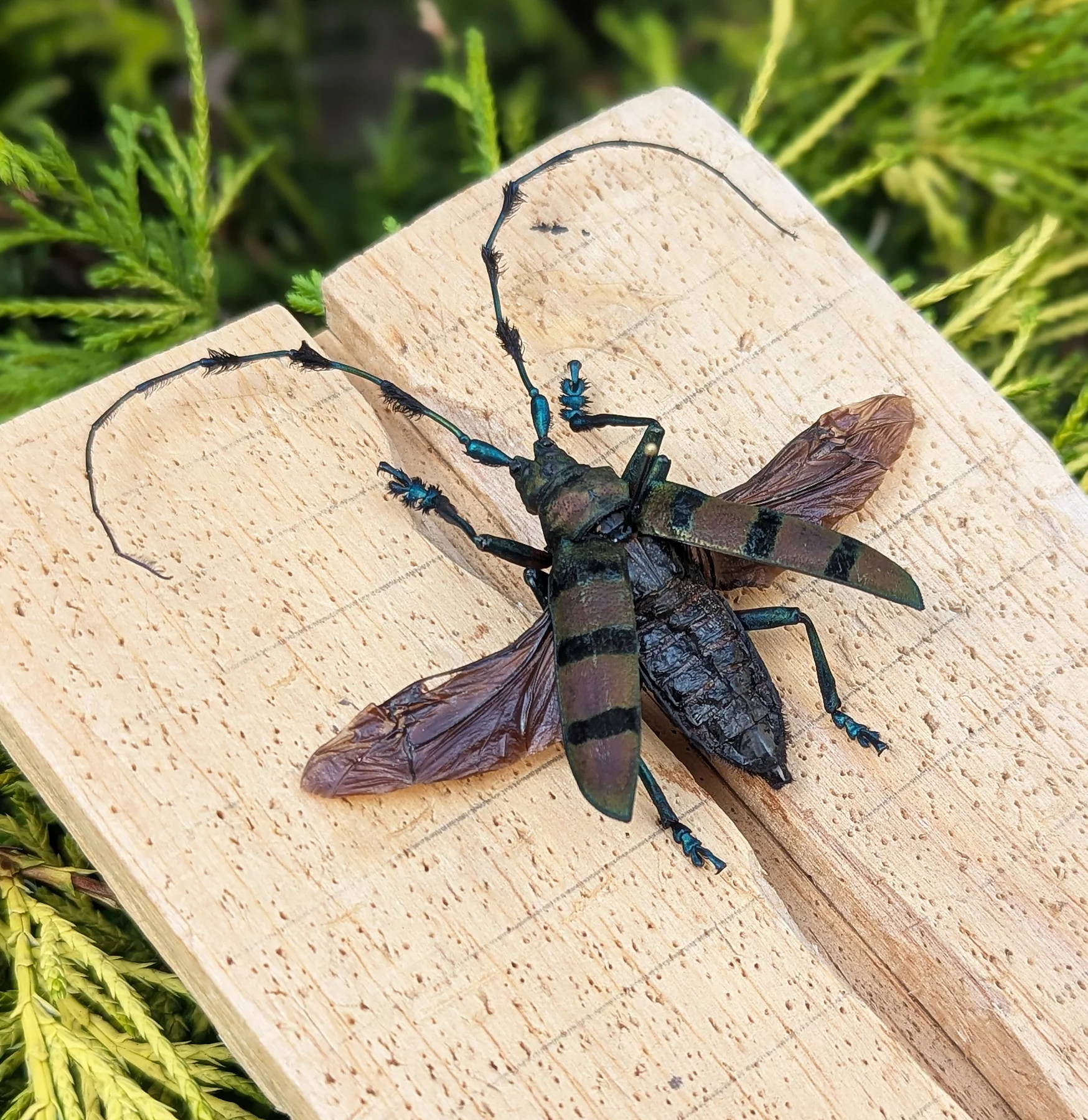
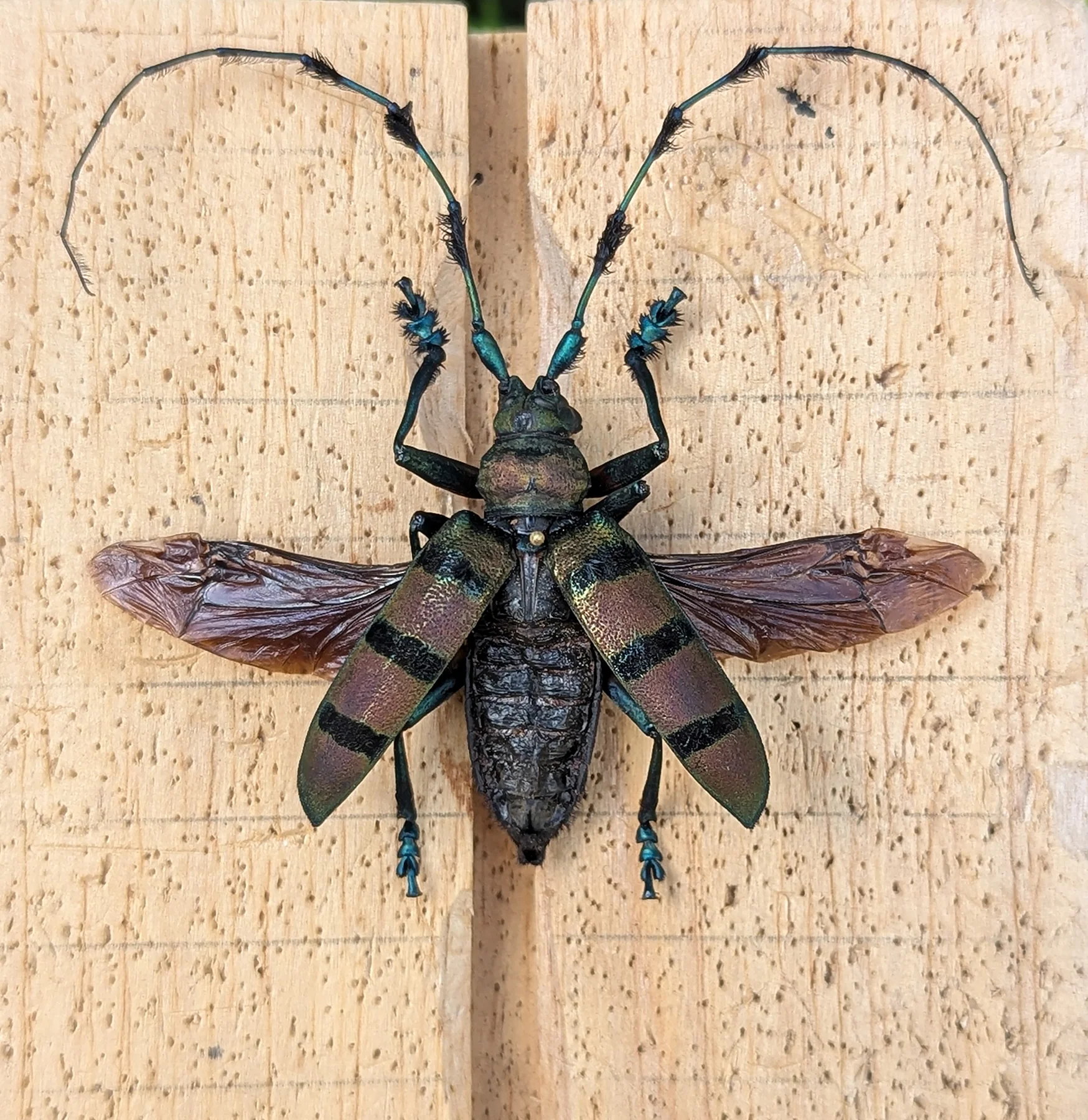
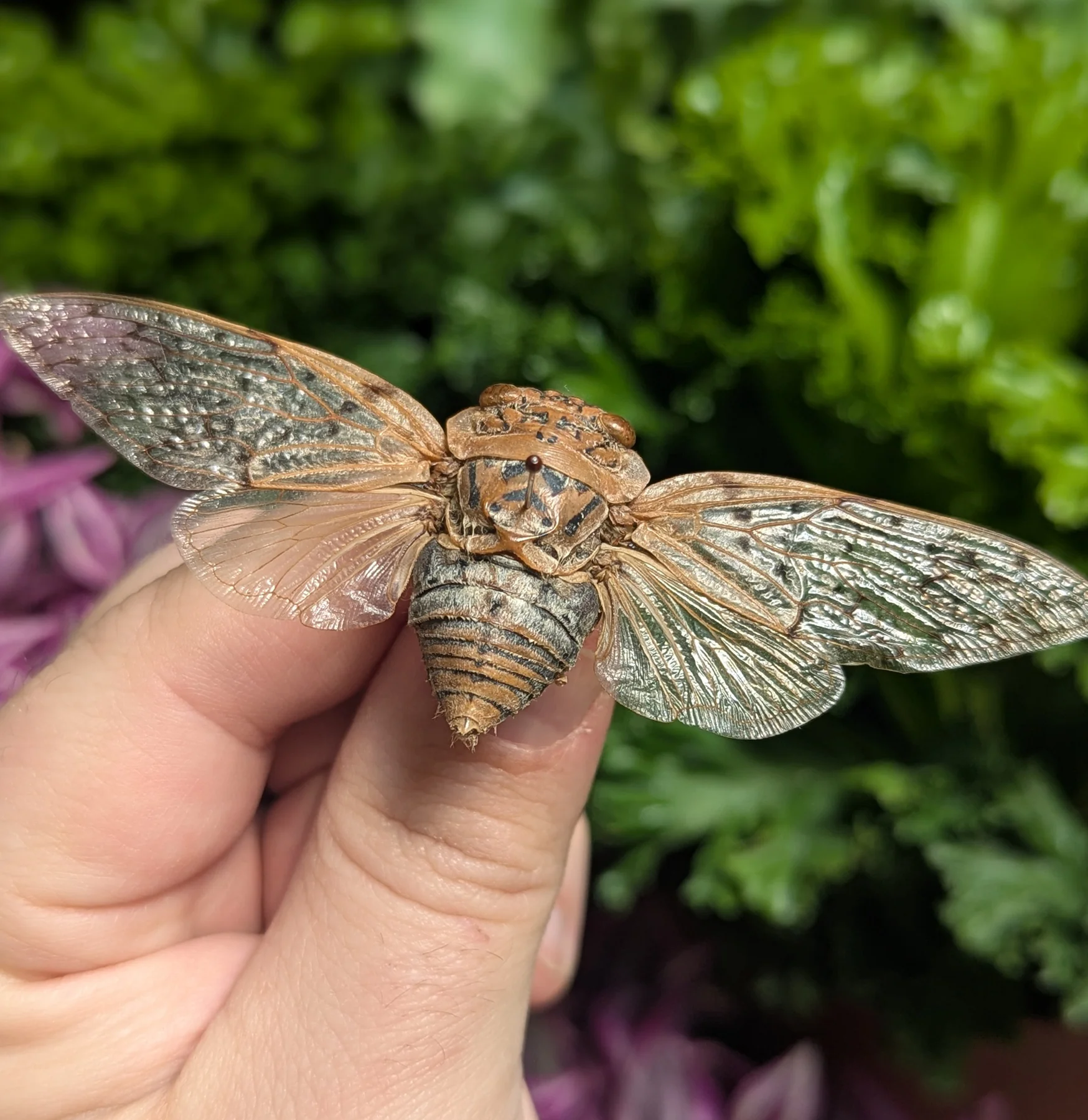
Tacua speciosa is one of the largest cicada species in the world. Its body ranges from about 1.6 to 2.5 inches long, with wingspans that can exceed 7 inches. Not only are they big, they’re real dang pretty too. Unlike many cicadas with smoky or patterned wings, this species has clear, glasslike wings. The transparency helps it blend into the background while perched on tree bark, which, considering their love of being insanely loud, seems counterintuitive, but more on that later.
As mentioned, these crazy, cool-looking cicadas are found in Southeast Asia, and when we say “found,” we really mean about 2 to 4 weeks out of the year. You wouldn’t think it, given their gigantic wings, but they spend the majority of their lives underground, only popping up at the tail end of their life to mate. During this short window of a few days, the males start their romantic ballad, an ear-splitting, metallic buzzing or whirring. Who needs “Endless Love” by Diana Ross and Lionel Richie when you can do that?
Before all the romance, the nymphs—the pre-adult stage, which is a pretty cool name—spend years underground feeding on sap from tree roots. When it’s time to become adults, the nymphs crawl out of the soil at night, climb a tree or other surface, and shed their exoskeleton in a process called molting. It’s a bit creepy, as these molts generally remain attached to the trees, reminding us of some alien species emerging from long cryostasis. Yes, we read too much sci-fi.
And that’s really just the tip of the iceberg when it comes to these cicadas. We’re beyond jazzed to have them as a subject for an insect pinning class, and trust us, this is one session you don’t want to miss.
About the class:
In this hands-on, two-hour class, you will learn the full process of cicada pinning, from hydration to pinning and preservation. Our expert instructor will guide you step by step, and you will use a Paxton Gate spreading kit to transform your ciacada into a preserved specimen you will get to take home and show off.
Inside each kit, you will receive:
- 1 Box of entomology pins
- 1 Anchor pin
- 4 Strips vellum paper
- Forceps
- Pinning board
- Instruction pamphlet
Important Details:
Classes will be held at 766 Valencia St., San Francisco.
Children under 18 must be accompanied by an adult.
Cancellations must be made at least 72 hours before the class to receive store credit, redeemable for merchandise or future classes.
Pre-registration is required, as materials must be prepared for each student and space is very limited. Please arrive promptly at the start time. Students are encouraged to bring lunch or snacks.
Species: Quesada gigas
Location: San Francisco, 766 Valencia St.
If you’ve ever spent time in the South during late spring and summer, you know exactly what we mean when we say these insects get insanely loud, like can’t-hear-yourself-think loud. While the Giant Clearwing Cicada hails from Southeast Asia, it shares the gregarious nature of its cousins from the USA. Apparently, they’ve got a lot to say, and so do we during this insect pinning class. Not only is the Giant Clearwing Cicada an avid singer, it’s also one of the coolest insects we’ve ever worked with. Here’s a bit about them.
Tacua speciosa is one of the largest cicada species in the world. Its body ranges from about 1.6 to 2.5 inches long, with wingspans that can exceed 7 inches. Not only are they big, they’re real dang pretty too. Unlike many cicadas with smoky or patterned wings, this species has clear, glasslike wings. The transparency helps it blend into the background while perched on tree bark, which, considering their love of being insanely loud, seems counterintuitive, but more on that later.
As mentioned, these crazy, cool-looking cicadas are found in Southeast Asia, and when we say “found,” we really mean about 2 to 4 weeks out of the year. You wouldn’t think it, given their gigantic wings, but they spend the majority of their lives underground, only popping up at the tail end of their life to mate. During this short window of a few days, the males start their romantic ballad, an ear-splitting, metallic buzzing or whirring. Who needs “Endless Love” by Diana Ross and Lionel Richie when you can do that?
Before all the romance, the nymphs—the pre-adult stage, which is a pretty cool name—spend years underground feeding on sap from tree roots. When it’s time to become adults, the nymphs crawl out of the soil at night, climb a tree or other surface, and shed their exoskeleton in a process called molting. It’s a bit creepy, as these molts generally remain attached to the trees, reminding us of some alien species emerging from long cryostasis. Yes, we read too much sci-fi.
And that’s really just the tip of the iceberg when it comes to these cicadas. We’re beyond jazzed to have them as a subject for an insect pinning class, and trust us, this is one session you don’t want to miss.
About the class:
In this hands-on, two-hour class, you will learn the full process of cicada pinning, from hydration to pinning and preservation. Our expert instructor will guide you step by step, and you will use a Paxton Gate spreading kit to transform your ciacada into a preserved specimen you will get to take home and show off.
Inside each kit, you will receive:
- 1 Box of entomology pins
- 1 Anchor pin
- 4 Strips vellum paper
- Forceps
- Pinning board
- Instruction pamphlet
Important Details:
Classes will be held at 766 Valencia St., San Francisco.
Children under 18 must be accompanied by an adult.
Cancellations must be made at least 72 hours before the class to receive store credit, redeemable for merchandise or future classes.
Pre-registration is required, as materials must be prepared for each student and space is very limited. Please arrive promptly at the start time. Students are encouraged to bring lunch or snacks.
Description
Species: Quesada gigas
Location: San Francisco, 766 Valencia St.
If you’ve ever spent time in the South during late spring and summer, you know exactly what we mean when we say these insects get insanely loud, like can’t-hear-yourself-think loud. While the Giant Clearwing Cicada hails from Southeast Asia, it shares the gregarious nature of its cousins from the USA. Apparently, they’ve got a lot to say, and so do we during this insect pinning class. Not only is the Giant Clearwing Cicada an avid singer, it’s also one of the coolest insects we’ve ever worked with. Here’s a bit about them.
Tacua speciosa is one of the largest cicada species in the world. Its body ranges from about 1.6 to 2.5 inches long, with wingspans that can exceed 7 inches. Not only are they big, they’re real dang pretty too. Unlike many cicadas with smoky or patterned wings, this species has clear, glasslike wings. The transparency helps it blend into the background while perched on tree bark, which, considering their love of being insanely loud, seems counterintuitive, but more on that later.
As mentioned, these crazy, cool-looking cicadas are found in Southeast Asia, and when we say “found,” we really mean about 2 to 4 weeks out of the year. You wouldn’t think it, given their gigantic wings, but they spend the majority of their lives underground, only popping up at the tail end of their life to mate. During this short window of a few days, the males start their romantic ballad, an ear-splitting, metallic buzzing or whirring. Who needs “Endless Love” by Diana Ross and Lionel Richie when you can do that?
Before all the romance, the nymphs—the pre-adult stage, which is a pretty cool name—spend years underground feeding on sap from tree roots. When it’s time to become adults, the nymphs crawl out of the soil at night, climb a tree or other surface, and shed their exoskeleton in a process called molting. It’s a bit creepy, as these molts generally remain attached to the trees, reminding us of some alien species emerging from long cryostasis. Yes, we read too much sci-fi.
And that’s really just the tip of the iceberg when it comes to these cicadas. We’re beyond jazzed to have them as a subject for an insect pinning class, and trust us, this is one session you don’t want to miss.
About the class:
In this hands-on, two-hour class, you will learn the full process of cicada pinning, from hydration to pinning and preservation. Our expert instructor will guide you step by step, and you will use a Paxton Gate spreading kit to transform your ciacada into a preserved specimen you will get to take home and show off.
Inside each kit, you will receive:
- 1 Box of entomology pins
- 1 Anchor pin
- 4 Strips vellum paper
- Forceps
- Pinning board
- Instruction pamphlet
Important Details:
Classes will be held at 766 Valencia St., San Francisco.
Children under 18 must be accompanied by an adult.
Cancellations must be made at least 72 hours before the class to receive store credit, redeemable for merchandise or future classes.
Pre-registration is required, as materials must be prepared for each student and space is very limited. Please arrive promptly at the start time. Students are encouraged to bring lunch or snacks.