Insect Pinning Class: Harlequin Beetle
Species: Acrocinus longimanus
Location: San Francisco, 766 Valencia St.
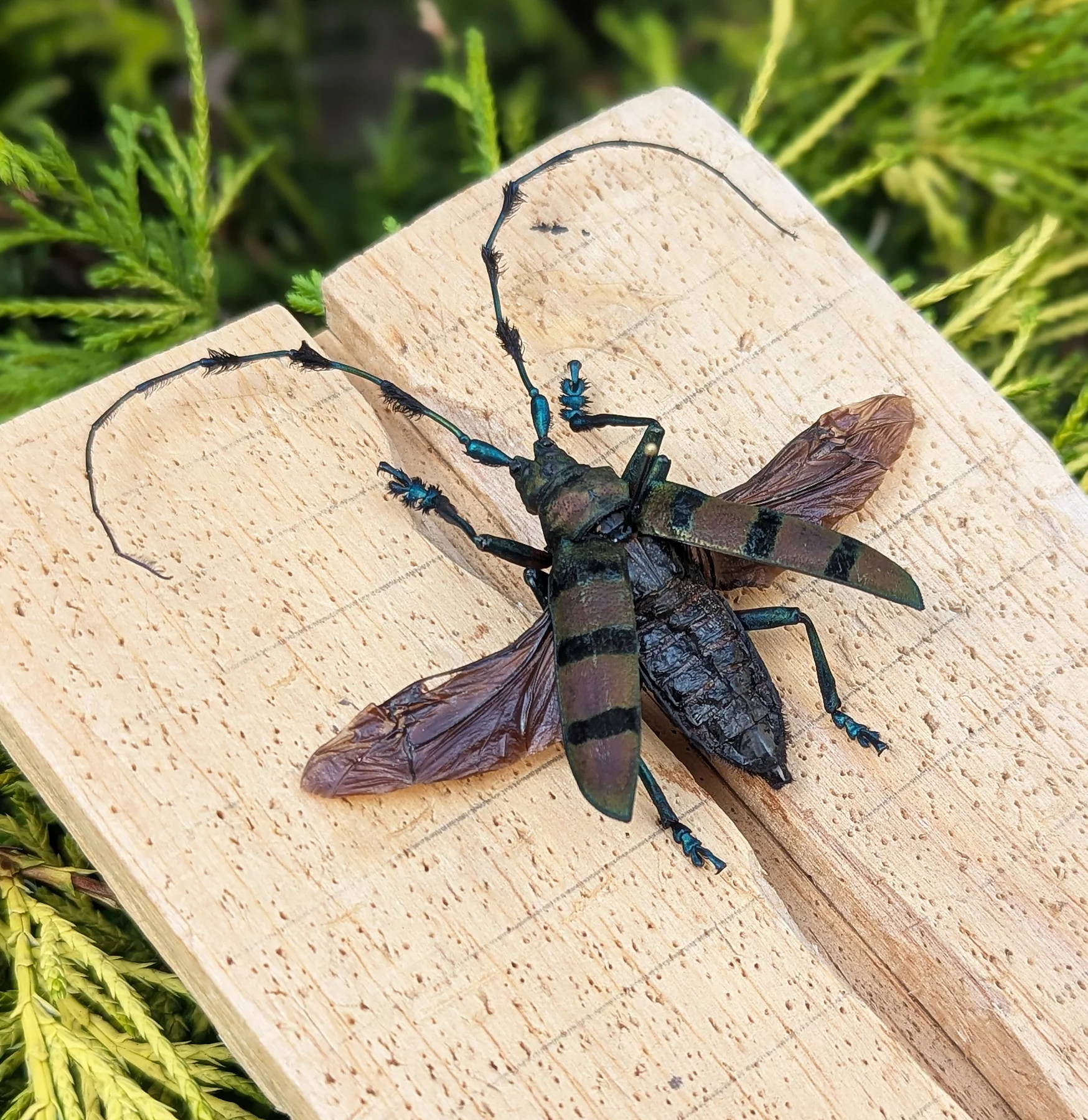
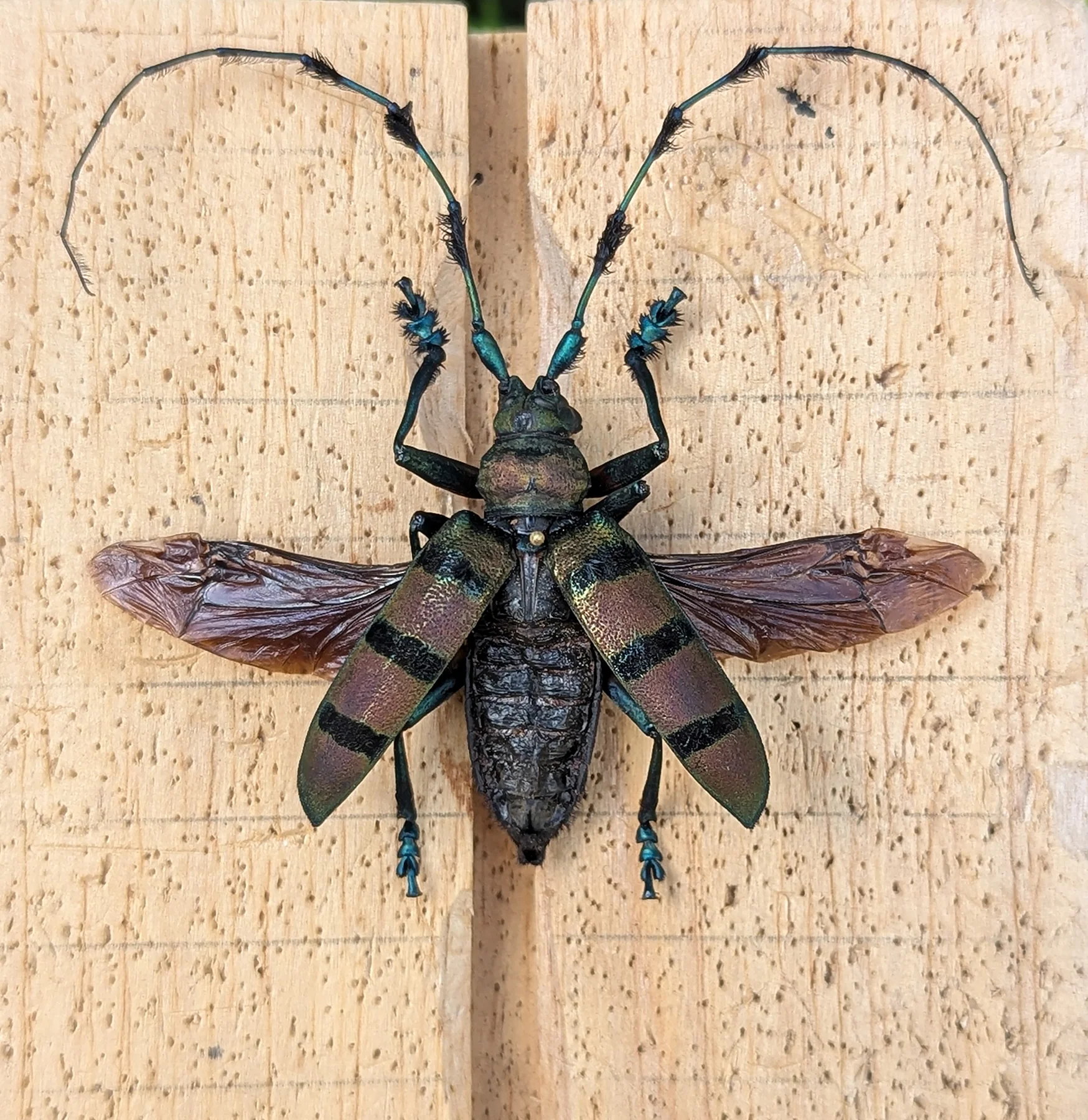
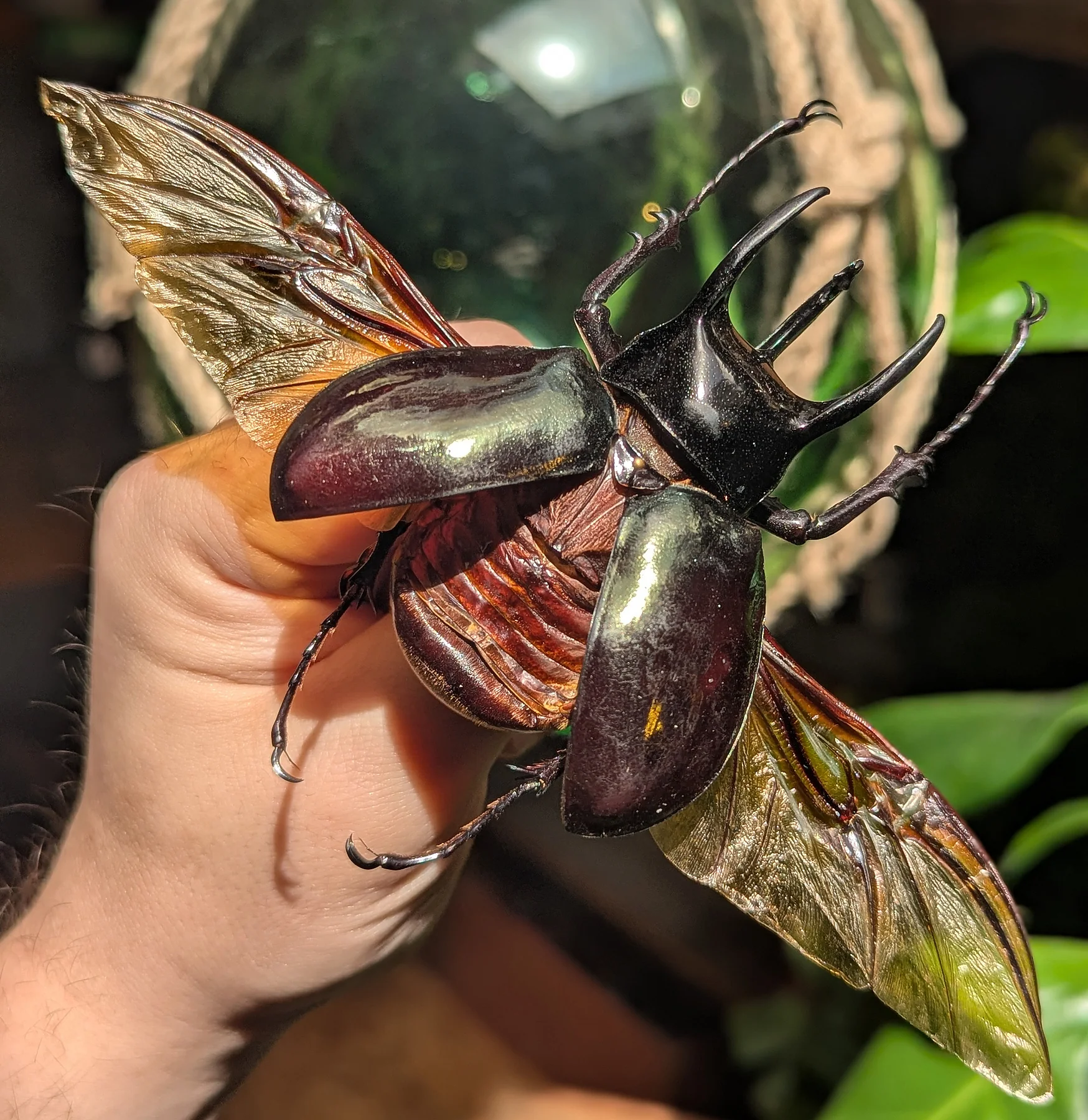
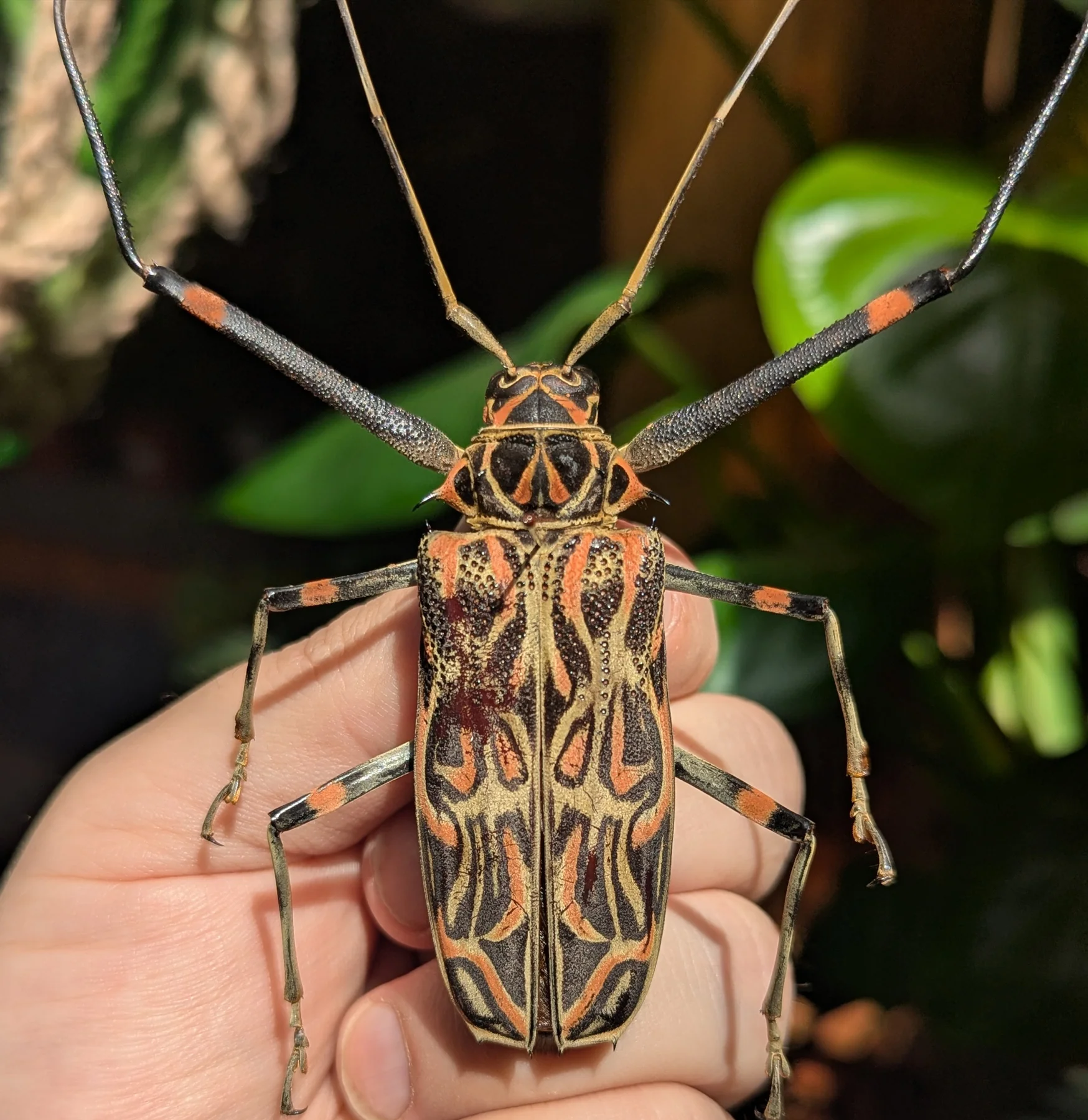
Clowns are making somewhat of a resurgence in modern pop culture these days, but this bug was born into the clown game. The Harlequin beetle may not do your kids' next birthday party or entertain a king, but it’s got more clown cred than a box full of juggalos. It’s not all “ha ha funny balloon animals and red noses” when it comes to these gigantic longhorn beetles. They may have a silly coat of paint, but they are one of nature's most accomplished fashionistas.
As you may have guessed, the Harlequin beetle gets its name from the harlequin costume pattern seen in traditional theater covering its body. This may be one of the only insects named after a character from the Italian Commedia dell’arte, a form of theater that began in the 16th century. That may be a bit too specific, as over time, “harlequin” came to describe anything that is brightly or oddly colored, patterned like a checkerboard or patchwork. We like to think this beetle is just really into the arts and has a complex understanding of 16th-century theater.
Anyway, its appearance is just a bold fashion choice. It actually serves a few different purposes. Scientists believe that its loud coloration also serves as camouflage. To us, it sticks out like a sore thumb, but in its natural habitat of a dense rainforest, the red, yellow, and black patchwork helps it blend into its surroundings. Predators can’t eat it if they can’t find it. On top of that, some scientists think the colors might mimic toxic insects or patterns in the environment, making the beetle less likely to be eaten. On the off chance a predator does find it, it might think twice before scarfing down something that looks like a moving warning label. Aside from becoming someone's dinner insurance, the colorful patterns may also help males and females identify each other among the trees, especially in the visually busy rainforest environment. After all, we’re just looking for love in this world.
We could go on, but in order to really understand a clown, you’ve got to spend time with one. If you’re into bright colors, big beetles, and maybe a dash of ye olden Italian theater, you’re going to love this class.
About the class:
In this hands-on, two-hour class, you will learn the full process of beetle pinning, from hydration to pinning and preservation. Our expert instructor will guide you step by step, and you will use a Paxton Gate spreading kit to transform your beetle into a preserved specimen you will get to take home and show off.
Inside each kit, you will receive:
- 1 Box of entomology pins
- 1 Anchor pin
- 4 Strips vellum paper
- Forceps
- Pinning board
- Instruction pamphlet
Important Details:
Classes will be held at 766 Valencia St., San Francisco.
Children under 18 must be accompanied by an adult.
Cancellations must be made at least 72 hours before the class to receive store credit, redeemable for merchandise or future classes.
Pre-registration is required, as materials must be prepared for each student and space is very limited. Please arrive promptly at the start time. Students are encouraged to bring lunch or snacks.
Species: Acrocinus longimanus
Location: San Francisco, 766 Valencia St.
Clowns are making somewhat of a resurgence in modern pop culture these days, but this bug was born into the clown game. The Harlequin beetle may not do your kids' next birthday party or entertain a king, but it’s got more clown cred than a box full of juggalos. It’s not all “ha ha funny balloon animals and red noses” when it comes to these gigantic longhorn beetles. They may have a silly coat of paint, but they are one of nature's most accomplished fashionistas.
As you may have guessed, the Harlequin beetle gets its name from the harlequin costume pattern seen in traditional theater covering its body. This may be one of the only insects named after a character from the Italian Commedia dell’arte, a form of theater that began in the 16th century. That may be a bit too specific, as over time, “harlequin” came to describe anything that is brightly or oddly colored, patterned like a checkerboard or patchwork. We like to think this beetle is just really into the arts and has a complex understanding of 16th-century theater.
Anyway, its appearance is just a bold fashion choice. It actually serves a few different purposes. Scientists believe that its loud coloration also serves as camouflage. To us, it sticks out like a sore thumb, but in its natural habitat of a dense rainforest, the red, yellow, and black patchwork helps it blend into its surroundings. Predators can’t eat it if they can’t find it. On top of that, some scientists think the colors might mimic toxic insects or patterns in the environment, making the beetle less likely to be eaten. On the off chance a predator does find it, it might think twice before scarfing down something that looks like a moving warning label. Aside from becoming someone's dinner insurance, the colorful patterns may also help males and females identify each other among the trees, especially in the visually busy rainforest environment. After all, we’re just looking for love in this world.
We could go on, but in order to really understand a clown, you’ve got to spend time with one. If you’re into bright colors, big beetles, and maybe a dash of ye olden Italian theater, you’re going to love this class.
About the class:
In this hands-on, two-hour class, you will learn the full process of beetle pinning, from hydration to pinning and preservation. Our expert instructor will guide you step by step, and you will use a Paxton Gate spreading kit to transform your beetle into a preserved specimen you will get to take home and show off.
Inside each kit, you will receive:
- 1 Box of entomology pins
- 1 Anchor pin
- 4 Strips vellum paper
- Forceps
- Pinning board
- Instruction pamphlet
Important Details:
Classes will be held at 766 Valencia St., San Francisco.
Children under 18 must be accompanied by an adult.
Cancellations must be made at least 72 hours before the class to receive store credit, redeemable for merchandise or future classes.
Pre-registration is required, as materials must be prepared for each student and space is very limited. Please arrive promptly at the start time. Students are encouraged to bring lunch or snacks.
Description
Species: Acrocinus longimanus
Location: San Francisco, 766 Valencia St.
Clowns are making somewhat of a resurgence in modern pop culture these days, but this bug was born into the clown game. The Harlequin beetle may not do your kids' next birthday party or entertain a king, but it’s got more clown cred than a box full of juggalos. It’s not all “ha ha funny balloon animals and red noses” when it comes to these gigantic longhorn beetles. They may have a silly coat of paint, but they are one of nature's most accomplished fashionistas.
As you may have guessed, the Harlequin beetle gets its name from the harlequin costume pattern seen in traditional theater covering its body. This may be one of the only insects named after a character from the Italian Commedia dell’arte, a form of theater that began in the 16th century. That may be a bit too specific, as over time, “harlequin” came to describe anything that is brightly or oddly colored, patterned like a checkerboard or patchwork. We like to think this beetle is just really into the arts and has a complex understanding of 16th-century theater.
Anyway, its appearance is just a bold fashion choice. It actually serves a few different purposes. Scientists believe that its loud coloration also serves as camouflage. To us, it sticks out like a sore thumb, but in its natural habitat of a dense rainforest, the red, yellow, and black patchwork helps it blend into its surroundings. Predators can’t eat it if they can’t find it. On top of that, some scientists think the colors might mimic toxic insects or patterns in the environment, making the beetle less likely to be eaten. On the off chance a predator does find it, it might think twice before scarfing down something that looks like a moving warning label. Aside from becoming someone's dinner insurance, the colorful patterns may also help males and females identify each other among the trees, especially in the visually busy rainforest environment. After all, we’re just looking for love in this world.
We could go on, but in order to really understand a clown, you’ve got to spend time with one. If you’re into bright colors, big beetles, and maybe a dash of ye olden Italian theater, you’re going to love this class.
About the class:
In this hands-on, two-hour class, you will learn the full process of beetle pinning, from hydration to pinning and preservation. Our expert instructor will guide you step by step, and you will use a Paxton Gate spreading kit to transform your beetle into a preserved specimen you will get to take home and show off.
Inside each kit, you will receive:
- 1 Box of entomology pins
- 1 Anchor pin
- 4 Strips vellum paper
- Forceps
- Pinning board
- Instruction pamphlet
Important Details:
Classes will be held at 766 Valencia St., San Francisco.
Children under 18 must be accompanied by an adult.
Cancellations must be made at least 72 hours before the class to receive store credit, redeemable for merchandise or future classes.
Pre-registration is required, as materials must be prepared for each student and space is very limited. Please arrive promptly at the start time. Students are encouraged to bring lunch or snacks.